Bitcoin Magazine
The History and Future of Physical Bitcoin
Bitcoin’s digital nature is the source of most of its advantages. Since it is programmable, it unlocks self-custody practices that can make theft and confiscation very difficult. Since it is digital, it can move at the speed of light, allowing movement of value and settlement across the globe in minutes.
Nevertheless, Bitcoin has at times been criticized for being hard to grasp, literally. Bitcoin, in its natural state, can not be touched, can not be physically held; it can only be imagined and understood. To many people, that’s a significant barrier and one that has inspired quite a few attempts to bring the coin into meat space, but it is not easy.
Entrepreneurs and artists alike, for well over a decade, have taken on the challenge of making Bitcoin physical in a way that retains its most valuable cash-like properties, and while nobody has entirely solved the problem, significant progress has been made, leaving a wonderful trail of artifacts along the way.
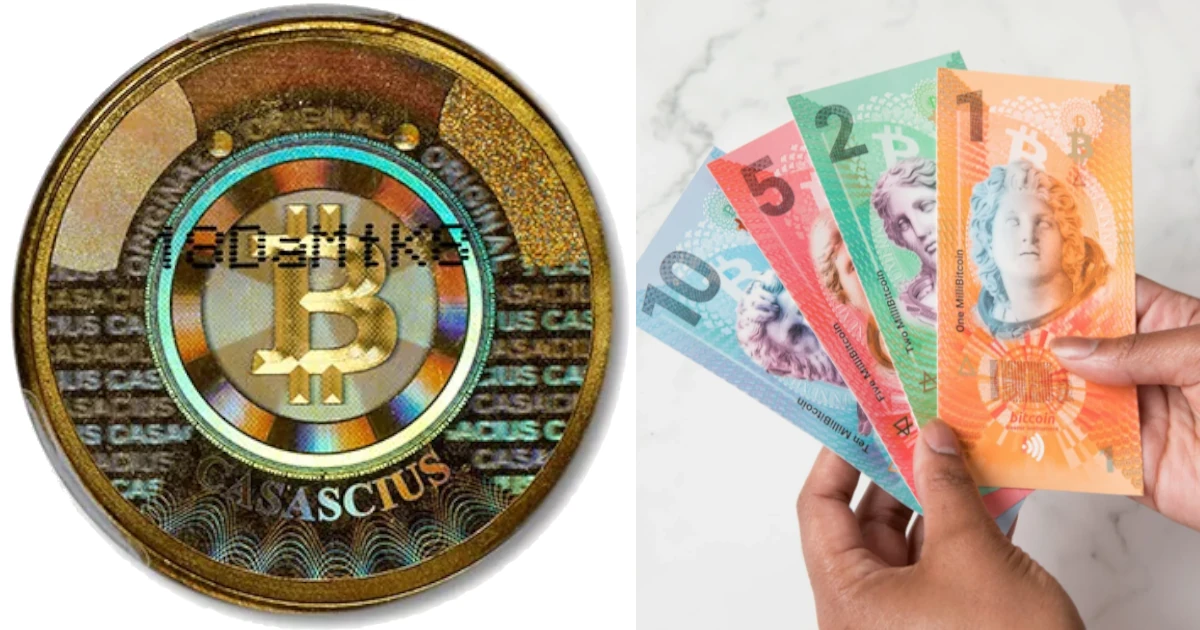
Casascius Coins
(Image by Stacks Bowers Galleries)
Minted as early as September 6th, 2011, at a bitcoin price of barely $8 dollars, Casascius coins are without a doubt the most iconic physical Bitcoin artifacts in history, with many copycats since. Named after Mike Caldwell’s Bitcointalk forum nym, which appears to be an idiom for “call a spade a spade”, the Casascius coins developed many of the practices that other attempts at physical Bitcoin would innovate on over the years.One problem with making Bitcoin physical is the handling of private key material. Since Bitcoin is digitally native, it can only live in a cryptographic private-public key pair, a secret that is used to generate a public key, with Bitcoin-compatible cryptography. In the case of the Casascius coin, Caldwell generated the private keys in an airgapped machine and printed them, gluing them to the iconic precious metal coins and then presumably destroyed the copy that could have been kept on his computer. He described the security precautions taken on his website for potential buyers to review.
The printed private key was then covered by specialized tamper-proof stickers, which, if removed, leave an obvious mark in a “honeycomb pattern”. Buyers of the coins could thus tell if the private keys in a Casascius coin had been exposed before purchase from a third-party vendor.This key management issue is the biggest hazard in the creation of physical bitcoin, and one which, in the case of Caldwell, was dealt with by trusting him not to cheat. He was also very transparent and careful by the standards of the time. To this day, his reputation is strong if not legendary, so that trust was well placed by buyers who profited greatly from the collector’s value of the items, which to this day mark a premium on top of the bitcoin and precious metal values of the piece.
Casascius coins were discontinued in November 2013 after the Fin