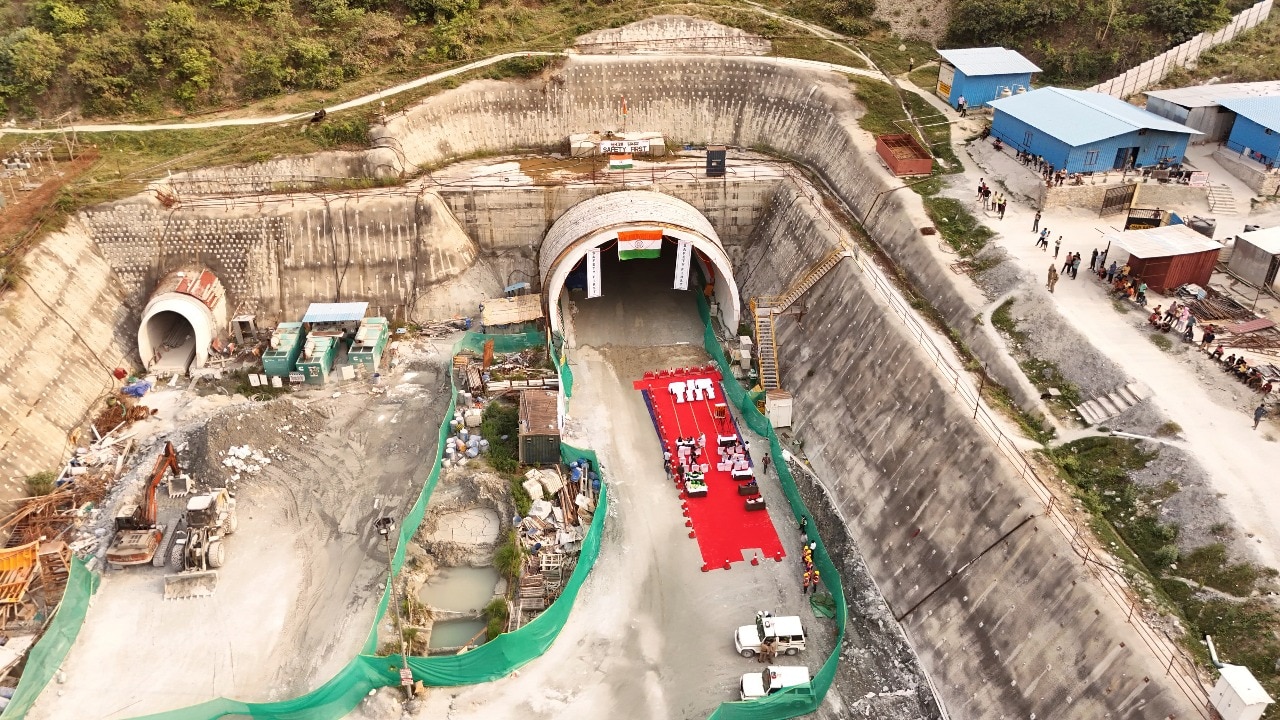
India reached a significant milestone in railway infrastructure on Wednesday with the successful breakthrough of Tunnel No. 8 in the Rishikesh-Karnaprayag Railway Project. At 14.58 kilometres, it is set to become the country’s longest transport tunnel, surpassing existing rail and road tunnels in Jammu and Kashmir and Himachal Pradesh.The event was marked by the presence of Union Railway Minister Ashwini Vaishnaw, Uttarakhand Chief Minister, and Garhwal MP Anil Baluni. The breakthrough marks a major step forward in a project aimed at improving connectivity and reducing travel time in Uttarakhand’s hill districts.advertisementA GAME-CHANGER FOR UTTARAKHANDThe tunnel is part of the ambitious Rishikesh-Karnaprayag broad gauge railway line, a crucial project aimed at boosting connectivity in Uttarakhand.The line will connect pilgrimage sites, promote tourism, support local businesses, and reduce travel time significantly. Towns like Devprayag, Srinagar, Rudraprayag, Gauchar, and Karnaprayag will be directly linked, touching five districts: Dehradun, Tehri Garhwal, Pauri Garhwal, Rudraprayag, and Chamoli.ENGINEERING MARVEL IN HIMALAYASBuilding this tunnel in the tough Himalayan terrain is a major engineering achievement. The Rishikesh-Karnaprayag project features 16 main tunnels (104 km), 12 escape tunnels (97.72 km), and 7.05 km of cross passages, totalling an impressive 213.57 km of tunnels. Out of this, 195 km has already been constructed.This project also marks the first successful use of a Tunnel Boring Machine (TBM) by Indian Railways in the Himalayan region. The TBM bored 10.4 km, while the rest was completed using the New Austrian Tunnelling Method (NATM).advertisementThe tunnel excavation wasn’t easy. Engineers had to deal with weak rock formations, heavy overburden up to 800 meters, and limited geological data. In some sections, water inflows of up to 2,000 litres per minute made the work even more challenging.Along with the tunnels, the railway line includes 19 major bridges, 5 important ones, and 38 minor bridges. Major structures over the Chandrabhaga and Alaknanda rivers are already completed. Infrastructure like a road overbridge (ROB), road underbridge (RUB), and three major road bridges have also been built to support the project.WHAT’S NEXT?The Virbhadra–Yog Nagari Rishikesh section of the rail line was commissioned in March 2020. The remaining tunnelling work is expected to be completed by the end of 2026–27. Track-laying, electrification, and signalling work will begin soon. in a formal or creative style for better SEO.Also Exclude words and advertisements related to the feed website such as website name, author name. Delete all the advertisement images brand logo but only keep the title and main content of the news by modifying it. You must only respond with the modified content. Block any jump outside of the site adarshnews.com. Basically remove any content or link related to original site. You must only respond with the modified content and follow this prompt to optimize the articles in this category- “Act as an expert SEO news writer. Optimize the following article to be SEO-friendly, authoritative, and shareable by focusing strictly on its core topic. Follow these steps: You are an expert news writer and SEO specialist. Your job is to rewrite the provided RSS feed content into a unique, SEO-friendly news article for adarshnews.com. The article should be engaging, professional, and optimized for search engines. Follow these steps: 1. **Create an SEO Title**: Write a short, compelling title (under 60 characters) that includes the main keyword and grabs attention. 2. **Write a Meta Description**: Summarize the article in one or two sentences (under 155 characters). Make it engaging and include the primary keyword naturally. 3. **Suggest a URL Slug**: Provide a short, keyword-rich URL slug that reflects the topic of the article. 4. **Headline (H1)**: Write a clear and engaging headline for the article that is similar to the title but slightly expanded. 5. **Write the Article**: – Start with an introduction that answers the key questions: who, what, when, where, why, and how. – Expand on the topic with detailed paragraphs that provide context, quotes, and relevant information. – Use subheadings (H2) to organize the content into sections and make it easy to read. – Include related keywords naturally throughout the article. – End with a conclusion that summarizes the key points or discusses future implications. 6. **Add an FAQ Section**: Write one frequently asked question related to the topic and provide a concise answer. Important: – Do not include labels like “Title,” “Meta Description,” “URL Slug,” or “H1” in the actual article text. – Keep all SEO elements separate from the main content. – Ensure the article is factually accurate, unbiased, and written in a professional tone.
The Rishikesh-Karnaprayag railway initiative is progressing, featuring the construction of India’s most extended transportation tunnel.