**Title:** Murshidabad Violence: Uncovering the Radical Networks Behind the Chaos
**Meta Description:** Investigating the radical groups and NGOs linked to the Murshidabad violence, revealing a troubling network operating under local administration’s watch.
**URL Slug:** murshidabad-violence-radical-networks
**Headline:** Unveiling the Radical Networks Behind the Murshidabad Violence
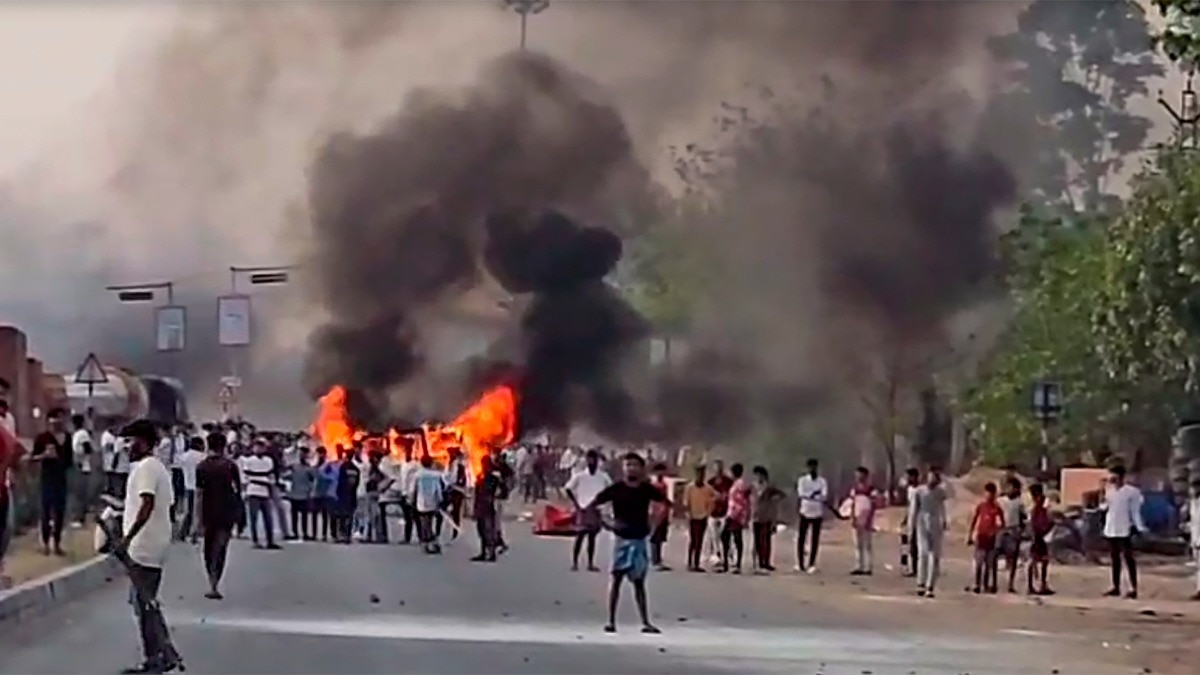
The recent violence in Murshidabad has unveiled a disturbing reality involving banned radical groups, local NGOs with extremist affiliations, and a rising trend of digital and grassroots radicalization. These elements have been operating openly, often under the protection or negligence of local authorities.
Following the April 8 incident in Jangipur, local police hesitated to permit any protests related to Waqf issues. However, intelligence sources from the West Bengal Police indicated that this restriction was circumvented. On April 10, a rally was announced under the guise of protesting the SSC teacher recruitment verdict, which quickly transformed into a Waqf demonstration. Investigators suspect this was a prelude to the violence that erupted on April 11. Exclusive visuals obtained from both rallies show the same group of youth participants, suggesting a coordinated effort despite the lack of police approval for the April 11 gathering.
At the heart of the protest was a banner proclaiming “All NGOs United.” However, investigations reveal that this collective was primarily driven by two organizations: Asomoyer Alor Bati and Golden Star Group. Analysis of video recordings and discussions with officers involved in the investigation indicate that three individuals—Kausar, Mostakin, and Rajesh Sheikh—were pivotal in orchestrating the mobilization. Although they are officially listed as absconding, local sources suggest they are moving freely without facing immediate legal repercussions. Their involvement in the protest is under scrutiny, as is the system that has failed to hold them accountable.
Rajesh Sheikh, a known member of the TMC Yubo Block Committee, has been linked to the PFI in the past, and District Intelligence officials report that he also supported an SDPI candidate during the 2018 local elections. Dr. Bashir Sheikh, a former SIMI member, has also emerged as a significant figure in the orchestration of these events.
Local DIB Inspector Rajib confirmed the involvement of these individuals in communal provocation during a recent sting operation. These names have surfaced alongside political figures, including MLC Mehboob Alam. A senior investigating officer, speaking anonymously, remarked that these NGOs serve as the frontline for mobilization, whether for electoral disruptions or orchestrating violence. This insight points to a broader ecosystem where lesser-known organizations operate in a formal or creative manner to further their agendas.
In conclusion, the Murshidabad violence highlights a complex web of radicalization and mobilization that poses significant challenges to local governance and community safety. The ongoing investigation will be crucial in addressing these issues and ensuring accountability for those involved.
**FAQ Section:**
**Q: What role do local NGOs play in the Murshidabad violence?**
A: Local NGOs have been implicated in mobilizing support for protests that escalated into violence, often acting as fronts for radical groups and operating with little oversight from authorities.