Thousands of protesters in Bangladesh expressed their anger towards exiled former Prime Minister Sheikh Hasina by demolishing a family home that has come to represent the nation’s independence and, they argue, the authoritarianism she embodies. The unrest was ignited by a speech Hasina delivered to her supporters from exile in India, where she fled last year amid a violent student-led uprising against her 15-year rule, during which she faced accusations of stifling dissent.
The house in Dhaka was once the residence of Hasina’s late father, Sheikh Mujibur Rahman, a key figure in Bangladesh’s independence, who proclaimed the country’s separation from Pakistan there in 1971 and was assassinated on the premises in 1975. Hasina later transformed the home into a museum.
Since her departure, some of her supporters have attempted to gather at the site but have faced violent opposition from her critics, who have also targeted other symbols of her administration and party, vandalizing and setting fire to various buildings.
On Wednesday, protesters threatened to “bulldoze” the house if Hasina proceeded with her speech, which marked the beginning of a month-long protest campaign by her Awami League party, seeking to rally support amid allegations of violence against its members and supporters.
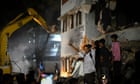
As Hasina began her address, protesters invaded the house, tearing down brick walls and later using a crane and excavator to demolish the structure. In response, Hasina stated, “They do not have the power to destroy the country’s independence with bulldozers. They may destroy a building, but they won’t be able to erase history.” She urged the people of Bangladesh to resist the new leadership, claiming they came to power through “unconstitutional” means.
Hasnat Abdullah, a student leader, warned media outlets about Hasina’s speech and declared on Facebook, “Tonight Bangladesh will be freed from the pilgrimage site of fascism.” Many protesters chanted for Hasina’s execution, blaming her for the hundreds of deaths during last year’s uprising, one of the most severe periods of unrest since independence. Hasina has called for a UN investigation into these fatalities.
Protesters also voiced their discontent with India. An interim government in Bangladesh, led by Nobel laureate Muhammad Yunus, has sought Hasina’s extradition, but India has yet to respond. Reports indicate that overnight, a series of attacks targeted homes and businesses belonging to Awami League supporters. The interim government, struggling to maintain order and prevent mob violence against Hasina’s supporters, has accused her of extensive corruption and human rights violations during her tenure.