**First Human in Space: A Lesson in History and Education**
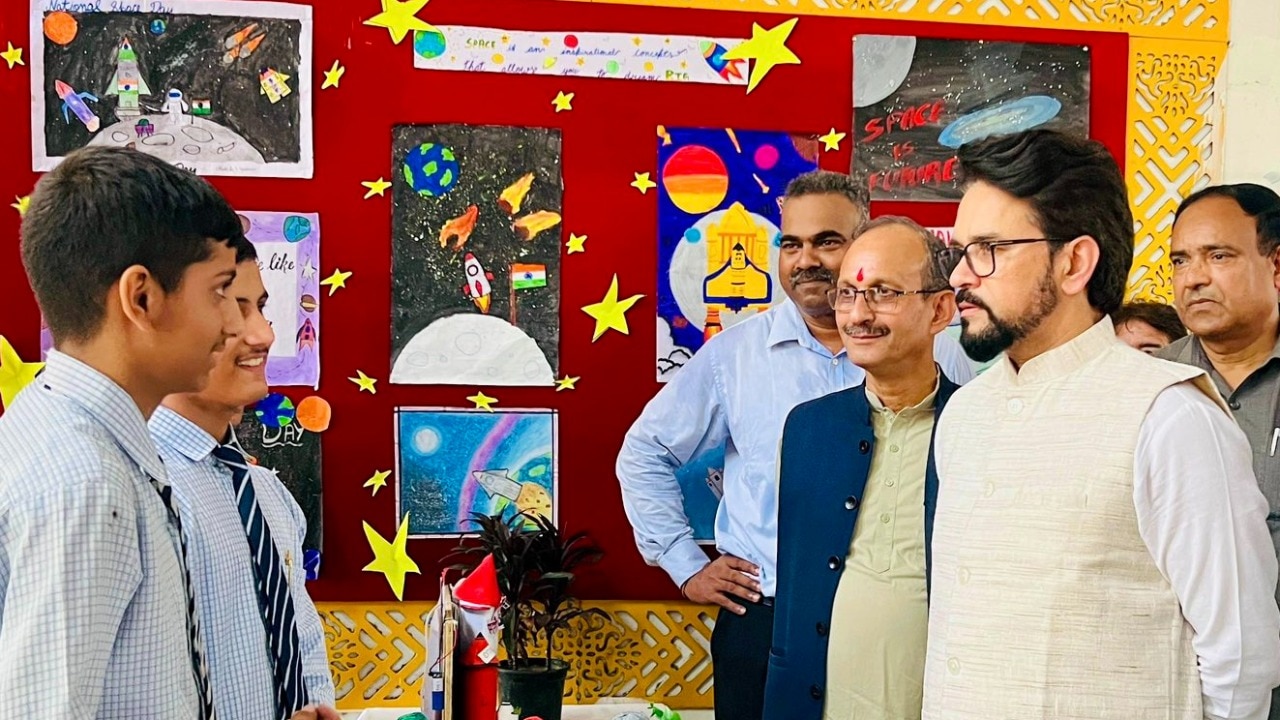
In a recent interaction with schoolchildren in Una, Himachal Pradesh, BJP MP Anurag Thakur posed a question that sparked a lively discussion: “Who was the first man to travel to space?” The children enthusiastically responded, “Neil Armstrong!” However, Thakur humorously suggested, “I think it was Hanumanji,” highlighting a significant gap in historical knowledge.
The reality is that the first human to journey into space was Soviet cosmonaut Yuri Gagarin, who completed an orbit around Earth in 1961. Neil Armstrong, an American astronaut, made history later in 1969 as the first person to walk on the Moon. This exchange not only reflects a misunderstanding among the students but also raises concerns about the reinforcement of inaccuracies by a public figure.
Thakur’s comments seem to align with a broader initiative to encourage young minds to embrace India’s rich cultural heritage and challenge colonial narratives. He emphasized the importance of recognizing traditional knowledge, stating, “If we don’t learn about our own, we will remain limited to what the British taught us.” While promoting cultural pride is essential, it is equally important to distinguish between mythology and historical fact.
The incident underscores a critical need for educational reform in India, particularly in public schools where foundational knowledge may be lacking. It is vital to teach students how to differentiate between fact and fiction, especially when discussing significant historical events. The ability to make this distinction is a crucial aspect of education.
While mythology can play a valuable role in cultural education, it should not be conflated with historical fact. The narratives found in epics like the Ramayana and Mahabharata, while culturally significant, should be taught as mythology unless supported by archaeological evidence.
In conclusion, fostering a scientific temper and a fact-based learning environment is essential for the development of informed citizens. As we celebrate our cultural heritage, we must also ensure that our education system equips students with the knowledge and skills to navigate the complexities of history and science accurately.
**FAQ**
**Q: Who was the first human to travel to space?**
A: The first human to travel to space was Yuri Gagarin, a Soviet cosmonaut, who orbited Earth in 1961.