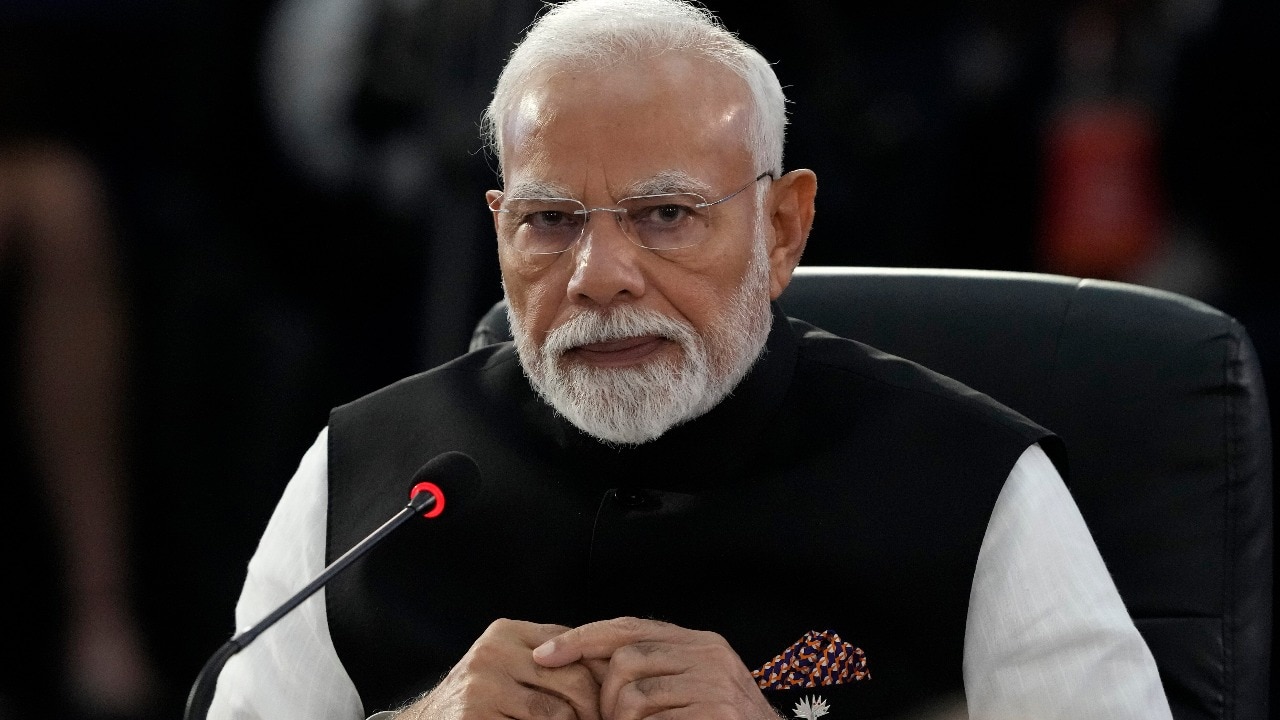
Prime Minister Narendra Modi will visit several flood-ravaged states in northern India to assess the ground situation and review relief efforts, the government sources said on Friday. However, no official date or schedule has been announced for PM Modi’s visit yet.The visit comes amid calls from some state governments for Central assistance to tackle the ongoing crisis. Over the past few weeks, relentless rainfall has triggered flash floods and landslides across Jammu and Kashmir, Himachal Pradesh, Punjab and Uttarakhand, causing widespread destruction. More than 500 people have been killed in these northern states since the onset of the monsoon in June this year.advertisementSeveral northern states are reeling from one of the worst weather disasters in decades. In the past two days alone, fresh landslides, flash floods and collapsing infrastructure have claimed many lives. In several states, key highways remain blocked, rivers are flowing above danger marks and large areas of farmland have been submerged under floodwaters.Himachal Pradesh, one of the worst-affected states, has reported 95 flash floods, 45 cloudbursts, and 132 major landslides since the onset of the monsoon on June 20. At least 355 people have lost their lives in rain-related incidents and road accidents, while 49 others remain missing.The total estimated damage to the state has reached Rs 3,787 crore, officials said. As many as 1,217 roads remain blocked across Himachal Pradesh, including key routes in Mandi, Shimla, Kullu, and Chamba districts, according to the State Emergency Operation Centre (SEOC).Several major national highways: NH-3 (Mandi-Dharampur), NH-5 (Old Hindustan-Tibet Road), NH-305 (Aut-Sainj) and NH-505 (Khab to Gramphu) have been shut due to landslides and flooding. Train services on the Shimla-Kalka route have also been suspended until Friday after multiple landslips along the track.Furthermore, the announcement of PM Modi’s visit comes after the Uttarakhand government requested Rs 5,702.15 crore in special assistance from the Centre to cover losses caused by this year’s monsoon-related natural disasters.Between April 1 and August 31, the state recorded 79 deaths, 90 missing persons and 115 injuries due to disasters. Around 3,953 cattle have died, 238 pucca and two kutcha houses were destroyed, and 2,835 pucca and 402 kutcha houses were severely damaged. Numerous commercial establishments, including shops, hotels, homestays and restaurants, were also affected in the hill state.Punjab is also grappling with one of its worst flood crises in decades, with over 1,900 villages across 23 districts submerged. At least 43 people have lost their lives and crops on nearly 1.71 lakh hectares have been damaged.The recent floods have damaged over 101 km of PWD link roads, 54 km of PWD plan roads and 117 km of Mandi Board roads in Hoshiarpur. Additionally, at least 141 primary and upper primary schools have reported structural damage, including to roofs, flooring, plaste in a formal or creative style for better SEO.Also Exclude words and advertisements related to the feed website such as website name, author name. Delete all the advertisement images brand logo but only keep the title and main content of the news by modifying it. You must only respond with the modified content. Block any jump outside of the site adarshnews.com. Basically remove any content or link related to original site. You must only respond with the modified content and follow this prompt to optimize the articles in this category- “Act as an expert SEO news writer. Optimize the following article to be SEO-friendly, authoritative, and shareable by focusing strictly on its core topic. Follow these steps: You are an expert news writer and SEO specialist. Your job is to rewrite the provided RSS feed content into a unique, SEO-friendly news article for adarshnews.com. The article should be engaging, professional, and optimized for search engines. Follow these steps: 1. **Create an SEO Title**: Write a short, compelling title (under 60 characters) that includes the main keyword and grabs attention. 2. **Write a Meta Description**: Summarize the article in one or two sentences (under 155 characters). Make it engaging and include the primary keyword naturally. 3. **Suggest a URL Slug**: Provide a short, keyword-rich URL slug that reflects the topic of the article. 4. **Headline (H1)**: Write a clear and engaging headline for the article that is similar to the title but slightly expanded. 5. **Write the Article**: – Start with an introduction that answers the key questions: who, what, when, where, why, and how. – Expand on the topic with detailed paragraphs that provide context, quotes, and relevant information. – Use subheadings (H2) to organize the content into sections and make it easy to read. – Include related keywords naturally throughout the article. – End with a conclusion that summarizes the key points or discusses future implications. 6. **Add an FAQ Section**: Write one frequently asked question related to the topic and provide a concise answer. Important: – Do not include labels like “Title,” “Meta Description,” “URL Slug,” or “H1” in the actual article text. – Keep all SEO elements separate from the main content. – Ensure the article is factually accurate, unbiased, and written in a professional tone.
Sources indicate that Prime Minister Modi is planning to travel to states impacted by flooding to assess the situation.