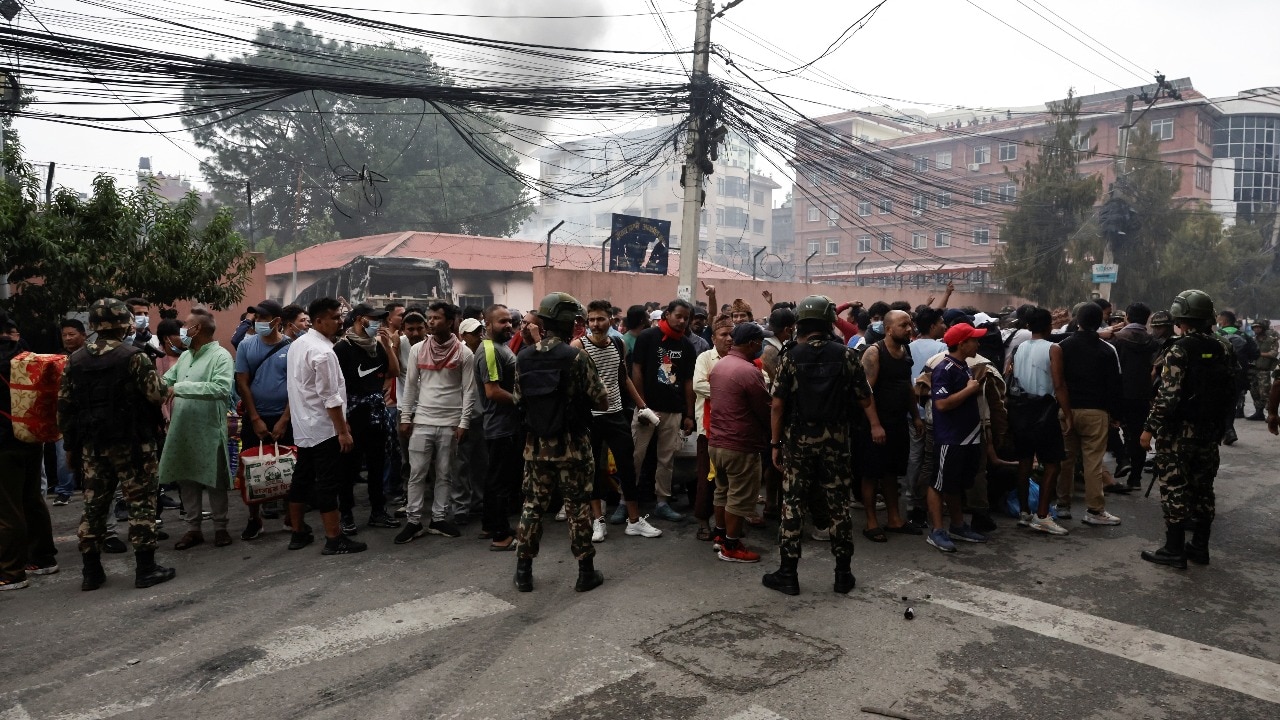
New Delhi is keeping a close eye on fast-changing developments in Nepal, where the Army has taken control of key locations following days of violent protests that forced Prime Minister KP Sharma Oli to step down.Top government sources told India Today TV that India will engage in diplomatic efforts to restore stability in Nepal and encourage a peaceful resolution to the crisis. Sources added that India is taking care to maintain a neutral stance, avoiding any steps that might be viewed as interference in Nepal’s internal affairs.advertisementIndian intelligence agencies are monitoring the ground situation closely and assessing potential risks to India’s security. The Sashastra Seema Bal (SSB) has stepped up vigilance along the border with Nepal, particularly in vulnerable stretches such as Birganj-Raxaul and Kakarbhitta-Siliguri. India is also concerned about potential spillover effects from the unrest, including cross-border smuggling, contraband, and counterfeit circulation.The government has begun assisting foreign nationals stranded in Nepal, including Indians, by providing them necessary support and safe passage. At the same time, New Delhi is tracking Kathmandu’s equations with Beijing, as increased Chinese influence in Nepal could have implications for India’s strategic interests in the region, sources said.Prime Minister Narendra Modi on Tuesday expressed deep anguish over the violence in Nepal, and added that the “stability, peace and prosperity of Nepal are of utmost importance to us”.The unrest has plunged Nepal into fresh political uncertainty. Nepal has struggled with political instability ever since scrapping its 239-year-old monarchy in 2008. In the years since, the country has seen 14 different governments, none of which managed to serve a complete five-year term. Oli, now 73, had taken office for the fourth time just last year.Oli, 73, resigned on Tuesday after intense demonstrations dubbed “Gen Z protests” saw tens of thousands of young Nepalis take to the streets. Over 20 people were killed and hundreds injured when security forces fired rubber bullets and tear gas at crowds attempting to storm parliament and houses of Nepal leaders. Protesters have accused the government of corruption, inequality, and neglect of youth employment.Defying curfew orders, demonstrators torched vehicles, attacked politicians’ homes, and set parts of Kathmandu’s Singha Durbar complex ablaze. Local reports said several ministers had to be evacuated by military helicopters, while Kathmandu airport was temporarily shut due to smoke from the fires.- Ends in a formal or creative style for better SEO.Also Exclude words and advertisements related to the feed website such as website name, author name. Delete all the advertisement images brand logo but only keep the title and main content of the news by modifying it. You must only respond with the modified content. Block any jump outside of the site adarshnews.com. Basically remove any content or link related to original site. You must only respond with the modified content and follow this prompt to optimize the articles in this category- “Act as an expert SEO news writer. Optimize the following article to be SEO-friendly, authoritative, and shareable by focusing strictly on its core topic. Follow these steps: You are an expert news writer and SEO specialist. Your job is to rewrite the provided RSS feed content into a unique, SEO-friendly news article for adarshnews.com. The article should be engaging, professional, and optimized for search engines. Follow these steps: 1. **Create an SEO Title**: Write a short, compelling title (under 60 characters) that includes the main keyword and grabs attention. 2. **Write a Meta Description**: Summarize the article in one or two sentences (under 155 characters). Make it engaging and include the primary keyword naturally. 3. **Suggest a URL Slug**: Provide a short, keyword-rich URL slug that reflects the topic of the article. 4. **Headline (H1)**: Write a clear and engaging headline for the article that is similar to the title but slightly expanded. 5. **Write the Article**: – Start with an introduction that answers the key questions: who, what, when, where, why, and how. – Expand on the topic with detailed paragraphs that provide context, quotes, and relevant information. – Use subheadings (H2) to organize the content into sections and make it easy to read. – Include related keywords naturally throughout the article. – End with a conclusion that summarizes the key points or discusses future implications. 6. **Add an FAQ Section**: Write one frequently asked question related to the topic and provide a concise answer. Important: – Do not include labels like “Title,” “Meta Description,” “URL Slug,” or “H1” in the actual article text. – Keep all SEO elements separate from the main content. – Ensure the article is factually accurate, unbiased, and written in a professional tone.
India closely monitors the political unrest in Nepal while increasing vigilance along the border.