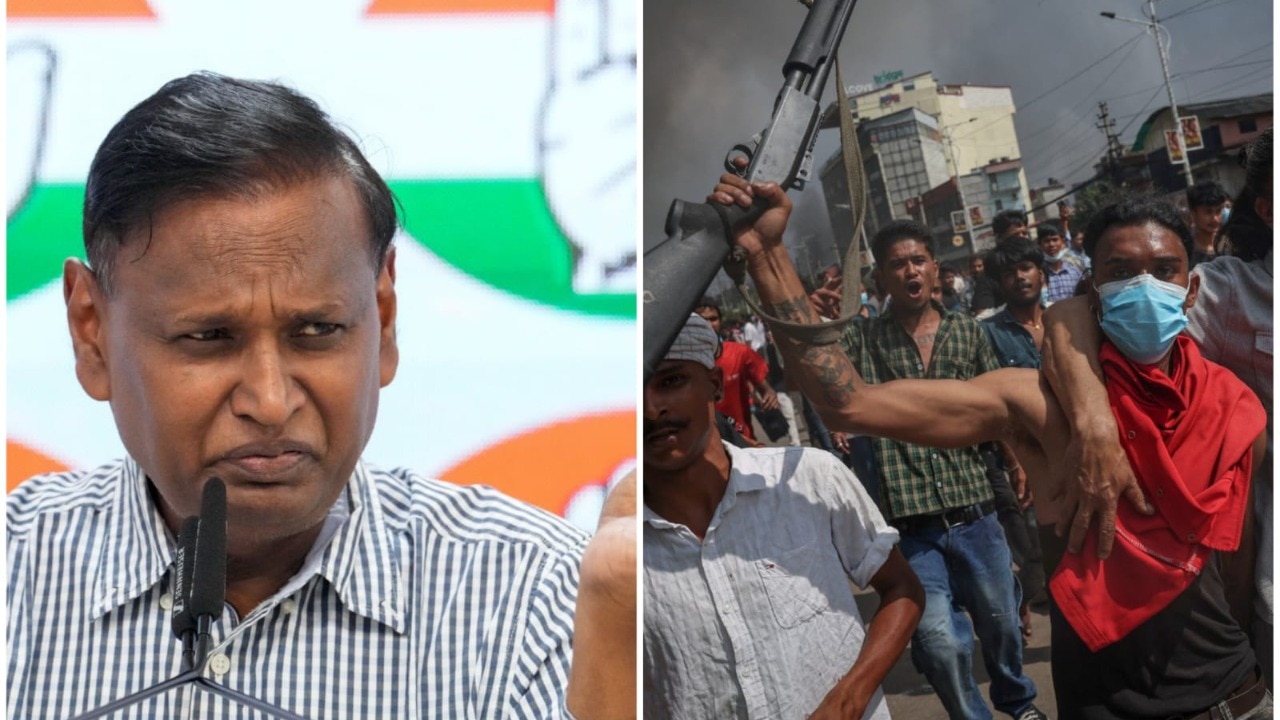
Congress leader Udit Raj’s comments linking India’s situation with the recent turmoil in Nepal have triggered a sharp reaction from the BJP, which termed his remarks “dangerous” and “anti-national.”In a post on X, Raj noted that people were comparing India’s conditions with recent upheavals in Nepal, Sri Lanka and Bangladesh. He argued that while inflation, unemployment and corruption were “worse in some cases,” India’s democracy had deep roots planted by the Congress, which made such unrest unlikely.advertisement“People are discussing the way in which the public has uprooted power in Nepal, Sri Lanka, and Bangladesh. Could something like that not happen in India? Some people are even expressing the possibility of it happening. In fact, the circumstances are just the same, and in some cases even more so, but our constitution prevents us from doing so. The roots of our democracy are very deep, which were planted by the Congress,” the Congress leader said.Speaking to ANI, Raj said that the BJP wanted to change the Constitution but could not succeed because “constitutional institutions are strong.” Otherwise, he said, “a situation like Nepal would have happened here as well.”His remarks came against the backdrop of violent protests in Nepal, where a ban on social media and anger over corruption spiralled into nationwide chaos. Parliament was set on fire, over 13,500 prisoners escaped, and Prime Minister KP Sharma Oli was forced to resign. The army has since taken control of Kathmandu, imposed a curfew and begun talks with protest leaders to reach consensus on who would lead the interim government in the Himalayan nation.The BJP condemned Udit Raj’s comments. Party spokesperson CR Kesavan called them “dangerous” and accused the Congress of inciting unrest. He said the remarks reflected the same “emergency mindset” that led to the suspension of democratic rights in 1975.“These dangerous remarks from a senior congress leader are blatantly anti-national and deliberately inciting unrest. The Congress leadership both past and present is always the greatest threat to Dr. Babasaheb Ambedkar’s Constitution. The Congress party in 1975 murdered our Constitution and massacred our democracy. These remarks mirror the same emergency mindset of the Congress,” BJP leader CR Kesavan said.Filmmaker Ram Gopal Varma also joined the debate, dismissing speculation about Nepal-like unrest in India as “pure nonsense.” He argued that no one could predict such events in advance but added that “no government will ever dare” to ban social media for fear of public backlash.- Ends in a formal or creative style for better SEO.Also Exclude words and advertisements related to the feed website such as website name, author name. Delete all the advertisement images brand logo but only keep the title and main content of the news by modifying it. You must only respond with the modified content. Block any jump outside of the site adarshnews.com. Basically remove any content or link related to original site. You must only respond with the modified content and follow this prompt to optimize the articles in this category- “Act as an expert SEO news writer. Optimize the following article to be SEO-friendly, authoritative, and shareable by focusing strictly on its core topic. Follow these steps: You are an expert news writer and SEO specialist. Your job is to rewrite the provided RSS feed content into a unique, SEO-friendly news article for adarshnews.com. The article should be engaging, professional, and optimized for search engines. Follow these steps: 1. **Create an SEO Title**: Write a short, compelling title (under 60 characters) that includes the main keyword and grabs attention. 2. **Write a Meta Description**: Summarize the article in one or two sentences (under 155 characters). Make it engaging and include the primary keyword naturally. 3. **Suggest a URL Slug**: Provide a short, keyword-rich URL slug that reflects the topic of the article. 4. **Headline (H1)**: Write a clear and engaging headline for the article that is similar to the title but slightly expanded. 5. **Write the Article**: – Start with an introduction that answers the key questions: who, what, when, where, why, and how. – Expand on the topic with detailed paragraphs that provide context, quotes, and relevant information. – Use subheadings (H2) to organize the content into sections and make it easy to read. – Include related keywords naturally throughout the article. – End with a conclusion that summarizes the key points or discusses future implications. 6. **Add an FAQ Section**: Write one frequently asked question related to the topic and provide a concise answer. Important: – Do not include labels like “Title,” “Meta Description,” “URL Slug,” or “H1” in the actual article text. – Keep all SEO elements separate from the main content. – Ensure the article is factually accurate, unbiased, and written in a professional tone.
A comment made by a Congress leader about a potential ‘Nepal-like situation in India’ has sparked a strong reaction from the BJP.