**Title:** India’s Political Turbulence: A Deep Dive into the 1980s and 1990s
**Meta Description:** Explore the tumultuous political landscape of India during the 1980s and 1990s, marked by scandals, social upheaval, and economic reforms.
**URL Slug:** indias-political-turbulence-1980s-1990s
**Headline:** Unraveling India’s Political Turbulence: Scandals and Reforms of the 1980s and 1990s
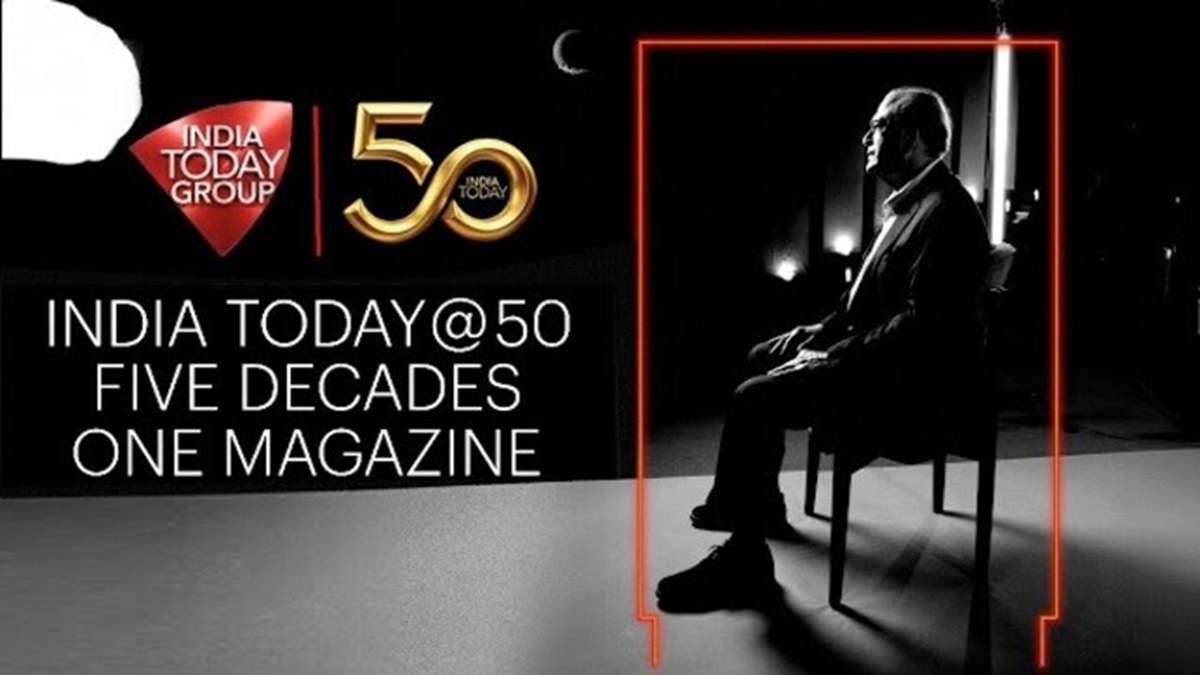
The second episode of a five-part docu-series commemorating 50 years of the India Today Group delves into one of the most tumultuous periods in Indian politics, spanning the 1980s and 1990s. This episode, which aired on December 20, chronicles the transformation of the nation through a series of scandals, social upheavals, and insurgencies that not only reshaped India but also the landscape of Indian journalism.
Beginning with the initial optimism surrounding Rajiv Gandhi’s leadership, the episode highlights the significant political, social, and security challenges that emerged during his tenure. The narrative unfolds from the early promise of Gandhi’s administration to the crises ignited by the Bofors scandal, the Mandal Commission’s recommendations, the Kashmir insurgency, and the demolition of the Babri Masjid, culminating in the economic reforms of 1991.
Through a combination of newsroom memories and frontline reporting, the episode emphasizes journalism’s role as “the first draft of history,” crafted amidst chaos and division. Aroon Purie, Chairperson and Editor-in-Chief of India Today, reflects on Rajiv Gandhi’s initial years in office, describing him as a young leader with a historic mandate who was ultimately hesitant about the complexities of political power. Gandhi famously remarked on the unpredictability of his role, contrasting it with his experience as a pilot.
Raj Chengappa, Editorial Director (Publishing) at India Today Group, referred to Gandhi’s first two years as the “Camelot years,” a period that was short-lived due to critical missteps. Senior journalist Shekhar Gupta pointed to the Shah Bano case and the decision to unlock the Babri Masjid gates as pivotal errors that alienated the Congress’s support base and facilitated the rise of the BJP.
The Bofors scandal marked a turning point for the Rajiv Gandhi government, leading to its unraveling. Despite potential repercussions, India Today chose to publish explosive revelations that implicated the sitting Prime Minister. The episode also discusses the Mandal Commission, which Chengappa described as “the biggest social upheaval India has seen,” fracturing political alliances along caste lines. Concurrently, militancy surged in Kashmir following allegations of election rigging in 1987, prompting former editor Inderjit Badhwar to note the alarming shift from political moderation to armed conflict.
The demolition of the Babri Masjid on December 6, 1992, is portrayed as a moment of institutional failure, with warnings from the magazine about the mosque’s vulnerability falling on deaf ears. When the structure was dismantled, the headline “Nation’s Shame” encapsulated the gravity of the event, as recounted by Badhwar. The aftermath saw widespread communal riots, the 1993 Mumbai blasts, and the emergence of mass-casualty terrorism.
The episode concludes with the assassination of Rajiv Gandhi and the subsequent economic reset under the leadership of PV Narasimha Rao and Manmohan Singh. The liberalization policies initiated during this period are credited with “lifting the shackles” on the Indian economy, setting the stage for future growth.
**FAQ Section:**
**What were the key events that shaped Indian politics in the 1980s and 1990s?**
The key events included the Bofors scandal, the Mandal Commission’s recommendations, the Kashmir insurgency, and the demolition of the Babri Masjid, all of which significantly influenced the political landscape and social dynamics of India during that era.