


Nestled within a familiar yet often overlooked brick building in Melbourne’s inner east, vintage machines hum, tick, chatter, rattle, and ring. While “vintage” might be a stretch, for the children eager to explore these room-sized artifacts during the school holidays, a telephone switchboard could very well seem a relic from a bygone era.
Recently opened in September, the National Communication Museum offers more than just a display of phones and curiosities. It provides an opportunity to witness outdated technology in action and serves as a treasure trove of once-common items that reflect every Australian generation. These objects weave together the narrative of our journey from manual exchanges to smartphones, and from Indigenous song lines to fiber optic networks, while also offering a glimpse into the future of communication.
Visitors can make a brief call using a functioning phone exchange at the museum. The venue itself is housed in a repurposed 1930s telephone exchange building, a place where technicians once left notes on the walls and where the distinct braiding of cables by different workers can still be seen, remnants of the building’s past that are now part of the exhibit.
The museum’s lower level features mostly hands-off collections, including the Instruments of Surveillance exhibition, which runs until March. This exhibit delves into a lengthy history of espionage, showcasing an original Enigma Machine used by Germany to encode messages during World War II, as well as handmade audio bugs believed to have been used illegally by police in the 1980s, linked to a scandal known as The Age tapes. Other intriguing items include a glove designed to infiltrate dreams and a coat intended to evade cameras.
Additionally, there is a large interactive art installation that captures the essence of data centers with its flashing LEDs and tangled cables, alongside artifacts and explanations of undersea cables, satellite constellations, and other hidden technologies that underpin the modern internet’s delicate yet seemingly effortless connectivity.
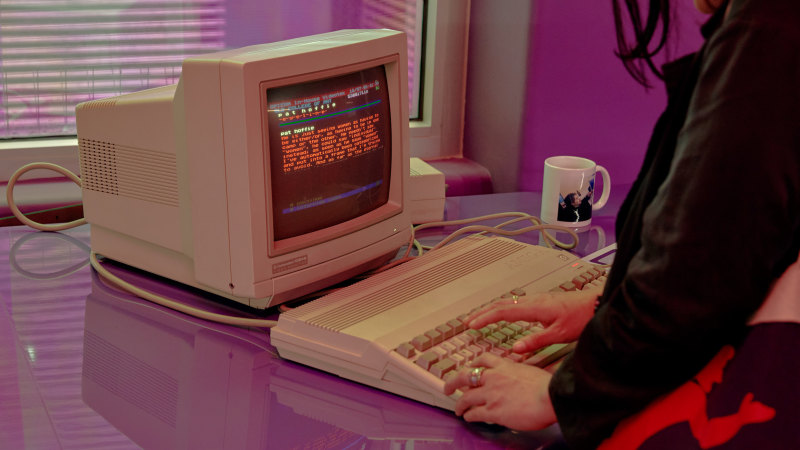
However, it is the upstairs collection that is likely to attract the most attention. A spacious central area showcases layers of nostalgia, featuring everything from manual phone exchanges and typewriters to Walkmans and cathode ray tube televisions. Many items have been transformed into interactive exhibits, allowing visitors to engage with them directly, while rows of touchscreen kiosks provide extensive information, stories, interviews, and visual materials. A screen-free area for children includes colorful cables connecting nodes with activities centered around various types of messages, as well as old phones that link to other units throughout the museum.


