**Title:** Insights from the CBDC IL Forum on Digital Currency Research
**Meta Description:** Explore key findings from the CBDC IL Forum meeting on digital currency research conducted by the Bank of Israel, highlighting potential risks and biases.
**URL Slug:** cbdc-il-forum-digital-currency-research
**Headline:** Key Takeaways from the CBDC IL Forum on Digital Currency Research
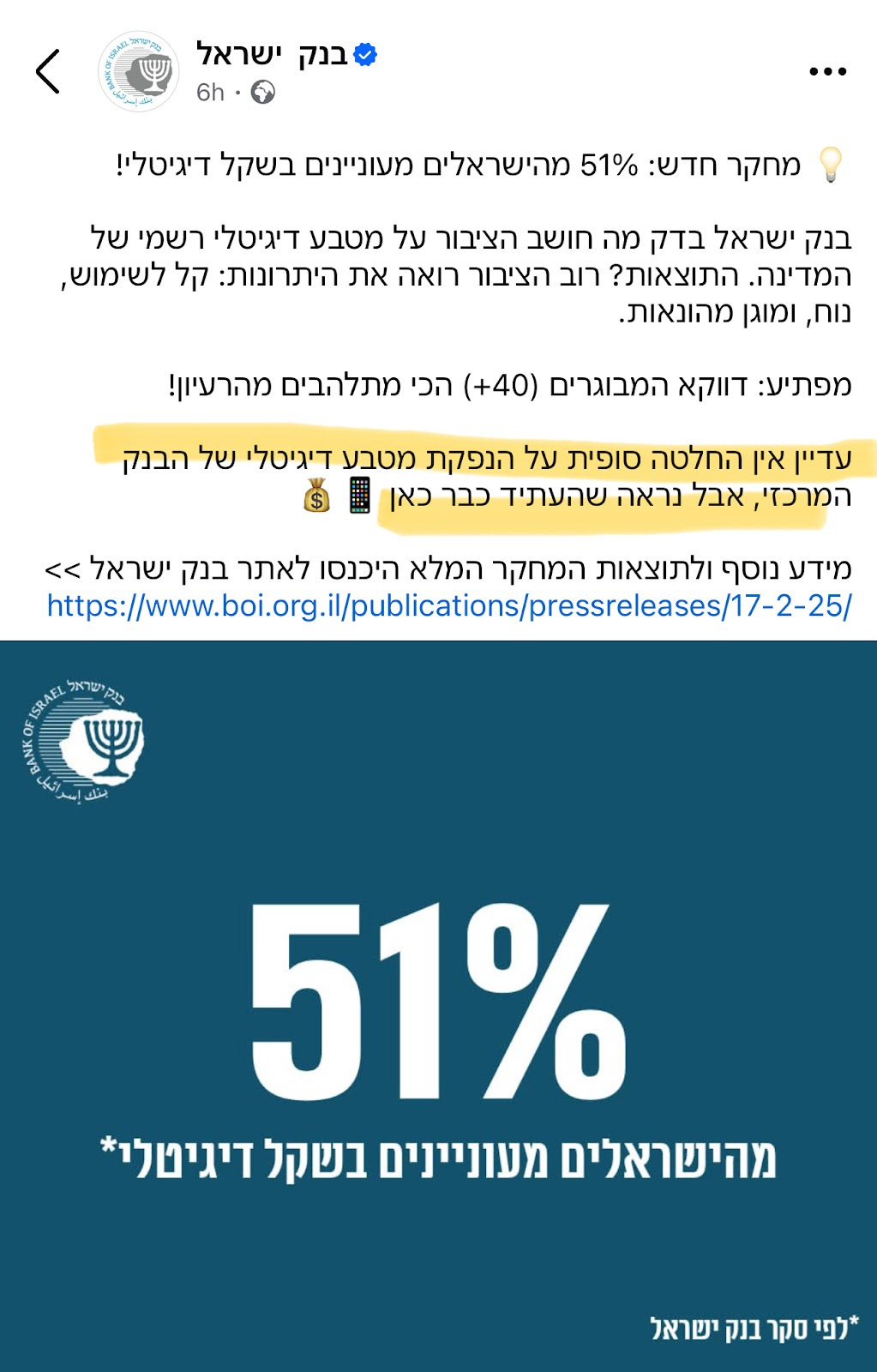
On April 1st, a gathering at KPMG’s Tel Aviv offices brought together numerous attendees for the “CBDC IL Forum.” The event featured presentations from representatives of academia, the Bank of Israel, and KPMG, who shared insights from a study conducted by the Bank of Israel in collaboration with the Roschink research institute. This comprehensive study involved approximately 1,000 participants, and its findings were made available on the Bank of Israel’s website.
Dr. Nir Yaacobi from the Digital Shekel team at the Bank of Israel explained that the study’s participants were randomly selected to represent various segments of the population. He noted that participants were compensated for their involvement, although the specific payment amount was not disclosed. Prof. Ruth Plato-Shinar, one of the study’s authors, highlighted that the questionnaires were designed in a digital format, allowing even individuals with basic mobile phones to participate. However, she acknowledged that those without any digital access likely did not take part and may not fully understand the concept of a digital shekel.
The study employed an online panel for sampling, which may have introduced bias by favoring tech-savvy individuals and skewing perceptions about digital currency. Additionally, certain demographic groups, particularly Arab citizens, were underrepresented. To address this, reweighting was applied, which involved doubling the responses of some participants, potentially affecting the authenticity of the results. Concerns regarding privacy, government oversight, and the impact on cash economies may have been understated due to the bias towards digitally inclined respondents. Furthermore, 115 participants dropped out between the first and second questionnaires, suggesting a selection bias where those more interested in the topic remained engaged.
During my closing remarks at the forum, I expressed concerns about the predominantly positive information presented to attendees and study participants. I emphasized that the public had not been adequately informed about the potential risks and limitations associated with such a system, which I have discussed in various keynote speeches, articles, and podcasts.
The presentation of the digital shekel to study participants appeared to lack balance, focusing primarily on its advantages. Prof. Plato-Shinar’s remarks at the CBDC IL Forum underscored this one-sided portrayal. Moreover, the study did not thoroughly explore potential risks for end users, such as state control over financial behavior, loss of privacy, asset seizure, and the use of the currency as a surveillance tool.
In conclusion, while the CBDC IL Forum provided valuable insights into the research on digital currency, it is crucial to consider the methodological limitations and potential risks associated with the implementation of a digital shekel.
**FAQ Section:**
**What are the potential risks associated with a digital currency like the digital shekel?**
Potential risks include loss of privacy, government control over financial transactions, asset seizure, and the possibility of the currency being used as a surveillance tool.