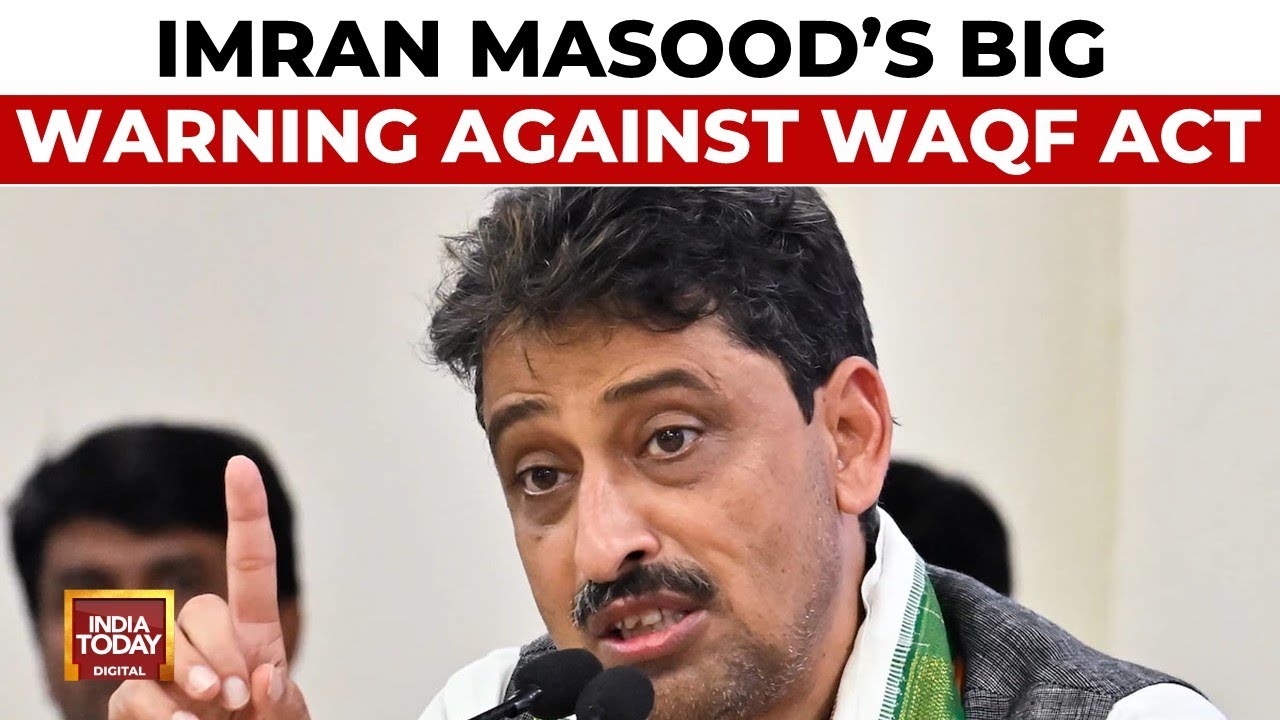
**Imran Masood Vows to Repeal Waqf Law if Elected**
Congress MP Imran Masood has made a bold statement regarding the Waqf law, asserting that if his party returns to power, they will take decisive action to ‘uproot’ the legislation. This declaration comes amid ongoing discussions about the implications of the Waqf law on community resources and governance.
Masood’s comments were made during a recent political rally, where he emphasized the need for reform in the management of Waqf properties. He argued that the current law has led to mismanagement and has not served the interests of the community effectively. His remarks resonate with many who feel that the Waqf system requires significant changes to ensure transparency and accountability.
The Waqf law, which governs the administration of charitable endowments in India, has been a topic of contention for years. Critics argue that it often leads to disputes and inefficiencies, while supporters believe it is essential for protecting religious and cultural heritage.
Masood’s pledge to dismantle the existing framework reflects a broader strategy by the Congress party to address community concerns and position themselves as advocates for reform. As the political landscape evolves, the implications of such promises will be closely monitored by both supporters and opponents.
In conclusion, Imran Masood’s commitment to reforming the Waqf law highlights the ongoing debate surrounding its effectiveness and the need for a more accountable system. As elections approach, this issue is likely to remain a focal point in political discussions.
**FAQ**
**What is the Waqf law?**
The Waqf law governs the management of charitable endowments in India, aimed at ensuring the proper use of properties for religious and community purposes.