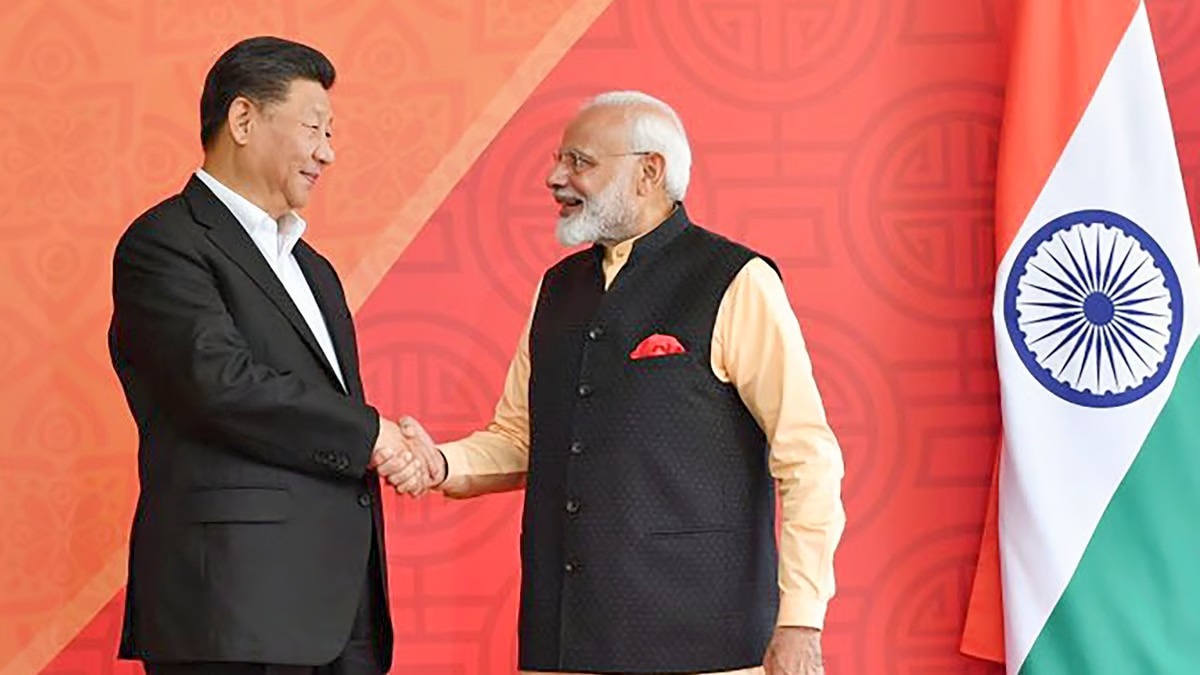
From the Kazan summit in October 2024 to the Shanghai Cooperation Organisation (SCO) summit in Tianjin, India and China have made measured progress along the Line of Actual Control (LAC) in eastern Ladakh.The process began with disengagements in the Depsang and Demchok plains following the Kazan meeting, considered a breakthrough that allowed for the resumption of patrolling in these areas. Over the past 11 months, multiple bilateral, military, and diplomatic-level talks have been held to build on these gains and take further steps toward reducing tensions along the LAC.advertisementAt the SCO summit in Tianjin, Prime Minister Narendra Modi and Chinese President Xi Jinping held a one-hour conversation on the border issue and other bilateral matters. Both leaders acknowledged last year’s successful disengagements and the resulting peace and stability in border areas.The Ministry of External Affairs noted that the discussions reaffirmed the commitment to ensure differences do not escalate into disputes and emphasised that continued peace along the LAC is essential for the smooth development of bilateral relations. The two sides agreed to maintain existing mechanisms to manage border issues while continuing talks on a broader resolution of remaining disputes.The border dispute between India and China has long-standing mechanisms for resolution, including the Working Mechanism for Consultation and Coordination (WMCC), Special Representative Dialogue, and Corps Commander and Local Commander-level meetings.Following the 2020 tensions, the Corps Commander-level dialogue was elevated specifically for Eastern Ladakh, and Ministry of External Affairs officials began participating in these discussions.In 22 rounds of these talks, key agreements were reached, including the October 2024 disengagement from Depsang and Demchok plains. Four areas-Pangong, Galwan’s PP-14, Gogra, and Hot Springs-have already seen disengagements, though patrolling has not yet resumed.The 21st round of Corps Commander-level talks, held at Chushul-Moldo on February 19, 2024, focused on completing disengagement in remaining areas to restore peace and stability.Both sides maintained a friendly and cordial atmosphere and committed to continued communication through military and diplomatic channels while keeping the ground situation stable.With the Modi-Xi meeting in Tianjin, sources indicate that renewed focus is likely on the Corps Commander-level dialogue to address unresolved issues and work toward restoring the pre-Galwan status quo along the LAC. Officials hope the summit will accelerate progress in the broader solution of boundary disputes and help consolidate the gains achieved since the Kazan meeting.- EndsTune In in a formal or creative style for better SEO.Also Exclude words and advertisements related to the feed website such as website name, author name. Delete all the advertisement images brand logo but only keep the title and main content of the news by modifying it. You must only respond with the modified content. Block any jump outside of the site adarshnews.com. Basically remove any content or link related to original site. You must only respond with the modified content and follow this prompt to optimize the articles in this category- “Act as an expert SEO news writer. Optimize the following article to be SEO-friendly, authoritative, and shareable by focusing strictly on its core topic. Follow these steps: You are an expert news writer and SEO specialist. Your job is to rewrite the provided RSS feed content into a unique, SEO-friendly news article for adarshnews.com. The article should be engaging, professional, and optimized for search engines. Follow these steps: 1. **Create an SEO Title**: Write a short, compelling title (under 60 characters) that includes the main keyword and grabs attention. 2. **Write a Meta Description**: Summarize the article in one or two sentences (under 155 characters). Make it engaging and include the primary keyword naturally. 3. **Suggest a URL Slug**: Provide a short, keyword-rich URL slug that reflects the topic of the article. 4. **Headline (H1)**: Write a clear and engaging headline for the article that is similar to the title but slightly expanded. 5. **Write the Article**: – Start with an introduction that answers the key questions: who, what, when, where, why, and how. – Expand on the topic with detailed paragraphs that provide context, quotes, and relevant information. – Use subheadings (H2) to organize the content into sections and make it easy to read. – Include related keywords naturally throughout the article. – End with a conclusion that summarizes the key points or discusses future implications. 6. **Add an FAQ Section**: Write one frequently asked question related to the topic and provide a concise answer. Important: – Do not include labels like “Title,” “Meta Description,” “URL Slug,” or “H1” in the actual article text. – Keep all SEO elements separate from the main content. – Ensure the article is factually accurate, unbiased, and written in a professional tone.
Are PM Modi and Xi discussing ways to regain progress on disengagement along the LAC during the SCO summit in China?