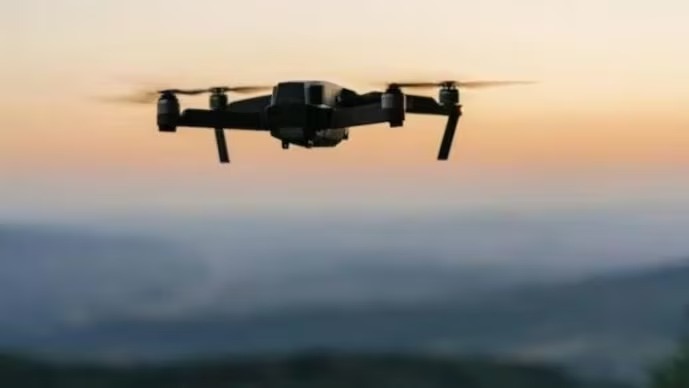
In a move to strengthen its air defence capabilities, the Army has invited proposals from indigenous companies for advanced counter-unmanned aerial systems (C-UAS), focusing on both ground-based and manpack systems. This comes in the wake of growing concerns over drone threats from China and Pakistan.During Operation Sindoor, India successfully thwarted multiple aerial drone strikes by Pakistan. Pakistan sent hundreds of drones targeting India’s military and civilian infrastructures and most of the drones were shot down by Indian air defence systems. Now, the Army is seeking new technology to counter drones guided by satellite navigation systems like GPS and China’s BeiDou, which is also used by Pakistan.advertisementThe Request for Information (RFI) outlines the need for two specific systems — a Ground-Based C-UAS and a Manpack C-UAS — designed to detect, track, identify, and neutralise enemy drones along the Line of Control (LoC), International Border (IB), and Line of Actual Control (LAC).GROUND-BASED C-UASThe ground-based system must include a wideband RF detector, radar, and an electro-optical/infrared (EO/IR) camera. It should feature both soft kill capabilities (such as jamming and spoofing) and hard kill options (including medium machine guns and Negev light machine guns).The Army specifies detection ranges based on drone size:Micro drones: 3 kmMini drones: 5 kmSmall drones: 8 kmSoft kill jamming capabilities should work within a 2 km range. The system must be capable of jamming multiple satellite systems — GPS, GLONASS, BeiDou, Galileo, and IRNSS — and support techniques such as spoofing and fault injection.MANPACK C-UASadvertisementDesigned for single-operator use, the manpack system must be lightweight (under 9 kg) and able to function continuously for up to 5 hours. It should detect drone radio frequencies up to 5 km and identify threats in real time. A colour-coded display should distinguish enemy drones (red) from friendly ones (blue).If unable to neutralise the drone, the system should store the drone’s frequency in a threat library capable of holding over 1,000 entries for future reference.The system will significantly boost India’s anti-drone capabilities in varied terrains, including high altitudes, plains, and deserts, the RFI mentions.The Army has underlined the need for operational flexibility, all-weather performance, high mobility, and rapid deployment, pointing to the increasing urgency of defending India’s airspace from modern drone warfare. in a formal or creative style for better SEO.Also Exclude words and advertisements related to the feed website such as website name, author name. Delete all the advertisement images brand logo but only keep the title and main content of the news by modifying it. You must only respond with the modified content. Block any jump outside of the site adarshnews.com. Basically remove any content or link related to original site. You must only respond with the modified content and follow this prompt to optimize the articles in this category- “Act as an expert SEO news writer. Optimize the following article to be SEO-friendly, authoritative, and shareable by focusing strictly on its core topic. Follow these steps: You are an expert news writer and SEO specialist. Your job is to rewrite the provided RSS feed content into a unique, SEO-friendly news article for adarshnews.com. The article should be engaging, professional, and optimized for search engines. Follow these steps: 1. **Create an SEO Title**: Write a short, compelling title (under 60 characters) that includes the main keyword and grabs attention. 2. **Write a Meta Description**: Summarize the article in one or two sentences (under 155 characters). Make it engaging and include the primary keyword naturally. 3. **Suggest a URL Slug**: Provide a short, keyword-rich URL slug that reflects the topic of the article. 4. **Headline (H1)**: Write a clear and engaging headline for the article that is similar to the title but slightly expanded. 5. **Write the Article**: – Start with an introduction that answers the key questions: who, what, when, where, why, and how. – Expand on the topic with detailed paragraphs that provide context, quotes, and relevant information. – Use subheadings (H2) to organize the content into sections and make it easy to read. – Include related keywords naturally throughout the article. – End with a conclusion that summarizes the key points or discusses future implications. 6. **Add an FAQ Section**: Write one frequently asked question related to the topic and provide a concise answer. Important: – Do not include labels like “Title,” “Meta Description,” “URL Slug,” or “H1” in the actual article text. – Keep all SEO elements separate from the main content. – Ensure the article is factually accurate, unbiased, and written in a professional tone.
As part of a renewed defense initiative, the Army aims to develop homegrown technologies to address the increasing dangers posed by drones.