


**Bitcoin Price Plummets to $80,000 Before Recovering Amid Market Turmoil**
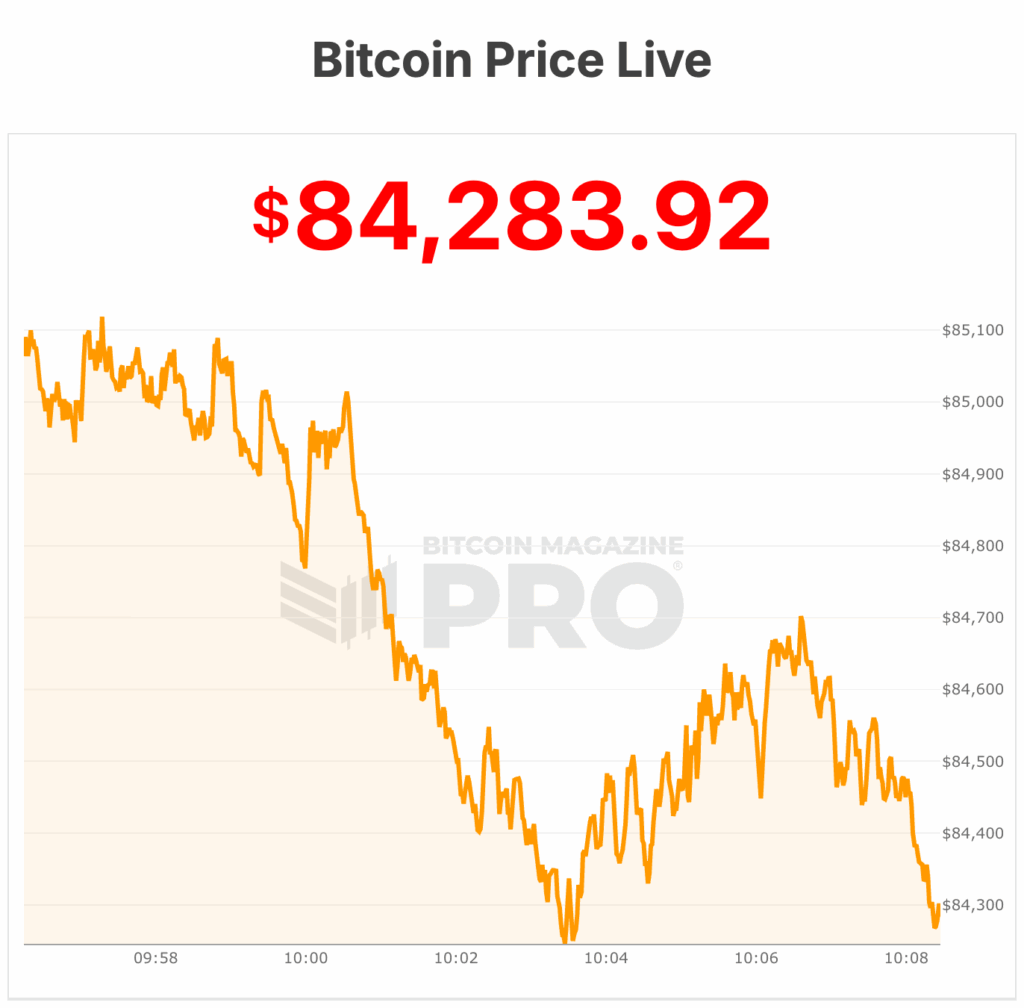
Bitcoin has entered a precarious phase, with recent price movements indicating significant volatility. On Friday, the cryptocurrency’s value dropped to $80,524, marking its lowest point since April and surprising many who did not anticipate revisiting such levels this year. This decline represents a staggering 35% decrease from Bitcoin’s all-time high, erasing all gains made in 2023 and negatively impacting overall market sentiment.
Following this dip, Bitcoin has seen a rebound, climbing back to the $84,000 range, yet the market remains highly volatile. Data from Glassnode reveals that realized losses have surged to levels reminiscent of the FTX collapse in November 2022. Short-term holders, those who purchased Bitcoin within the last 90 days, are selling off their assets in large numbers, contributing to a market atmosphere characterized by panic.
Market structure is also showing signs of distress. Independent analyst MEKhoko pointed out that Bitcoin is trading over 3.5 standard deviations below its 200-day moving average, a deviation that has only occurred three times in the past decade—during late 2018, the March 2020 crash, and the June 2022 Three Arrows/Luna crisis. Each of these instances was marked by extreme fear and forced selling, and the current situation feels eerily similar.
Funding rates have plummeted, and momentum traders have largely exited the market, leaving the marginal buyer—typically one who pursues upward trends—on the sidelines. This has resulted in a stretched market chart and a community grappling with uncertainty. Some analysts attribute the current pressures to macroeconomic factors, including fading hopes for interest rate cuts, a downturn in AI stocks, and increased volatility in traditional markets, which have collectively weighed down the crypto sector.
Despite the turmoil, Bitcoin’s recent pullback has approached the $78,000 to $82,000 range, as suggested by Giovanni Santostasi’s Bitcoin power-law model. Historically, this zone has been associated with mid-cycle rebounds rather than cycle lows, providing a glimmer of hope for bullish investors as prices revisit levels seen multiple times in 2024.
Additionally, the market is still reeling from the October 10 “mechanical glitch,” which Tom Lee noted was triggered by a malfunction in a stablecoin price feed, leading to cascading liquidations across exchanges. Nearly two million accounts were affected before the situation was fully understood, leaving the market in a fragile state.
The October 10 incident was further exacerbated by an unexpected U.S. tariff announcement, which sent shockwaves through global markets and resulted in over $19 billion in leveraged positions being liquidated in a matter of hours, marking one of the largest single-day losses in crypto history. The aftereffects of this crash continue to influence market dynamics.
As the situation unfolds, some observers suspect that deliberate pressure may be at play, with large players potentially manipulating market conditions. The coming days will be crucial for Bitcoin and the broader cryptocurrency market as investors seek clarity amid the ongoing turbulence.
**FAQ**
**What caused the recent Bitcoin price drop?**
The recent drop in Bitcoin’s price was triggered by a combination of factors, including macroeconomic pressures, a significant mechanical glitch in stablecoin price feeds, and a broader downturn in traditional markets, leading to widespread liquidations.


