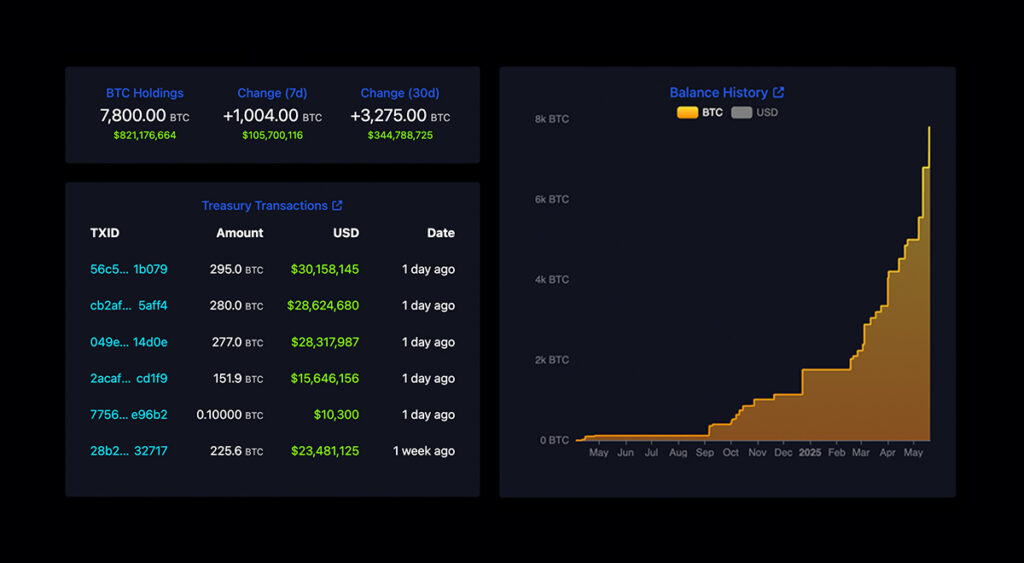
Bitcoin Magazine Proof of Reserves Should Be the Standard for Bitcoin Treasury Companies “The root problem with conventional currency is all the trust that’s required to make it work. The central bank must be trusted not to debase the currency, but the history of fiat currencies is full of breaches of that trust. Banks must be trusted to hold our money and transfer it electronically, but they lend it out in waves of credit bubbles with barely a fraction in reserve.”— Satoshi Nakamoto (2009) Bitcoin was created to eliminate the need for trusted intermediaries. It replaced opaque, permissioned systems with transparency, auditability, and decentralized verification. The ethos was clear from day one: don’t trust—verify. And yet, many of the institutions now holding Bitcoin—custodians, exchanges, ETFs, even public companies—continue to rely on trust-based assumptions, the very problem Bitcoin was designed to solve. For Bitcoin treasury companies, this contradiction is especially glaring. These are firms that claim to operate on a Bitcoin standard—yet without verifiable Proof of Reserves (PoR), there’s no way for shareholders to know whether the Bitcoin is actually there. The Problem: Unproven Bitcoin Is Just Another IOU Bitcoin is designed to be verifiable—but most corporate disclosures aren’t. When companies report BTC holdings without public wallet visibility or on-chain proof, investors are left to trust balance sheets, auditors, and custodians. That opens the door to systemic risks: Rehypothecation: BTC pledged or lent behind the scenes Custodial failure: Centralized services operating without 1:1 backing “Paper Bitcoin”: Multiple claims on the same BTC, echoing legacy financial opacity The mere presence of Bitcoin on a balance sheet is not a guarantee. Without verification, it’s no different than a fiat-denominated claim—an IOU dressed up in BTC terms. What We Learned from Gold: The Paper Problem Bitcoin is not the first hard asset to face this challenge. The gold market offers a cautionary tale. For decades, gold investors have dealt with “paper gold” systems—unallocated accounts, synthetic ETFs, and derivatives with little or no linkage to actual metal. These claims often outnumber real reserves many times over, leading to widespread suspicion of price distortion and systemic misrepresentation. Most gold investors don’t own gold—they own a claim to gold. And they have no way to prove it. Bitcoin gives us the tools to break this cycle. But only if companies choose to use them. Bitcoin Is Built for Proof—and Companies Should Use It Unlike legacy assets, Bitcoin is designed to make proof of ownership and solvency a native function of the asset itself. Through public key cryptography, on-chain auditability, and permissionless transparency, Bitcoin enables real-time, trust-minimized verification. This isn’t just a technical capability—it’s in a formal or creative style for better SEO.Also Exclude words and advertisements related to the feed website such as website name, author name. You must only respond with the modified content. Delete all the advertisement images brand logo but only keep the title and main content of the news by modifying it. Block any jump outside of the site adarshnews.com. Basically remove any content or link related to original site. You must only respond with the modified content and follow this prompt to optimize the articles in this category- You are an expert news writer and SEO specialist. Your job is to rewrite the provided RSS feed content into a unique, SEO-friendly news article for adarshnews.com. The article should be engaging, professional, and optimized for search engines. Follow these steps: 1. **Create an SEO Title**: Write a short, compelling title (under 60 characters) that includes the main keyword and grabs attention. 2. **Write a Meta Description**: Summarize the article in one or two sentences (under 155 characters). Make it engaging and include the primary keyword naturally. 3. **Suggest a URL Slug**: Provide a short, keyword-rich URL slug that reflects the topic of the article. 4. **Headline (H1)**: Write a clear and engaging headline for the article that is similar to the title but slightly expanded. 5. **Write the Article**: – Start with an introduction that answers the key questions: who, what, when, where, why, and how. – Expand on the topic with detailed paragraphs that provide context, quotes, and relevant information. – Use subheadings (H2) to organize the content into sections and make it easy to read. – Include related keywords naturally throughout the article. – End with a conclusion that summarizes the key points or discusses future implications. 6. **Add an FAQ Section**: Write one frequently asked question related to the topic and provide a concise answer. Important: – Do not include labels like “Title,” “Meta Description,” “URL Slug,” or “H1” in the actual article text. – Keep all SEO elements separate from the main content. – Ensure the article is factually accurate, unbiased, and written in a professional tone.
Bitcoin treasury companies should adopt Proof of Reserves as a standard practice.