


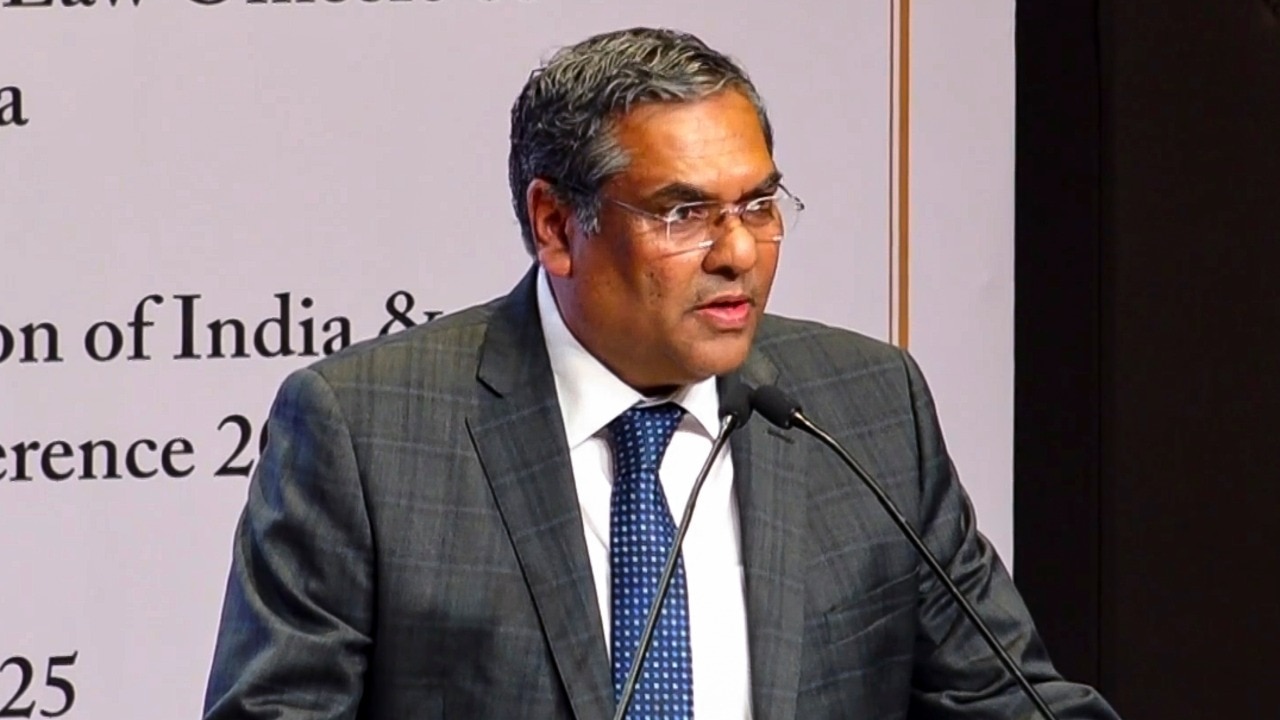
**Title:** Chief Justice Sanjiv Khanna Reflects on Tenure in Farewell Speech
**Meta Description:** In his farewell address, Chief Justice Sanjiv Khanna emphasized the importance of prioritizing institutional integrity over external validation.
**URL Slug:** chief-justice-sanjiv-khanna-farewell-speech
**Headline:** Chief Justice Sanjiv Khanna Reflects on His Legacy and Future of Indian Judiciary
On his final day as Chief Justice of India, Justice Sanjiv Khanna delivered a poignant farewell speech, reflecting on his legal career, the challenges he faced, and his significant achievements. He emphasized that true strength lies in prioritizing the institution’s interests over seeking external validation. Justice Khanna will be succeeded by Justice BR Gavai, who is set to be sworn in on May 14.
In his address, Justice Khanna acknowledged the immense responsibility and public scrutiny that accompany the role of Chief Justice. He shared that maintaining focus on both judicial and administrative duties allowed him to navigate these challenges effectively. “True strength, I realized, lies in discharging one’s duties with equanimity, always prioritizing the institution’s best interests over external validation,” he stated during the farewell event organized by the Supreme Court Bar Association.
Justice Khanna outlined his key priorities during his tenure, which included addressing case backlogs, enhancing the ease of filing and listing cases, and identifying dormant matters. He highlighted the importance of transparency and a data-driven approach to manage the increasing number of pending cases. Notably, he announced that the Supreme Court achieved a remarkable case clearance rate of 106%, meaning it disposed of more cases than were filed.
According to the Centre for Research and Planning, from November 2024 to April 2025, the Supreme Court reviewed over 10,000 pending cases, classifying 3,374 main matters and 901 connected matters. This effort resulted in the listing of 2,401 main and 850 connected matters, leading to the disposal of 1,342 main and 189 connected matters in just one or two hearings.
Justice Khanna expressed hope that mediation would soon become the preferred method for resolving disputes, rather than litigation. He noted a significant shift in the legal profession, where courtroom dynamics are evolving from traditional oratory skills to a focus on subject-matter expertise. “As preparation standards rise, it is essential for the bar to focus on becoming domain experts,” he remarked.
Justice Gavai, the Chief Justice-designate, praised Justice Khanna for his candidness and humility throughout his tenure. He acknowledged that Justice Khanna’s time in office would be remembered not only for judicial advancements but also for the grace with which he handled the responsibilities of his position.
In conclusion, Justice Sanjiv Khanna’s farewell speech encapsulated his commitment to the judiciary and his vision for its future, leaving a lasting impact on the legal landscape of India.
**FAQ Section:**
**What were Justice Sanjiv Khanna’s key achievements as Chief Justice of India?**
Justice Sanjiv Khanna focused on reducing case backlogs, enhancing transparency, and implementing a data-driven strategy, achieving a case clearance rate of 106% during his tenure.


