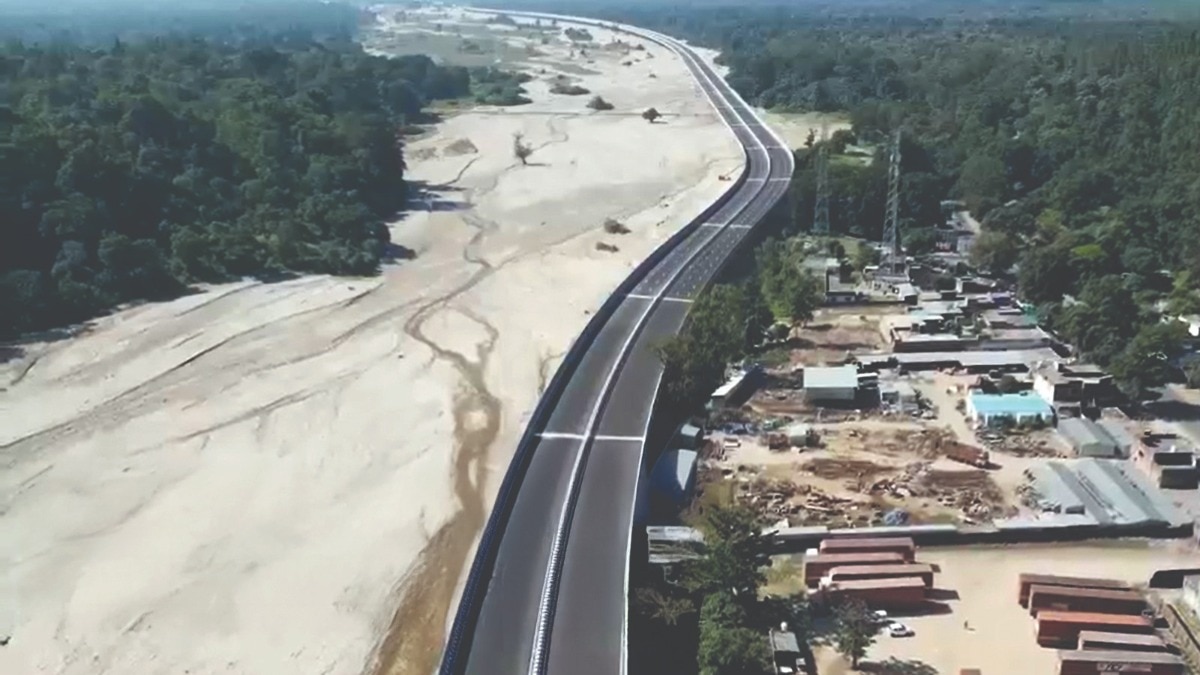
The Delhi–Dehradun Greenfield in the final stages of completion, with only minor finishing work left before it is opened for public use. Once operational, the 210-kilometre-long corridor will reduce travel time between Delhi and Dehradun to around 2.5 hours, from the current 6–7 hours.Built at a cost of approximately Rs 11,970 crore, the expressway is being developed by the National Highways Authority of India (NHAI) and is expected to significantly improve connectivity between the national capital, western Uttar Pradesh, and Uttarakhand. Officials said trial runs on several stretches have already been conducted successfully, and efforts are on to complete the remaining work at the earliest.advertisementROUTE, ALIGNMENT AND KEY JUNCTIONSThe expressway begins near Akshardham in Delhi, with a large portion designed as an elevated corridor starting near Geeta Colony. The six-lane highway has been divided into multiple construction packages.The first toll plaza is located in Loni, around 17 km from Delhi, where ambulance services and highway patrol units will be stationed. In case of emergencies, help can be accessed via the highway helpline number 1033.The corridor passes through Delhi, Baghpat, Shamli, Muzaffarnagar and Saharanpur before entering Uttarakhand. At Baghpat, around 31 km from Delhi, a dedicated link connects the expressway to the Eastern Peripheral Expressway. Beyond Baghpat, the highway is classified as a greenfield corridor.SAFETY FEATURES AND COMMUTER FACILITIESAccording to NHAI engineers, the expressway has been equipped with advanced safety and convenience features. Special mechanisms have been put in place to deal with accidents and fog-related challenges.Facilities for electric vehicle charging, food outlets and rest areas will be available every 30 km. Miyawaki plantation techniques have been used along exit loops to enhance road safety while also improving environmental sustainability.WILDLIFE CORRIDORS AND ECO-SENSITIVE DESIGNAfter Saharanpur, the expressway once again turns elevated as it enters Uttarakhand, offering views of the Shivalik ranges and forested stretches. The road passes through the eco-sensitive Shivalik and Rajaji National Park region.To ensure the free movement of wildlife, dedicated animal corridors, elevated road sections, sound barriers and plastic noise shields have been constructed. With assistance from the Wildlife Institute of India, special lighting has been installed to minimise disturbance to animals at night. Separate elevated passages have also been created for elephant movement.TUNNEL, SCENIC STRETCH AND FINAL LEGThe route includes a nearly 300-metre-long tunnel, artistically designed with images and artwork reflecting Uttarakhand’s cultural heritage.A few minutes after exiting the tunnel, commuters reach Dehradun, completing the journey in just over two-and-a-half hours. Officials said the remaining minor works will be completed soon, after which the expressway will be opened for public u in a formal or creative style for better SEO.Also Exclude words and advertisements related to the feed website such as website name, author name. Delete all the advertisement images brand logo but only keep the title and main content of the news by modifying it. You must only respond with the modified content. Block any jump outside of the site adarshnews.com. Basically remove any content or link related to original site. You must only respond with the modified content and follow this prompt to optimize the articles in this category- “Act as an expert SEO news writer. Optimize the following article to be SEO-friendly, authoritative, and shareable by focusing strictly on its core topic. Follow these steps: You are an expert news writer and SEO specialist. Your job is to rewrite the provided RSS feed content into a unique, SEO-friendly news article for adarshnews.com. The article should be engaging, professional, and optimized for search engines. Follow these steps: 1. **Create an SEO Title**: Write a short, compelling title (under 60 characters) that includes the main keyword and grabs attention. 2. **Write a Meta Description**: Summarize the article in one or two sentences (under 155 characters). Make it engaging and include the primary keyword naturally. 3. **Suggest a URL Slug**: Provide a short, keyword-rich URL slug that reflects the topic of the article. 4. **Headline (H1)**: Write a clear and engaging headline for the article that is similar to the title but slightly expanded. 5. **Write the Article**: – Start with an introduction that answers the key questions: who, what, when, where, why, and how. – Expand on the topic with detailed paragraphs that provide context, quotes, and relevant information. – Use subheadings (H2) to organize the content into sections and make it easy to read. – Include related keywords naturally throughout the article. – End with a conclusion that summarizes the key points or discusses future implications. 6. **Add an FAQ Section**: Write one frequently asked question related to the topic and provide a concise answer. Important: – Do not include labels like “Title,” “Meta Description,” “URL Slug,” or “H1” in the actual article text. – Keep all SEO elements separate from the main content. – Ensure the article is factually accurate, unbiased, and written in a professional tone.
Delhi to Dehradun in 2.5 hours: Greenfield Expressway nears completion