**Title:** Demis Hassabis: Pioneering AI Innovations at Google
**Meta Description:** Discover how Demis Hassabis is shaping AI at Google, focusing on smart glasses and the future of artificial general intelligence.
**URL Slug:** demis-hassabis-ai-innovations-google
**Headline:** Demis Hassabis: Leading the Charge in AI Advancements at Google
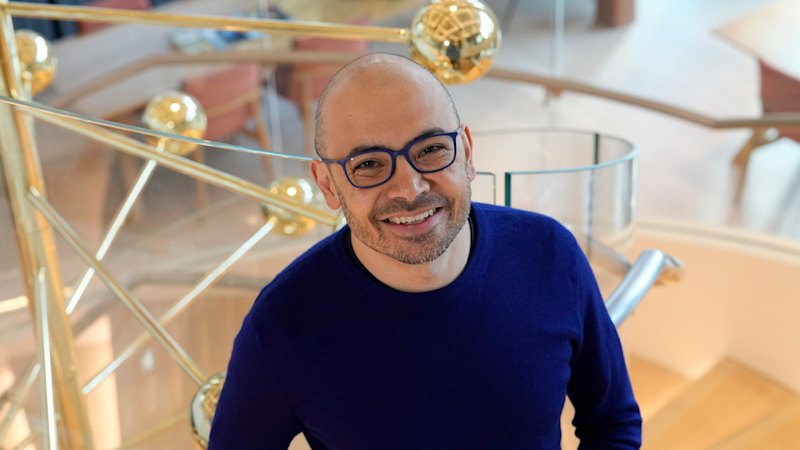
Demis Hassabis, a name that has recently gained prominence, is recognized as one of Time magazine’s “AI architects.” He has made significant strides in the field of artificial intelligence, notably winning a Nobel Prize for his groundbreaking work in predicting protein folding. As the head of Google’s AI initiatives, Hassabis has leveraged the resources of the tech giant since the acquisition of his company, DeepMind, in 2014, to develop machines that aim to achieve artificial general intelligence—machines that can outperform human cognitive abilities.
Since joining Google, Hassabis has contributed to the company’s reputation for scientific excellence, leading to notable achievements such as AI systems that have triumphed over the world’s best Go players and the aforementioned Nobel Prize in chemistry. However, a major product breakthrough has remained elusive for him—until now. The upcoming launch of AI-powered smart glasses in 2026 could potentially change that narrative, especially as Google seeks to reclaim its position in the market after being caught off guard by the rise of ChatGPT three years ago.
In collaboration with Samsung, Google plans to introduce smart glasses equipped with a small in-lens display for functionalities like navigation and translation. This new venture could serve as a redemption arc for Hassabis and his team, particularly after the original Google Glasses were criticized for their impractical design and functionality, which tarnished the smart glasses market for years. Stylish and functional AI glasses could restore credibility to the technology.
Moreover, this initiative aligns with Hassabis’ long-held belief that the future of powerful AI extends beyond chatbots. While OpenAI’s ChatGPT has driven the generative AI boom through large language models, Hassabis advocates for the development of “world models” that are trained on simulations and real-world data, which he believes will lead to significant advancements in AI.
In a strategic move, Google’s CEO Sundar Pichai merged the company’s two AI divisions under Hassabis’ leadership in 2023, surprising many who expected Jeff Dean to take the helm. Despite his reluctance to relocate to Silicon Valley or adopt a conventional market approach, Hassabis has focused on fostering scientific discovery and has worked to bridge the divide between the two AI units, which had previously hindered progress.
As Google prepares to invest approximately $2.7 billion in this new venture, the implications for the future of AI and smart technology are profound. With Hassabis at the forefront, the company is not only aiming to compete with Meta Platforms Inc. but also to redefine the landscape of artificial intelligence.
**FAQ Section:**
**Q: What is Demis Hassabis known for in the field of AI?**
A: Demis Hassabis is known for his work in artificial intelligence, particularly for developing systems that predict protein folding, leading to a Nobel Prize, and for his role in advancing artificial general intelligence at Google through his company, DeepMind.