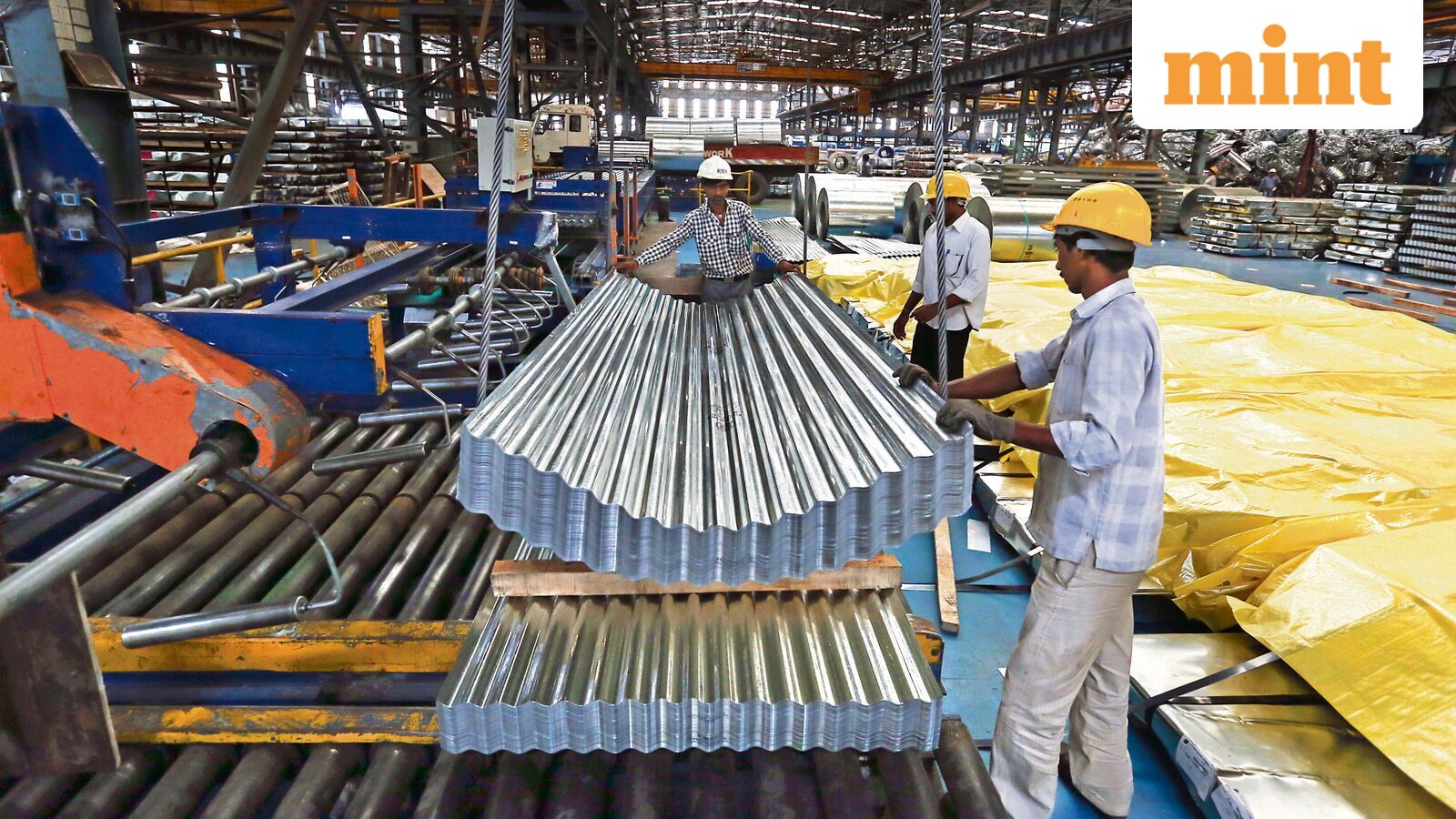
New Delhi: India’s leading steel producers are pushing for lower input costs to stay competitive globally, with a sharp focus on reforming iron ore supply and pricing mechanisms. Speaking at the ISA Steel Conclave 2025, top executives from Tata Steel, SAIL, JSW Steel, Jindal Steel and Power, and AM/NS India emphasized the need for government intervention to ease raw material pressures.For steelmakers, the primary input costs come from purchasing raw materials such as iron ore and coking coal.“If enough (iron ore) mines are brought out, there’s a calendar for auctions, then, automatically, it will put the steelmakers at ease,” said ISA president and Jindal Steel chairman Naveen Jindal on Monday, adding that it will reassure them that there is enough for everyone.Also Read | India moves to shield steelmakers with duty on Vietnamese importsSince the mines are auctioned one by one, Jindal said steelmakers who have set up steel plants are compelled to bid higher premiums to ensure raw material security.“But I hope in the times to come, if enough mines are brought out, then these premiums will also go down,” he said.Jindal also stated that the industry association has been in discussions with the government, which has expressed support for increasing domestic iron ore production. Jindal added that this will happen automatically when the supply increases. It will reduce the prices, which would help Indian steel become more sustainable and cost-competitive internationally.A similar sentiment was echoed by another industry executive.Also Read | Steel industry backs 12% safeguard duty amid global oversupply pressuresCall for competitiveness“One of the key areas which I want to focus on today is that we have to make steel very competitive, and it is important that input prices have to necessarily come down,” said Dilip Oommen, chief executive officer at ArcelorMittal Nippon Steel India.This comes after several steps to boost iron ore supply, including the auction of around 20 million tonnes of ore lying at pre-auction mine sites, and the expansion of state-run NMDC’s mining capacity, were discussed at a high-level inter-ministerial meeting on 26 August.The government could reallocate non-operational mines held by Steel Authority of India and Odisha Mining Corporation Ltd, either through fresh auctions or transfer them to state-run firms to boost output of iron ore, according to a senior government official and industry executives, all of whom spoke on condition of anonymity, Mint reported earlier.According to Big Mint, a market intelligence firm, since 2015, about 135 iron ore mines have been auctioned, but only around 35 are operational. Odisha, Chhattisgarh, Karnataka, Jharkhand, and Maharashtra are the top five iron ore-producing states.The mines are not operational because they have not received the required clearances, and some companies have bid such high premiums that it does not make economic sense to start operations, said Dhruv Goe in a formal or creative style for better SEO.Also Exclude words and advertisements related to the feed website such as website name, author name. You must only respond with the modified content. Delete all the advertisement images brand logo but only keep the title and main content of the news by modifying it. You must only respond with the modified content. Block any jump outside of the site adarshnews.com. Basically remove any content or link related to original site. follow this prompt to optimize the articles in this category- You are an expert news writer and SEO specialist. Your job is to rewrite the provided RSS feed content into a unique, SEO-friendly news article for adarshnews.com. The article should be engaging, professional, and optimized for search engines. Follow these steps: 1. **Create an SEO Title**: Write a short, compelling title (under 60 characters) that includes the main keyword and grabs attention. 2. **Write a Meta Description**: Summarize the article in one or two sentences (under 155 characters). Make it engaging and include the primary keyword naturally. 3. **Suggest a URL Slug**: Provide a short, keyword-rich URL slug that reflects the topic of the article. 4. **Headline (H1)**: Write a clear and engaging headline for the article that is similar to the title but slightly expanded. 5. **Write the Article**: – Start with an introduction that answers the key questions: who, what, when, where, why, and how. – Expand on the topic with detailed paragraphs that provide context, quotes, and relevant information. – Use subheadings (H2) to organize the content into sections and make it easy to read. – Include related keywords naturally throughout the article. – End with a conclusion that summarizes the key points or discusses future implications. 6. **Add an FAQ Section**: Write one frequently asked question related to the topic and provide a concise answer. Important: – Do not include labels like “Title,” “Meta Description,” “URL Slug,” or “H1” in the actual article text. – Keep all SEO elements separate from the main content. – Ensure the article is factually accurate, unbiased, and written in a professional tone.
Iron and steel manufacturers are advocating for reduced production costs to enhance their competitiveness in the global market.