**Title:** Illegal Mining in Aravallis: A Legacy of the Gehlot Government
**Meta Description:** Union Environment Minister Bhupender Yadav highlights the illegal mining issue in the Aravallis, attributing it to the previous Congress government in Rajasthan.
**URL Slug:** illegal-mining-aravallis-gehlot-government
**Headline:** Bhupender Yadav Attributes Illegal Mining in Aravallis to Congress Era
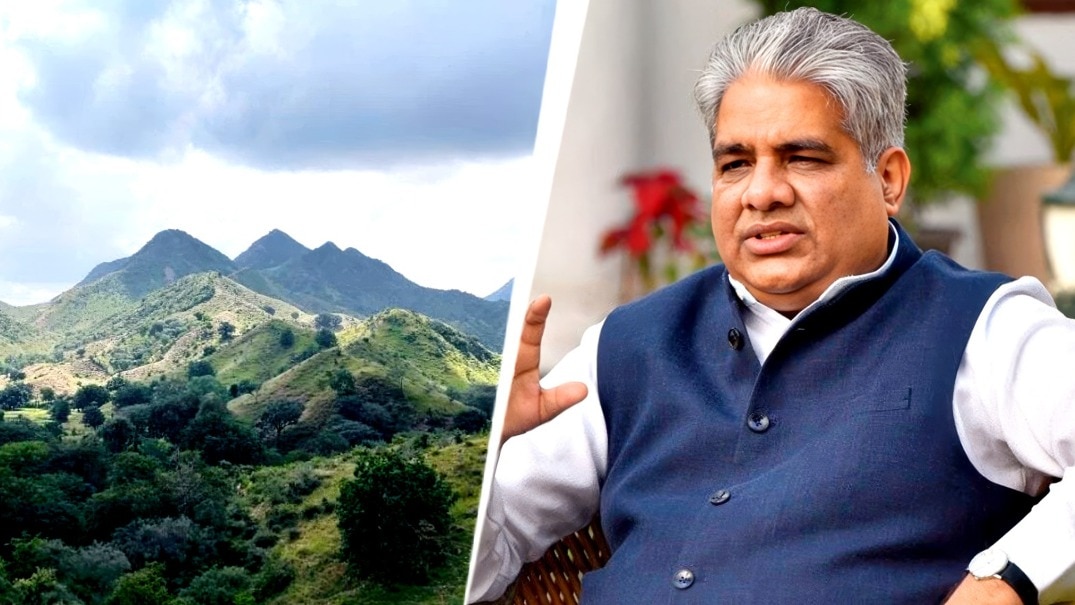
Union Environment Minister Bhupender Yadav addressed the ongoing issue of illegal mining in the Aravalli mountain range, asserting that the problem primarily emerged during the tenure of Ashok Gehlot as Chief Minister of Rajasthan. In an interview with India Today TV, Yadav claimed that the images circulating online depicting mining activities are remnants from the Congress era, stating, “All the photos that influencers are showing online are of mines that operated during the Congress era. People mined for eight to ten years and then left them abandoned.”
Yadav elaborated on the new definition of the Aravallis, which now includes a cluster of two or more hills that are at least 100 meters high and situated within 500 meters of each other. This definition also encompasses all landforms in the intervening area, including valleys and slopes, thereby expanding the protected range. He emphasized that this updated classification is crucial due to the rampant illegal mining activities in Rajasthan, where a significant concentration of mines exists.
According to Yadav, out of the 1,008 operational mines in Rajasthan, approximately 700 were established during Gehlot’s administration. He noted that the indiscriminate allocation of mining leases prompted intervention from the Supreme Court, which issued a stay to prevent the destruction of the Aravalli’s core characteristics. The court recognized the necessity for a unified definition of the Aravallis across the four states they span.
Furthermore, Yadav pointed out that mining is prohibited in several regions of the Aravalli Range, including Delhi, Gurgaon, and Faridabad, as well as in protected areas such as four tiger reserves and 20 wildlife sanctuaries, and within one kilometer of eco-sensitive zones. This highlights the government’s commitment to preserving the ecological integrity of the Aravallis while addressing the challenges posed by illegal mining.
In conclusion, the issue of illegal mining in the Aravallis is deeply rooted in past governance, and the current administration is taking steps to redefine and protect this vital ecological region.
**FAQ Section:**
**Q: What measures are being taken to combat illegal mining in the Aravallis?**
A: The government is redefining the protected areas of the Aravallis and enforcing stricter regulations to prevent illegal mining activities, alongside interventions from the Supreme Court.