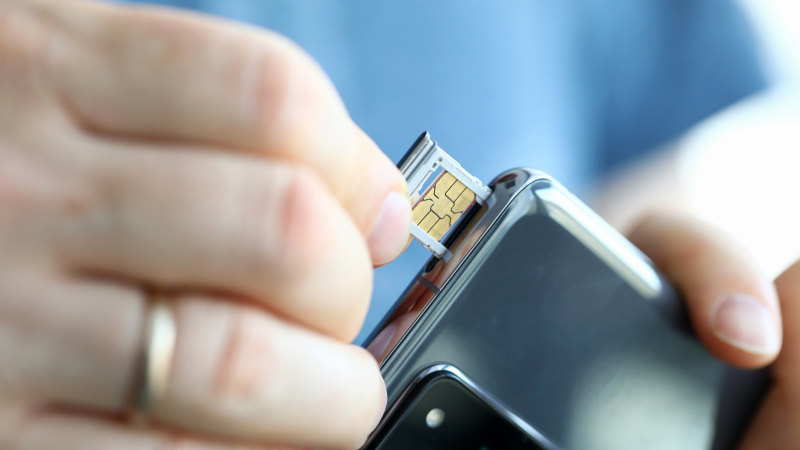
**Apple Launches iPhone Air: A New Era with eSIM Only**
Apple has officially unveiled the iPhone Air, marking a significant milestone as the company’s thinnest smartphone to date. This release is notable not only for its sleek design but also for its complete transition away from traditional plastic SIM cards across all global markets. Much like the controversial removal of the 3.5mm headphone jack nearly a decade ago, this shift may leave some users unfazed, while others might find themselves unprepared.
The digital alternative to physical SIM cards, known as eSIMs, has been available since 2016 and has been an option in every iPhone model since 2018. In regions like the US, many smartphones have already moved to eSIM-only configurations. However, the iPhone Air is pioneering this change in Australia, with Apple’s vice president of wireless software technologies, Arun Mathias, explaining that the motivation behind this transition mirrors the rationale for eliminating the headphone jack.
The removal of the physical SIM card tray has allowed Apple to optimize the internal space of the iPhone Air. Mathias noted, “The physical SIM does take up valuable real estate. It has to sit on other components like the SIM card tray, and there’s a SIM connector connected to it. There are structural elements to make it all work, as well as the waterproofing seal.” By eliminating these components, Apple can repurpose that space for other enhancements, such as a larger battery, contributing to the iPhone Air’s impressive thinness and lightness without compromising battery life.
Apple has successfully integrated eSIM technology into other devices, including smartwatches and tablets, and the benefits are evident. For instance, in the US, where iPhones have been eSIM-only since 2022, the latest iPhone 17 Pro features a larger battery compared to its predecessor with a SIM tray. While the iPhone Air is currently the only 2025 model in Australia to exclusively support eSIM, Apple is committed to phasing out physical SIM cards worldwide.
“This is the start of the journey. We will be looking for how on any given product, if we don’t have to use the space for a physical SIM, what else we can do to deliver compelling features for our users,” Mathias stated.
For those considering the ultra-thin iPhone Air, the setup process for eSIMs is straightforward. Major Australian carriers, including Telstra, Optus, and Vodafone, support features like eSIM Carrier Activation and eSIM Quick Transfer. This means that when purchasing a new phone, customers can have an eSIM allocated in advance, which they can activate upon starting the device. Alternatively, users can transfer their existing plan and number to a new eSIM seamlessly.
In conclusion, the iPhone Air represents a bold step forward in smartphone design and technology, embracing eSIMs to enhance user experience and device functionality. As Apple continues to innovate, the implications of this shift will likely resonate throughout the industry.
**FAQ**
**What is an eSIM and how does it work?**
An eSIM, or embedded SIM, is a digital SIM that allows users to activate a cellular plan without needing a physical SIM card. It is programmed wirelessly into the device, making it more convenient and space-efficient.