**Title:** Trump Claims Modi Urged Faster Delivery of Apache Helicopters
**Meta Description:** President Trump stated that PM Modi requested expedited delivery of Apache helicopters, but Indian officials clarified the order details and costs.
**URL Slug:** trump-modi-apache-helicopters-delivery
**Headline:** Trump Alleges Modi Requested Swift Delivery of Apache Helicopters Amid Cost Concerns
In a recent statement, President Donald Trump claimed that Indian Prime Minister Narendra Modi had asked him to accelerate the delivery of 68 Apache attack helicopters. Speaking at a House GOP Member Retreat, Trump asserted that the helicopters had faced delays exceeding five years. However, Indian defense ministry officials, speaking off the record, clarified that India had only ordered 28 Apache helicopters in two batches—22 in 2015 and eight in 2020—with all deliveries scheduled to be completed by December 2025.
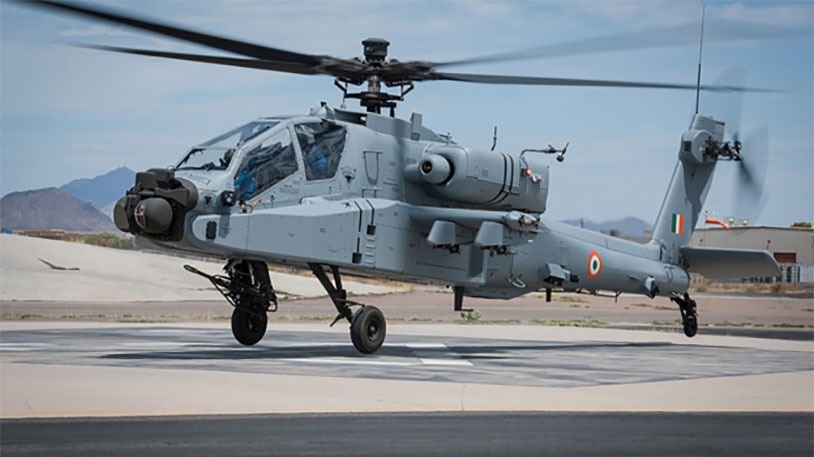
The primary concern for India regarding these helicopters is not the timeline but the cost. The AH-64E Apache is considered the pinnacle of U.S. attack helicopter technology, featuring advanced radars and sensors for all-weather and day/night operations. It is capable of launching Hellfire missiles and Hydra rockets at targets up to 10 kilometers away, firing 1,200 rounds of 30mm cannon shells at targets two kilometers away, and engaging other aircraft with Stinger air-to-air missiles.
These advanced capabilities come at a steep price, approximately $150 million (around Rs 1,350 crore) per helicopter, including missiles and ammunition. In contrast, India’s indigenous HAL-built Light Combat Helicopter Prachand costs about $48 million (Rs 400 crore) each. The high costs led the Indian military to reduce its initial plan for 39 attack helicopters—22 for the Air Force and 17 for the Army—to just 28 units, with the Army ultimately purchasing only six of the planned 17 helicopters.
Lt. General Ajay Kumar Suri, former Director General of the Army Aviation Corps, noted, “The Apache is a formidable machine in close-air support roles with the kind of missiles it carries, though costs could be an inhibiting factor if India were to buy the 11 more helicopters as planned earlier.”
The modern attack helicopter concept originated in the U.S. during the Vietnam War, where heavily armed helicopters were deployed to support ground troops. The first purpose-built attack helicopter, the Bell AH-61 Cobra, was introduced in 1967, followed by the Apache in 1984, designed for a conflict that never materialized—facing large formations of Soviet tanks in Europe. The Apache made its combat debut during the U.S. War on Terror, providing close air support and reconnaissance in Afghanistan. However, its vulnerabilities became evident during urban combat scenarios, such as the ambush of Apache helicopters in Karbala, Iraq, in 2003.
These vulnerabilities were not a concern when the Indian Air Force initiated the procurement process for 22 attack helicopters in 2007 to replace aging Soviet-built Mi-35 gunships. The Requests for Proposals were issued in 2009, and Boeing’s Apache ultimately won the contract over Russia’s Mi-28 based on cost considerations.
**FAQ Section:**
**Q: Why did India reduce its order for Apache helicopters?**
A: India scaled back its order due to the high costs associated with the Apache helicopters, opting for a total of 28 units instead of the initially planned 39.