


**Title:** RSS Chief Critiques Live-In Relationships and Advocates for Family Values
**Meta Description:** Mohan Bhagwat of the RSS questions live-in relationships, emphasizing the importance of family and marriage for societal stability.
**URL Slug:** rss-live-in-relationships-family-values
**Headline:** RSS Chief Mohan Bhagwat Questions Live-In Relationships and Emphasizes Family Importance
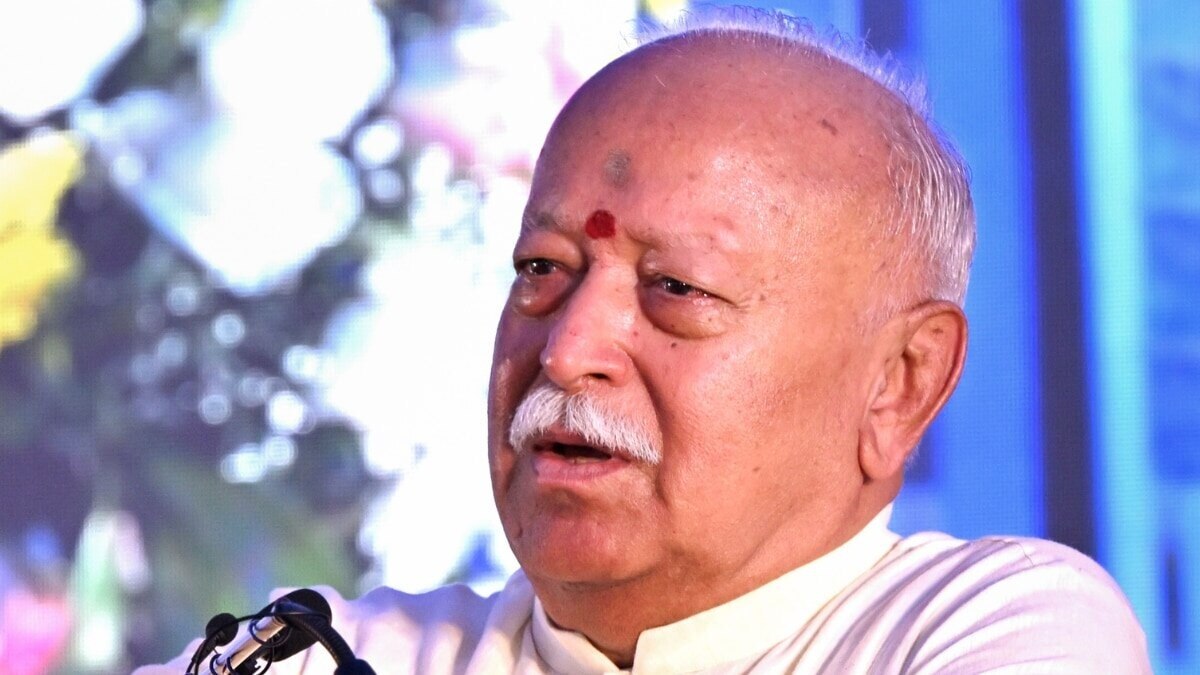
In a recent address in Kolkata, Mohan Bhagwat, the chief of the Rashtriya Swayamsevak Sangh (RSS), expressed his concerns regarding live-in relationships, suggesting that individuals who choose such arrangements often shy away from taking responsibility. He argued that this trend undermines the family structure, which he considers the cornerstone of society. Bhagwat emphasized that marriage and family extend beyond mere physical companionship, serving a vital social function.
“Regarding the concept of live-in relationships, you’re not ready to take responsibility. This isn’t right. The family and marriage are not just means of physical satisfaction; they are essential units of society. It is within the family that individuals learn how to coexist in society, and it is from there that people’s values are derived,” Bhagwat stated.
In addition to his views on relationships, Bhagwat also addressed the ongoing population debate, asserting that decisions about family size should be left to couples and communities rather than dictated by rigid policies. He referenced insights from medical professionals, psychologists, and demographers, suggesting that early marriages—specifically between the ages of 19 and 25—and having three children are linked to improved health outcomes and social stability.
“I have learned from discussions with doctors that early marriage and having three children contribute positively to the health of both parents and children. Psychologists indicate that raising three children aids in developing ego management skills. Demographers warn that if the birth rate falls below three, the population begins to decline, and if it drops below 2.1, it poses significant risks,” Bhagwat explained.
He noted that India’s current fertility rate hovers around 2.1, primarily due to the situation in Bihar, while several states are already below this threshold. Bhagwat clarified that he is not an expert in family planning, as he is unmarried, but he shared these insights based on the information he has gathered.
“Currently, we are at 2.1 only because of Bihar; otherwise, our rate is 1.9. This is the information I have received. I am a preacher, unmarried, and I do not claim to be knowledgeable about this matter,” he remarked.
On the topic of population policy, Bhagwat criticized India’s management of its population, describing it as both a burden and an asset. He advocated for a long-term policy approach that considers the country’s environment, infrastructure, women’s status, health, and national needs.
“We have not managed the population effectively. While it can be seen as a burden, it is also an asset. We should develop a policy based on a 50-year projection that takes into account various factors affecting our country,” he concluded.
**FAQ Section:**
**Q: What are Mohan Bhagwat’s views on live-in relationships?**
A: Mohan Bhagwat believes that live-in relationships indicate a lack of responsibility and weaken the family structure, which he views as essential for societal stability.


