Bitcoin Magazine
Rutherford Chang Retrospective: Hundreds and Thousands at UCCA Beijing
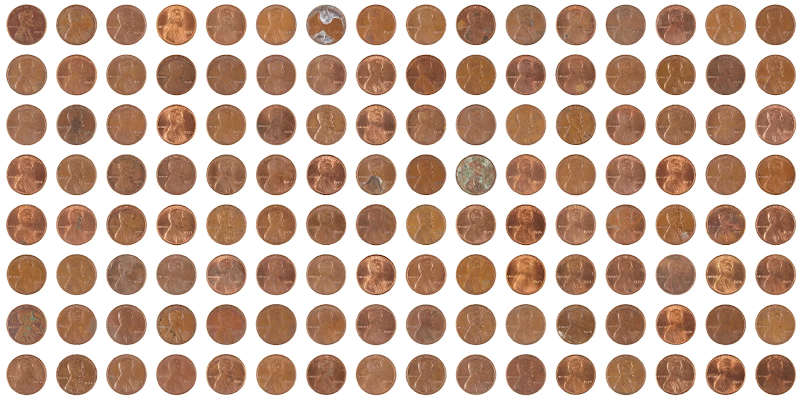
When people describe Rutherford Chang’s work, you hear words like: obsessive, conceptual, minimalist. These descriptions aren’t wrong, they point to something real in his practice. But they also miss what makes his approach distinctive. Chang worked with objects that industrial culture designed to be identical: records pressed in millions of copies, portraits drawn according to strict house style, coins minted for perfect interchange. His interest lay in the precise moment when the promise of sameness begins to fail, when time and human handling leave marks that transform supposedly identical objects into singular things.
The retrospective Rutherford Chang: Hundreds and Thousands opened January 17, 2026 at UCCA Center for Contemporary Art in Beijing, one of China’s leading institutions for contemporary art. This exhibition is significant for several reasons. It represents Chang’s first institutional retrospective and his most comprehensive solo presentation to date. It is also a posthumous one. Chang died in 2025 at the age of 45, leaving behind a body of work built almost entirely around the practice of collecting and arranging mass-produced objects until their individual histories became visible and legible.
Beijing provides a fitting location for this retrospective, though not for the obvious reasons alone. Yes, Chang moved frequently between New York and China throughout his career, and yes, he showed work in Beijing early on. But the city itself offers something more specific: a context shaped by rapid cycles of construction and replacement, by the constant acceleration of change and circulation. In such an environment, Chang’s patient attention to what gets left behind, to the residues and traces that accumulate on objects even as they move through systems designed to keep them uniform, takes on particular resonance. The exhibition is co-curated by Philip Tinari, director of UCCA, and Aki Sasamoto, a fellow artist – both longtime friends of Chang who understand his working methods from the inside. Their collaboration keeps the exhibition close to the work as practice, with process and method in the foreground.
To understand Chang’s approach, we need to look carefully at the exhibition’s title. Hundreds and Thousands sounds like simple measurement, like a gesture toward quantification. Chang typically worked at scale. He collected not dozens but hundreds or thousands of examples. But what the title really describes is a method and a particular way of working that emerges when you engage with mass-produced objects at sufficient volume. Chang discovered that quantity, at a certain point, stops behaving in predictable ways. At a certain scale, repetition starts to reveal detail. Put hundreds of nearly identical objects next to each other and you start to see time. You start to see touch. You see accidents. You see storage