**Stephen A. Smith Responds to Charles Barkley’s Media Exposure Warning**
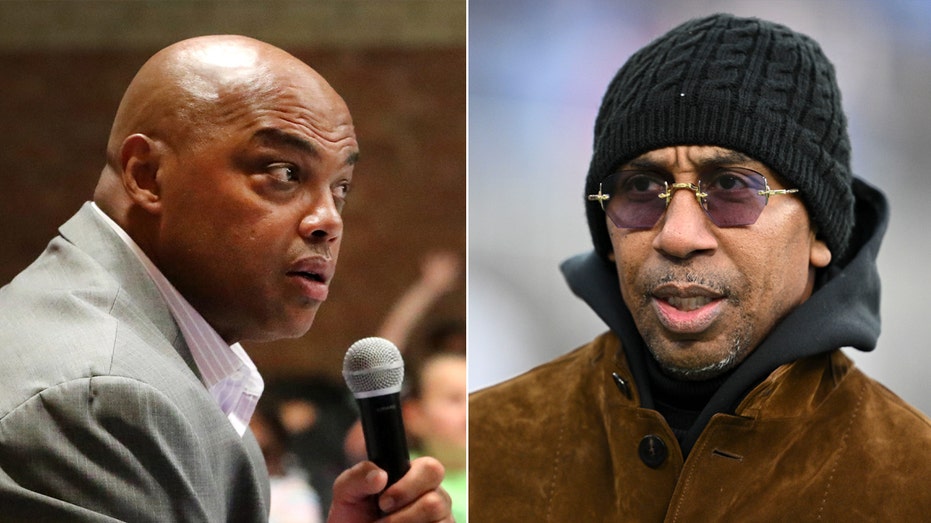
Stephen A. Smith, the prominent ESPN personality, has fired back at Charles Barkley following the Basketball Hall of Famer’s caution about Smith’s media presence. On his podcast, Smith expressed his respect for Barkley but also highlighted what he perceives as hypocrisy in Barkley’s comments regarding media overexposure.
Smith began by acknowledging their close relationship, stating, “That’s my guy, but that doesn’t mean I always agree with him.” He then pointed out the irony in Barkley’s warning, questioning the number of commercials Barkley appears in each year. “He’ll tell us two. Have you seen Charles Barkley in two commercials? Are you kidding me?” Smith remarked, emphasizing Barkley’s extensive endorsement deals and frequent media appearances.
The ESPN star further clarified that his comments were not solely aimed at Barkley but were directed at a broader audience. “I’m making people very uncomfortable, and I don’t give a damn,” Smith asserted. He expressed confidence in his own credibility, despite others doubting him, stating, “I’m a serious brotha.”
Barkley had previously made his remarks during an appearance on OutKick’s “Don’t @ Me with Dan Dakich,” where he humorously noted Smith’s numerous television appearances, including roles on “General Hospital” and “Law & Order.” Barkley cautioned that such visibility could lead to audience fatigue, suggesting that Smith should be mindful of his media saturation.
In contrast, Barkley shared his own philosophy about media appearances, stating, “I want to be on TV as less as possible… that’s why I only do a couple commercials a year.” He believes that “less is more” when it comes to maintaining a public presence.
As the exchange continues, both personalities highlight the balance between media engagement and maintaining credibility in the public eye.
**FAQ**
**Q: What did Stephen A. Smith say in response to Charles Barkley?**
A: Smith defended his media presence, calling Barkley a hypocrite for warning him about overexposure while himself being frequently seen in commercials and on television.