


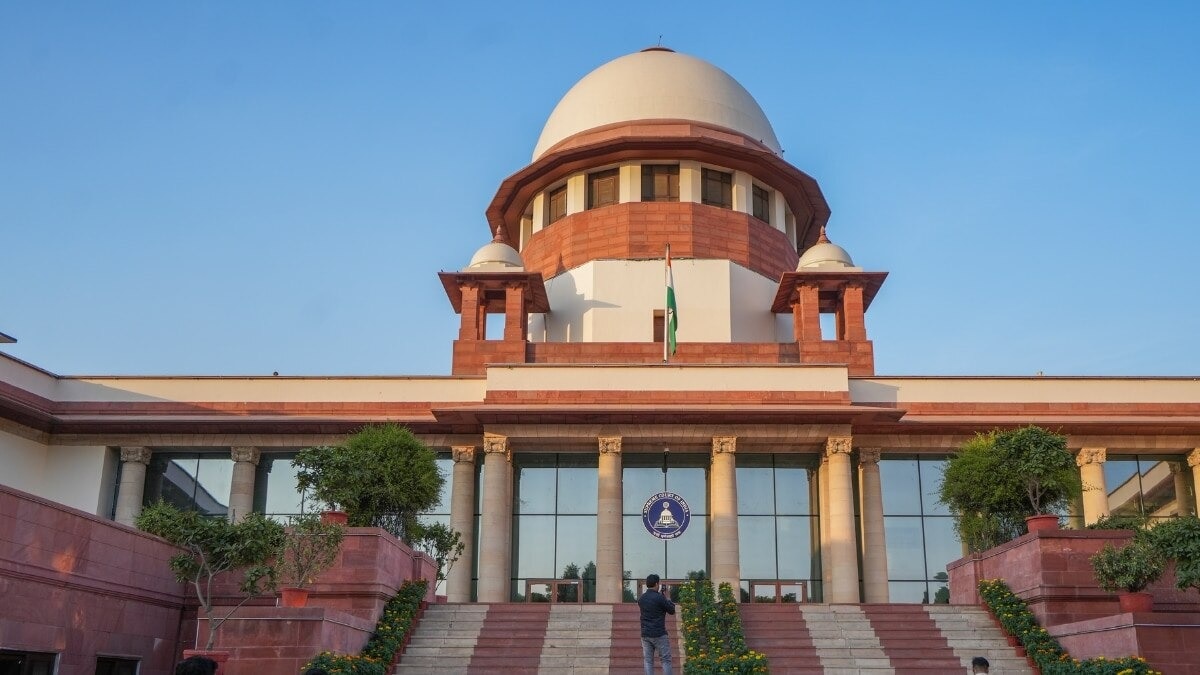
**Supreme Court Directs Framing of Issues in PMLA Review Pleas**
The Supreme Court of India has instructed the Centre and petitioners to outline the issues to be addressed in the review petitions challenging its 2022 ruling that upheld the provisions of the Prevention of Money Laundering Act (PMLA). This includes the Enforcement Directorate’s authority to arrest individuals and seize properties. A bench led by Justice Surya Kant has directed both the Union government and the Enforcement Directorate to formulate and circulate these issues, enabling the court to identify the questions that require adjudication. The matter is set to be listed for discussion on August 6, with a potential follow-up hearing on August 7. Additionally, the court will convene on July 16 to finalize the issues.
In a notable remark made in February 2025, the Supreme Court emphasized that the PMLA should not be utilized to keep individuals incarcerated. This statement was made while granting bail to a defendant involved in a money laundering case linked to the alleged Chhattisgarh liquor scam.
During the recent hearing, Solicitor General Tushar Mehta noted that the court had only issued notices regarding two specific aspects of the review petitions: the provision of a copy of the Enforcement Case Information Report (ECIR) to the accused and the validity of the provision that shifts the burden of proof. He argued that the respondents had contested the review’s filing and claimed that the issues proposed by the petitioners aimed to revisit the entire judgment.
Senior Advocate Kapil Sibal, representing the petitioners, objected to the Union’s submission of an affidavit seeking modifications to the previous order related to the review petitions. He highlighted that a related case had already been thoroughly examined by the court, where he had presented arguments for an entire day, urging the court to proceed with the current case. Sibal also pointed out that a three-judge bench of the Supreme Court had previously ruled that the ECIR must be provided to the accused.
The Supreme Court bench stated, “Based on this matter and other matters, you can propose some issues. You also see comprehensively what the issues are, once and for all, that we can resolve. If you can all do that, it makes it easy for us also.”
In its July 2022 judgment in the case of Vijay Madanlal Choudhary vs. Union of India, the Supreme Court upheld critical provisions of the PMLA, including those concerning arrest, seizure, presumption against the accused, and stringent bail conditions. The court also clarified that the ECIR is an internal document and does not need to be provided to the accused, as it is not equivalent to a First Information Report (FIR).
A notice regarding the review petition filed by Congress leader Karti Chidambaram was issued in August 2022 by a bench led by then-Chief Justice NV Ramana.
**FAQ**
**What is the significance of the Supreme Court’s ruling on the PMLA?**
The Supreme Court’s ruling on the PMLA is significant as it upholds the powers of the Enforcement Directorate, including arrest and property seizure, while also addressing concerns about the rights of the accused, particularly regarding the provision of the ECIR.


