


**Supreme Court to Rule on Bail Pleas of Activists in UAPA Case**
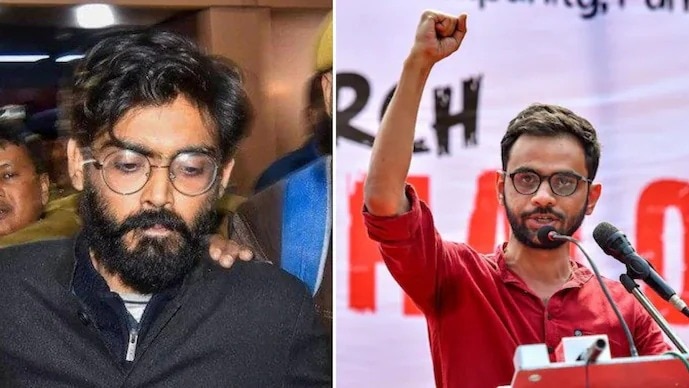
The Supreme Court of India is set to deliver its verdict on January 5 regarding the bail applications of activist Umar Khalid, scholar Sharjeel Imam, and several others implicated in a case under the Unlawful Activities (Prevention) Act (UAPA) related to the 2020 Delhi riots. A bench consisting of Justices Aravind Kumar and N V Anjaria will address the pleas submitted by Khalid, Imam, Gulfisha Fatima, Meeran Haider, Shifa Ur Rehman, Mohd Saleem Khan, and Shadab Ahmed.
The petitioners are contesting a September 2 ruling from the Delhi High Court that denied them bail in connection with the alleged “larger conspiracy” behind the violence that erupted in February 2020. The Supreme Court had reserved its judgment on December 10 after hearing extensive arguments from both the prosecution and the defense. The Delhi Police were represented by Solicitor General Tushar Mehta and Additional Solicitor General S V Raju, while senior advocates including Kapil Sibal and Salman Khurshid defended the accused.
Khalid, Imam, and the others face charges under the UAPA, India’s anti-terrorism legislation, as well as sections of the Indian Penal Code, for allegedly orchestrating the riots. The violence, which occurred during protests against the Citizenship (Amendment) Act (CAA) and the proposed National Register of Citizens (NRC), resulted in 53 fatalities and over 700 injuries in parts of northeast Delhi.
In an affidavit submitted to the Supreme Court in October, the Delhi Police vehemently opposed the bail requests, asserting that the riots were part of a calculated “regime-change operation” intended to destabilize India and tarnish its global reputation. The police claimed to have gathered witness statements, documents, and technical evidence linking the accused to a “deep-rooted conspiracy” driven by communal motives. They also accused the petitioners of intentionally delaying trial proceedings through “frivolous applications” and “coordinated non-cooperation.”
The police dismissed the argument that the trial would be prolonged due to the presence of nearly 900 witnesses, labeling it a “red herring” designed to secure bail. They contended that only about 100 to 150 witnesses were essential, and the trial could progress swiftly if the accused cooperated. Citing the UAPA, the affidavit emphasized that “jail, not bail” is the standard for serious terror-related offenses, arguing that the severity of the allegations and the prima facie case precluded release based solely on delays.
The police have alleged that Umar Khalid was instrumental in conceptualizing the “Chakka Jam” for the riots and played a pivotal role in orchestrating the violence through the Delhi Protest Support Group (DPSG). According to the affidavit, he purportedly directed others in a clandestine meeting in Seelampur to encourage local women to stockpile weapons and other items for use during the riots.
**FAQ**
**What is the significance of the Supreme Court’s upcoming verdict on the bail pleas?**
The Supreme Court’s decision will determine whether the accused activists will be granted bail in a high-profile case linked to the 2020 Delhi riots, which has significant implications for the interpretation of the UAPA and the legal proceedings surrounding terrorism-related charges in India.


