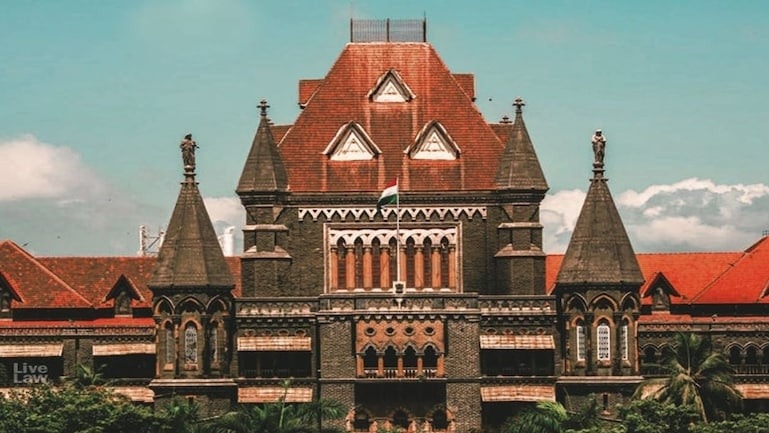
**Bombay High Court Upholds Demolition Order for Thane Dargah**
The Bombay High Court has dismissed a request from the Gazi Salauddin Rehmatulla Hoole Trust, commonly known as the Pardeshi Baba Trust, to overturn its previous ruling mandating the demolition of a Dargah structure in Borivade, Thane. The Trust sought to revisit the court’s decision, referencing a Supreme Court ruling that permitted it to explore legal options following the High Court’s initial demolition directive.
During the proceedings, Senior Advocate Rajiv Patil, representing the Trust, argued that the Dargah has historical significance, dating back to 1882, as noted in a republished Thane Gazette. He also cited a 1982 sale deed, 1989 land records, and the Trust’s registration with the Charity Commissioner in 1990 to assert the legitimacy of the structure’s existence.
However, the Thane Municipal Corporation, represented by Senior Advocate RS Apte, contended that the Dargah lacked legal authorization. The corporation stated that no construction permits were ever issued, and a prior demolition notice had been served, although the process was halted due to police restrictions and a Supreme Court order maintaining the status quo.
A bench consisting of Justices AS Gadkari and Kamal Khata determined that the Trust failed to provide credible evidence of ownership or the necessary permissions for the Dargah’s construction. The court noted that the Trust’s claim of ownership was based solely on the absence of objections to its public notice through the Charity Commissioner, a position the bench found insufficient.
The court remarked, “They have not been able to produce a single piece of evidence to suggest that there was any structure owned or possessed by the Trust.” It emphasized that encroachment cannot be legitimized through mere assertions or public sentiment, stating, “We are unable to accept that mob fury and mere footfalls of people on a particular piece of land can prove that it is a legal structure.”
Furthermore, the bench clarified that entries in revenue records, such as the 7/12 extract, do not constitute proof of lawful construction. It highlighted that the Dargah Trust had not secured permission for any construction, noting that the structure had expanded to over 20,000 square feet.
The court concluded that an individual claiming ownership must present clear evidence rather than rely on the deficiencies in the opposing party’s arguments. Ultimately, the High Court upheld the demolition order, affirming that the Trust had encroached upon the land without legal justification.
**FAQ**
**Q: What was the outcome of the Bombay High Court’s ruling regarding the Dargah?**
A: The Bombay High Court upheld the demolition order for the Dargah, stating that the Trust failed to provide credible evidence of ownership or legal permissions for the structure.