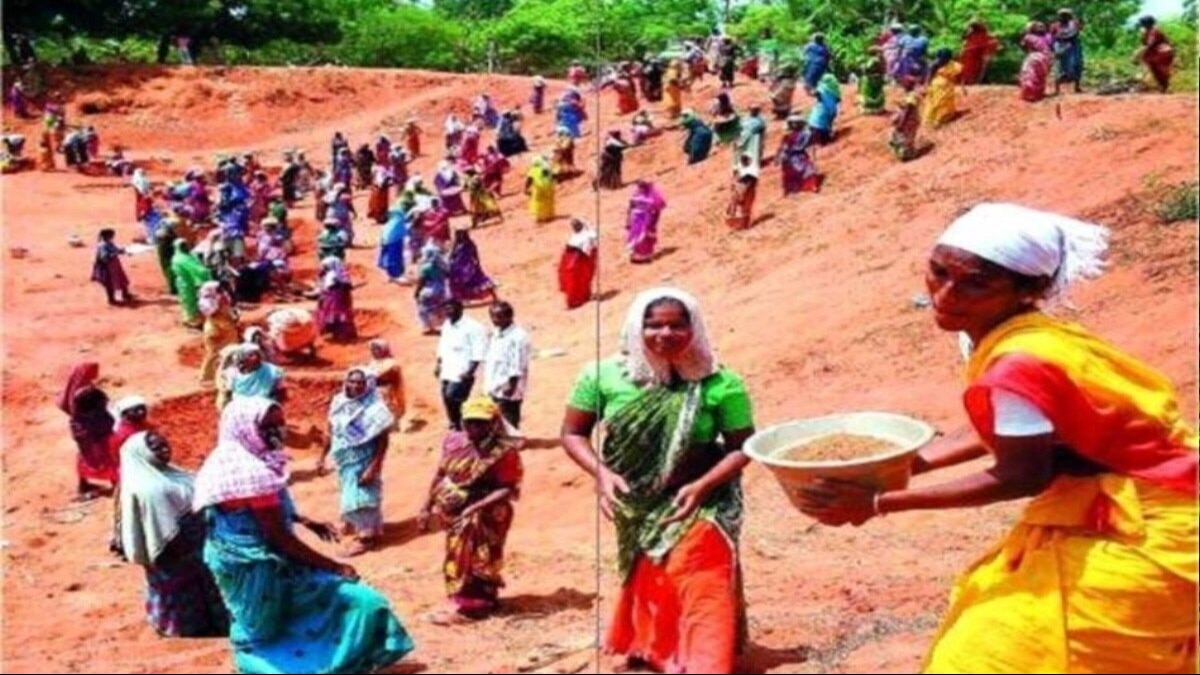
The Calcutta High Court has ordered the Central Government to resume implementation of the Mahatma Gandhi National Rural Employment Guarantee Act (MGNREGA) in West Bengal from August 1.The project had been stalled for nearly three years in the state, as allegations of corruption led to a political blame game between the Trinamool Congress (TMC) and the Bharatiya Janata Party (BJP).advertisementA division bench comprising Chief Justice T S Sivagnanam and Justice Chaitali Chatterjee Das has now ordered the implementation of the scheme.The bench noted that neither the Centre nor the State had taken any action against those involved in the alleged corruption, which had delayed the scheme’s implementation in Bengal.”The Centre has sufficient power. The Centre will start this scheme not only in four districts but across the entire state from August 1. The Centre may impose any conditions or restrictions it deems necessary, so that the corruption which occurred previously is not repeated,” the court stated.The High Court’s order followed a Public Interest Litigation (PIL) that claimed the poor were being denied their legitimate entitlement under the Act, which guarantees 100 days of employment per year to rural households. BJP leader Suvendu Adhikari had also filed a case in this regard, which was subsequently merged with the PIL.advertisementReacting to the order, Trinamool leader Kunal Ghosh said, “The state government will respond to this development in detail… But we want to say that today’s order vindicated our stance and our fight for the central funds. The central government was blocking Bengal’s funds illegally and in a discriminatory manner.””Such discrimination should not happen in the country. They pointed fingers at Bengal, but the Gujarat minister’s son was involved in the MGNREGA scam, and fake job cards were found in Uttar Pradesh…” Ghosh added.The Mahatma Gandhi National Rural Employment Guarantee Act (MGNREGA) was enacted in 2005 and came into force on February 2, 2006, initially covering 200 districts. It was later expanded to include all rural districts across India.The scheme guarantees 100 days of wage employment per year to rural households, aiming to enhance livelihood security, reduce poverty, and create durable rural assets, while promoting inclusive development through unskilled manual work on public projects. in a formal or creative style for better SEO.Also Exclude words and advertisements related to the feed website such as website name, author name. Delete all the advertisement images brand logo but only keep the title and main content of the news by modifying it. You must only respond with the modified content. Block any jump outside of the site adarshnews.com. Basically remove any content or link related to original site. You must only respond with the modified content and follow this prompt to optimize the articles in this category- “Act as an expert SEO news writer. Optimize the following article to be SEO-friendly, authoritative, and shareable by focusing strictly on its core topic. Follow these steps: You are an expert news writer and SEO specialist. Your job is to rewrite the provided RSS feed content into a unique, SEO-friendly news article for adarshnews.com. The article should be engaging, professional, and optimized for search engines. Follow these steps: 1. **Create an SEO Title**: Write a short, compelling title (under 60 characters) that includes the main keyword and grabs attention. 2. **Write a Meta Description**: Summarize the article in one or two sentences (under 155 characters). Make it engaging and include the primary keyword naturally. 3. **Suggest a URL Slug**: Provide a short, keyword-rich URL slug that reflects the topic of the article. 4. **Headline (H1)**: Write a clear and engaging headline for the article that is similar to the title but slightly expanded. 5. **Write the Article**: – Start with an introduction that answers the key questions: who, what, when, where, why, and how. – Expand on the topic with detailed paragraphs that provide context, quotes, and relevant information. – Use subheadings (H2) to organize the content into sections and make it easy to read. – Include related keywords naturally throughout the article. – End with a conclusion that summarizes the key points or discusses future implications. 6. **Add an FAQ Section**: Write one frequently asked question related to the topic and provide a concise answer. Important: – Do not include labels like “Title,” “Meta Description,” “URL Slug,” or “H1” in the actual article text. – Keep all SEO elements separate from the main content. – Ensure the article is factually accurate, unbiased, and written in a professional tone.
The High Court has directed the Central Government to restart the MGNREGA program in West Bengal, effective August 1.