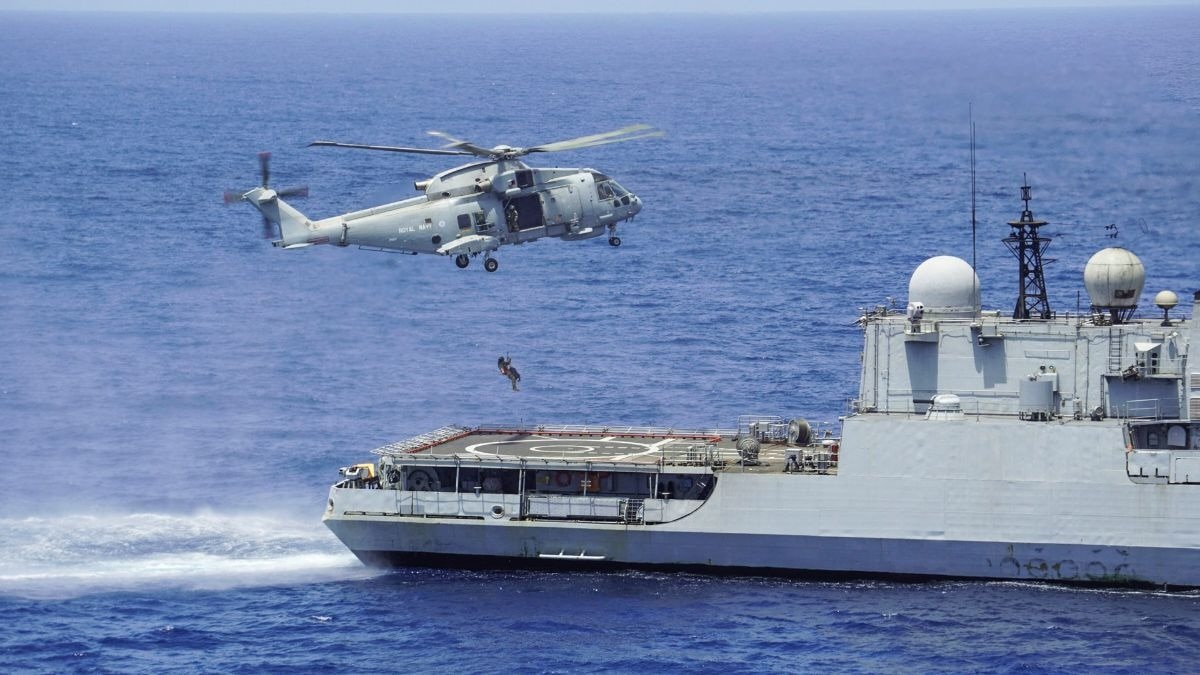
The Indian Navy is set to significantly bolster its coastal defence capabilities with the induction of 16 indigenously designed and built Anti-Submarine Warfare Shallow Water Craft (ASW-SWC) class of ships. The first ship, Arnala, was delivered on May 8 and is scheduled to be commissioned into the Navy on June 18. These vessels represent a significant addition to India’s maritime security capability and underscore the success of the “Aatmanirbhar Bharat” (Self-Reliant India) initiative in the defence sector.advertisementConstructed by Garden Reach Shipbuilders & Engineers (GRSE) and Cochin Shipyard Limited (CSL), these ships would replace the ageing Abhay-class corvettes. With over 80 indigenous technologies in place, these ships reflect India’s growing self-reliance in shipbuilding and defence technology. Indigenous shipbuilding not only strengthens the domestic defence industry but also reduces dependence on foreign suppliers, ensuring India’s strategic autonomy and supporting uninterrupted maintenance and upgrades.The primary role of these ASW-SWC ships is to detect, track and prosecute enemy submarines, particularly in coastal and shallow water regions. Equipped with advanced underwater sensors such as the Hull-Mounted Sonar Abhay, Underwater Acoustic Communication System (UWACS) and Low-Frequency Variable Depth Sonar (LFVDS), these vessels are capable of comprehensive underwater surveillance.These ships feature a state-of-the-art weapon suite, including lightweight torpedoes, ASW rockets, Anti-Torpedo Decoys and advanced mine-laying capabilities to neutralise underwater threats. The integration of sensors and weapons into the Combat Management System (CMS) and an Integrated ASW Complex (IAC) further enhances their combat capabilities.advertisementThe induction of the 16 ASW-SWCs would have a profound impact on the Indian Navy’s operational capabilities. These ships would facilitate continuous and effective protection of India’s vast coastline and critical offshore assets from submarine threats, enabling the Indian Navy to counter the growing subsurface threat in the Indian Ocean Region, thereby contributing to regional stability. These ships also possess the capability of operating in shallow waters, making them ideal for tasks close to the shore, including patrolling, surveillance and humanitarian assistance.The success of the ASW SWC project reinforces India’s commitment to ‘Aatmanirbhar Bharat’ in defence by demonstrating that India possesses the design, manufacturing, and technological prowess to build complex warships with advanced indigenous systems. The commissioning of Arnala will provide a fillip to indigenous defence projects, progressively reducing dependence on foreign arms imports and strengthening India’s strategic autonomy on the global stage.The induction of Arnala, the first of 16 indigenous ASW-SWC ships, marks a pivotal moment for the Indian Navy. It is set to transform the Navy’s anti-submarine warfare posture in a formal or creative style for better SEO.Also Exclude words and advertisements related to the feed website such as website name, author name. Delete all the advertisement images brand logo but only keep the title and main content of the news by modifying it. You must only respond with the modified content. Block any jump outside of the site adarshnews.com. Basically remove any content or link related to original site. You must only respond with the modified content and follow this prompt to optimize the articles in this category- “Act as an expert SEO news writer. Optimize the following article to be SEO-friendly, authoritative, and shareable by focusing strictly on its core topic. Follow these steps: You are an expert news writer and SEO specialist. Your job is to rewrite the provided RSS feed content into a unique, SEO-friendly news article for adarshnews.com. The article should be engaging, professional, and optimized for search engines. Follow these steps: 1. **Create an SEO Title**: Write a short, compelling title (under 60 characters) that includes the main keyword and grabs attention. 2. **Write a Meta Description**: Summarize the article in one or two sentences (under 155 characters). Make it engaging and include the primary keyword naturally. 3. **Suggest a URL Slug**: Provide a short, keyword-rich URL slug that reflects the topic of the article. 4. **Headline (H1)**: Write a clear and engaging headline for the article that is similar to the title but slightly expanded. 5. **Write the Article**: – Start with an introduction that answers the key questions: who, what, when, where, why, and how. – Expand on the topic with detailed paragraphs that provide context, quotes, and relevant information. – Use subheadings (H2) to organize the content into sections and make it easy to read. – Include related keywords naturally throughout the article. – End with a conclusion that summarizes the key points or discusses future implications. 6. **Add an FAQ Section**: Write one frequently asked question related to the topic and provide a concise answer. Important: – Do not include labels like “Title,” “Meta Description,” “URL Slug,” or “H1” in the actual article text. – Keep all SEO elements separate from the main content. – Ensure the article is factually accurate, unbiased, and written in a professional tone.
The inaugural ship of the 16 indigenous anti-submarine fleet, named ‘Arnala’, is set to be commissioned into the Navy on June 18.