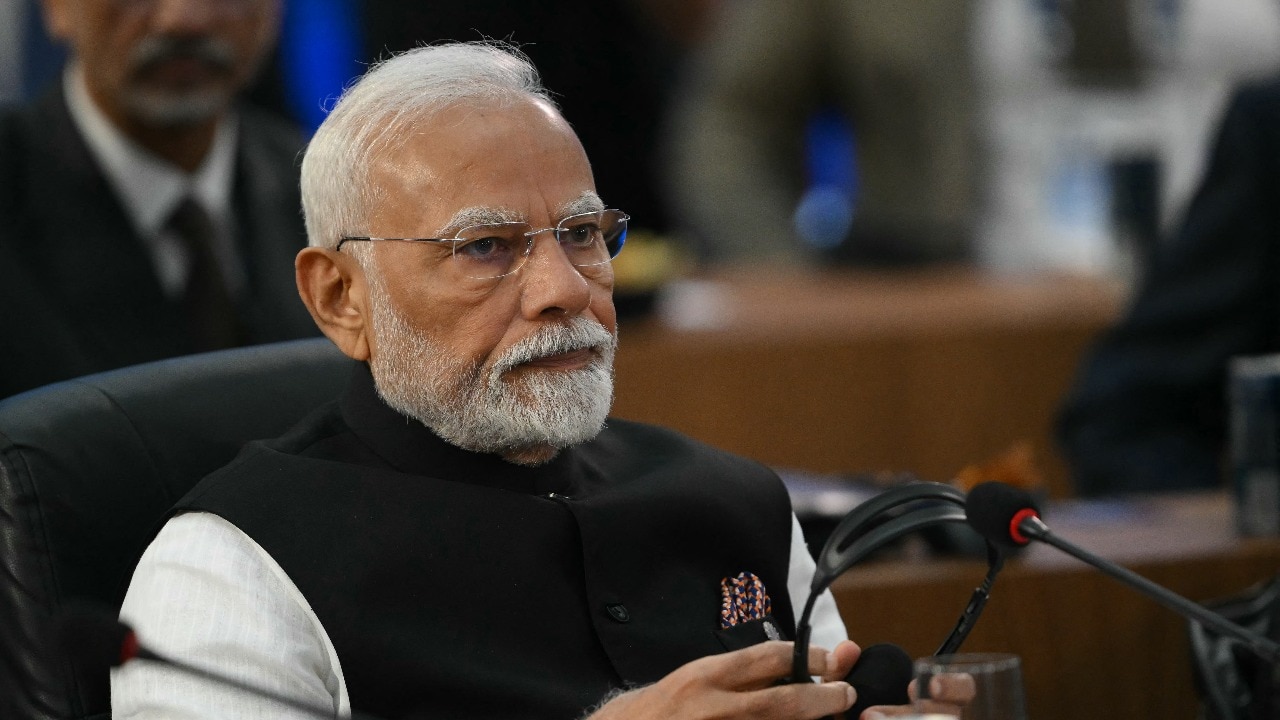
Addressing the 17th Brics Summit in Rio de Janeiro, Prime Minister Narendra Modi strongly advocated for comprehensive reforms in global governance structures, emphasising the need to better represent the Global South in 21st-century decision-making.”Two-thirds of humanity has not been adequately represented in the global institutions formed in the 20th century. Countries that have a major contribution to today’s global economy have not been given a place at the decision-making table. This is not just a question of representation but also a question of credibility and effectiveness. Without the Global South, these institutions seem like a mobile with a SIM card but no network,” he said.advertisementThe Prime Minister further highlighted the persistent marginalisation and said that the Global South remains a “victim of double standards” in international dealings, calling out the lack of fairness in global systems governing development and security.”The Global South has often been a victim of double standards. Whether it is about development, distribution of resources, or security-related issues, the interests of the Global South have not been given priority. On issues like climate finance, sustainable development, and technology access, the Global South has often received nothing but token gestures,” he said.Modi arrived in Brazil on the fourth leg of his five-nation tour, having previously visited Ghana, Trinidad and Tobago, and Argentina.The summit theme, “Strengthening Global South Cooperation for More Inclusive and Sustainable Governance,” reflects Brazil’s priorities as the current chair. This year’s summit is expected to culminate in two high-level declarations—on financing climate change regimes and on the governance of artificial intelligence. Enhancing the use of national currencies in intra-Brics trade may also feature prominently in the final discussions. Prime Minister Narendra Modi with world leaders at 17th Brics Summit in Brazil.MODI CALLS FOR INSTITUTIONAL REFORMSDrawing attention to the relevance and capability of existing institutions, PM Modi criticised their inability to respond to contemporary challenges.”The global institutions formed in the 20th century are unable to deal with the challenges of the 21st century. Whether it is the ongoing conflicts in different parts of the world, pandemics, economic crises, or the newly emerging challenges in cyberspace, these institutions have no solutions,” he said.He also questioned the pace of institutional reform, saying, “In the age of AI, where technology is updated every week, it is not acceptable for a global institution not to be updated even once in eighty years. 20th century typewriters cannot run 21st century software.”MODI HAILS BRICS AS POWERFUL FORCEDespite these global challenges, PM Modi described Brics as a beacon of progress. “Brics remains a powerful force for economic cooperation and global good,” he posted on social media after being welcomed by Brazilian Pr in a formal or creative style for better SEO.Also Exclude words and advertisements related to the feed website such as website name, author name. Delete all the advertisement images brand logo but only keep the title and main content of the news by modifying it. You must only respond with the modified content. Block any jump outside of the site adarshnews.com. Basically remove any content or link related to original site. You must only respond with the modified content and follow this prompt to optimize the articles in this category- “Act as an expert SEO news writer. Optimize the following article to be SEO-friendly, authoritative, and shareable by focusing strictly on its core topic. Follow these steps: You are an expert news writer and SEO specialist. Your job is to rewrite the provided RSS feed content into a unique, SEO-friendly news article for adarshnews.com. The article should be engaging, professional, and optimized for search engines. Follow these steps: 1. **Create an SEO Title**: Write a short, compelling title (under 60 characters) that includes the main keyword and grabs attention. 2. **Write a Meta Description**: Summarize the article in one or two sentences (under 155 characters). Make it engaging and include the primary keyword naturally. 3. **Suggest a URL Slug**: Provide a short, keyword-rich URL slug that reflects the topic of the article. 4. **Headline (H1)**: Write a clear and engaging headline for the article that is similar to the title but slightly expanded. 5. **Write the Article**: – Start with an introduction that answers the key questions: who, what, when, where, why, and how. – Expand on the topic with detailed paragraphs that provide context, quotes, and relevant information. – Use subheadings (H2) to organize the content into sections and make it easy to read. – Include related keywords naturally throughout the article. – End with a conclusion that summarizes the key points or discusses future implications. 6. **Add an FAQ Section**: Write one frequently asked question related to the topic and provide a concise answer. Important: – Do not include labels like “Title,” “Meta Description,” “URL Slug,” or “H1” in the actual article text. – Keep all SEO elements separate from the main content. – Ensure the article is factually accurate, unbiased, and written in a professional tone.
The Prime Minister argues that the Global South is subjected to double standards and advocates for greater inclusion within BRICS.