**Supreme Court to Examine NOTA Voting in Uncontested Elections**
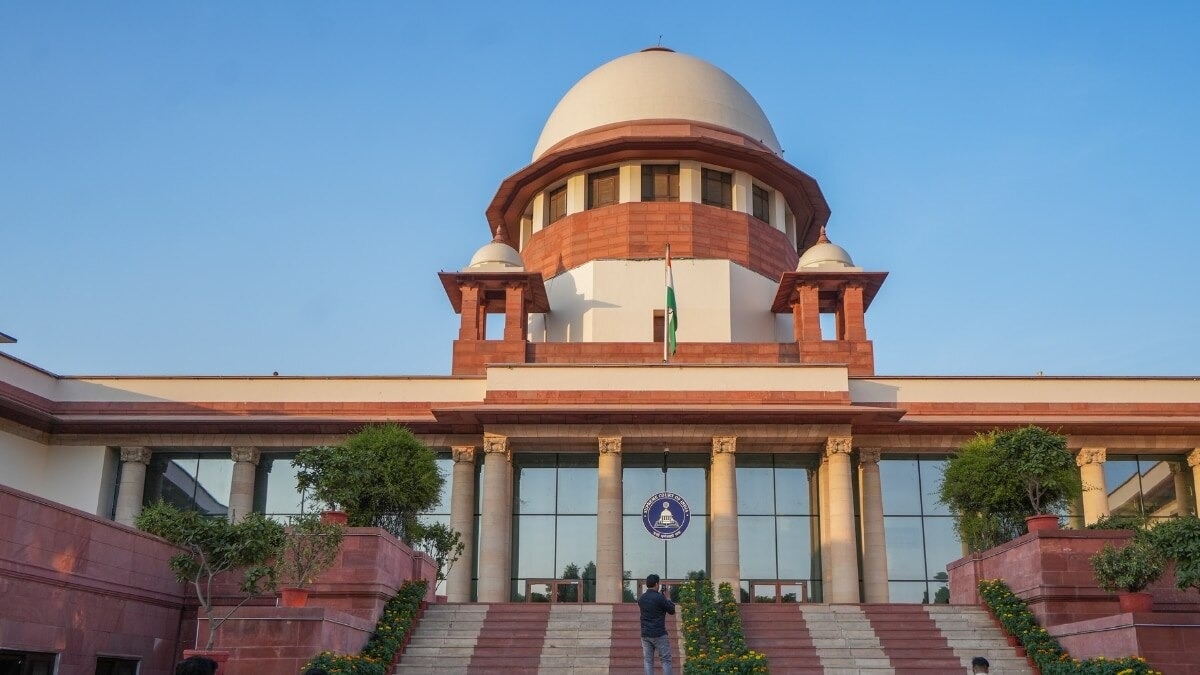
The Supreme Court has announced it will investigate the possibility of allowing the NOTA (None of the Above) voting option in constituencies where elections are uncontested, featuring only a single candidate. During a hearing on Thursday, the bench, comprising Justice Suryakant, Justice Ujjal Bhuyan, and Justice N Kotishwar Singh, emphasized the importance of enabling voters to express their preferences, even in the absence of multiple candidates. Justice Suryakant remarked, “If there is only one candidate and voters don’t like him, shouldn’t they be allowed to vote? This is a very interesting proposition.”
This discussion arose from a petition filed by the NGO Vidhi Center for Legal Policy, along with an intervention plea from the Association for Democratic Reforms (ADR). The petition challenges the current polling process for uncontested elections under Section 53(2) of the Representation of People Act, advocating for the inclusion of the NOTA option when only one candidate is contesting. The petitioners argue that since the introduction of NOTA in 2013, the electorate’s “Right to vote” is compromised in scenarios where there is only one candidate.
The petition highlights a significant decline in uncontested seats in Lok Sabha elections since 1989, yet notes that numerous instances of unopposed candidates still occur in state assembly and local body elections. During the hearing, the bench acknowledged that the petitioners appear to be seeking an extension of the NOTA principle. Justice Suryakant suggested that if voters opt for NOTA despite a single candidate, it indicates substantial discontent with that candidate.
However, the government and the Election Commission of India (ECI) opposed the petition. Attorney General R. Venkataramani described the situation as an “academic exercise” due to the rarity of uncontested elections, while also questioning the extent to which NOTA could be applied. Senior advocate Rakesh Dwivedi, representing the ECI, argued that dissatisfied voters have the option to nominate their own candidates.
Advocate Harsh Parasher, representing Vidhi Legal, countered that the issue directly impacts the public’s right to choose their representatives. He cited over 290 instances in recent years where candidates were elected unopposed in state assemblies, including six uncontested seats in Arunachal Pradesh for the upcoming 2024 elections. Parasher proposed that rules should permit the countermanding of elections if NOTA votes are cast in uncontested scenarios, raising questions about the implications of such a decision.
The bench noted that if NOTA were accepted and an election countermanded, it could lead to political parties fielding candidates in a more formal or creative manner.
**FAQ**
**Q: What is NOTA and how does it relate to elections?**
A: NOTA stands for “None of the Above” and allows voters to express disapproval of all candidates on the ballot. The Supreme Court is considering whether this option should be available in uncontested elections where only one candidate is running.