**Title:** PM Modi Highlights Makhana’s Importance in Bihar’s Economy
**Meta Description:** Prime Minister Modi emphasizes the significance of makhana in Bihar’s economy, appealing to voters and supporting local farmers.
**URL Slug:** pm-modi-makhana-bihar-economy
**Headline:** PM Modi’s Focus on Makhana: A Strategic Move for Bihar’s Farmers
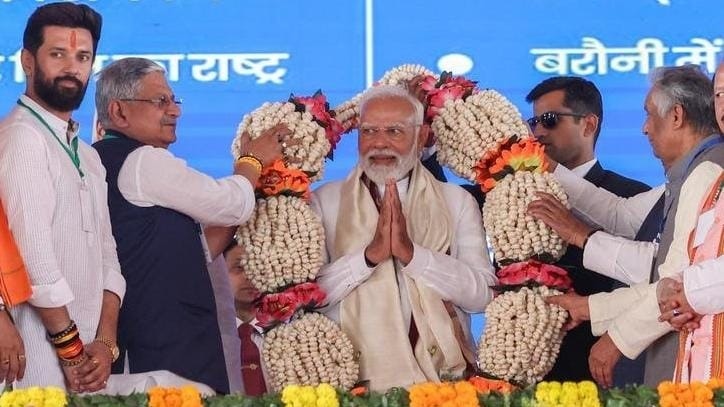
During his fifth visit to Bihar ahead of the elections, Prime Minister Narendra Modi once again highlighted his favorite snack, makhana, claiming he consumes it 300 days a year. Speaking at a rally in Motihari, East Champaran district, he noted that the price of makhana has risen under the NDA government, benefiting local farmers. However, this emphasis on makhana may serve a deeper strategic purpose.
The OBC Mallah community, which represents about 6% of Bihar’s electorate, plays a significant role in the processing of foxnuts. Community leaders are also advocating for their inclusion in the Scheduled Castes list. Notably, the nine districts in Bihar known for makhana cultivation account for approximately 25% of the seats in the state assembly. These districts include Darbhanga, Madhubani, Purnea, Katihar, Saharsa, Supaul, Araria, Kishanganj, and Sitamarhi.
Modi stated, “It was only after the NDA government came to power that the price of makhana increased, benefiting farmers. Additionally, products like litchi, Jardalu mango, Magahi paan, and ratale (yam) will be connected to markets worldwide.” Interestingly, four of these agricultural products from Bihar have received Geographical Indication (GI) status: Mithila Makhana, Shahi Litchi from Muzaffarpur, Jardalu mango from Bhagalpur, and Magahi Paan from the southern Magadh region.
By invoking makhana, Modi appears to be targeting voters in at least 61 of Bihar’s 243 Assembly seats. The Mallah community, part of the OBC category, constitutes nearly 63% of Bihar’s population, with over 34 lakh individuals according to the recent caste census. While some may argue that catering to a sub-caste does not guarantee support from the broader OBC bloc, experienced politicians like Modi recognize the potential ripple effects across caste groups.
Just moments after mentioning makhana, Modi emphasized, “The backward class and backward regions are the priority of our government. For decades, the OBC community demanded constitutional status, and it was our government that fulfilled this demand.” His reference to backward regions likely pertains to the makhana-growing districts, many of which are listed among the 250 aspirational districts identified by the Niti Aayog.
Makhana is not just a means to connect with a specific community; it also represents an economic and agricultural asset for Bihar, one of India’s most underdeveloped states. Bihar produces 90% of the country’s makhana, amounting to around 10,000 tonnes annually, according to the Indian Council of Agricultural Research (ICAR).
In conclusion, PM Modi’s focus on makhana during his campaign underscores its significance not only as a popular snack but also as a vital component of Bihar’s agricultural economy. This strategic emphasis may resonate with voters and bolster support for the NDA government in the upcoming elections.
**FAQ Section:**
**Q: Why is makhana significant in Bihar’s economy?**
A: Makhana is crucial as Bihar produces 90% of India’s supply, supporting local farmers and contributing to the state’s agricultural growth.