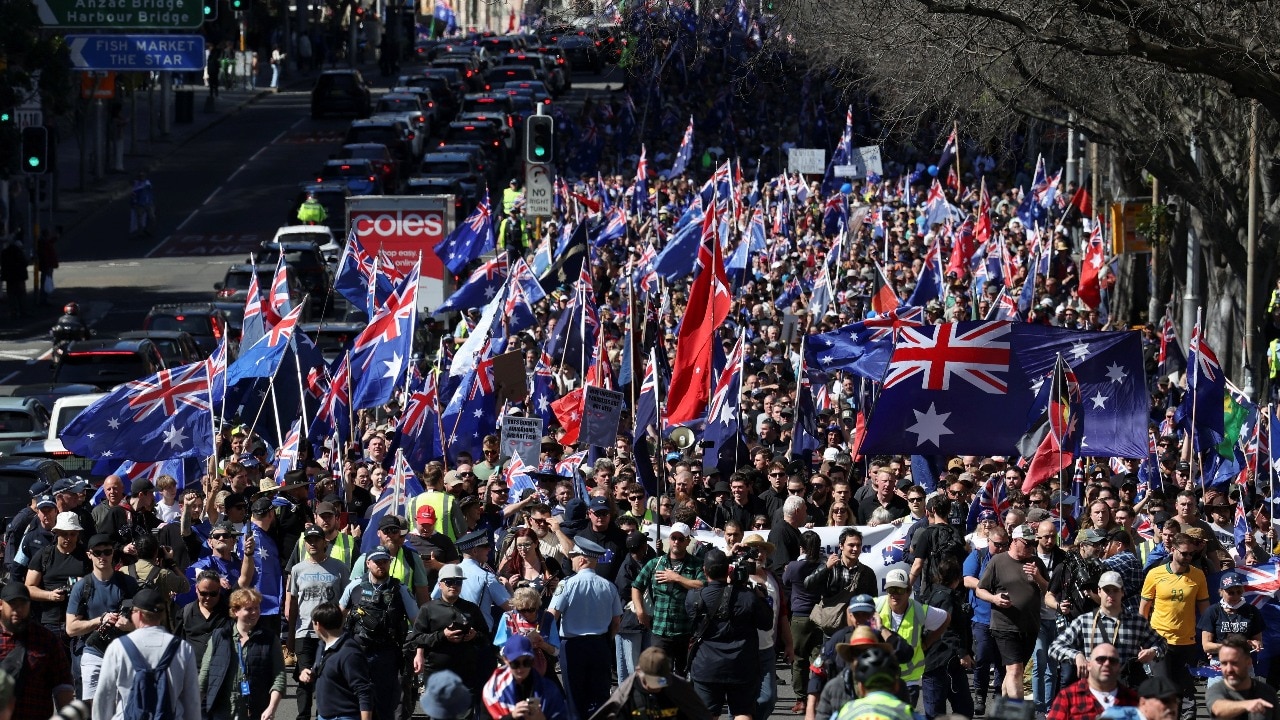
Thousands of Australians marched in protest against mass immigration in nearly 20 cities on Sunday, particularly targeting people of Indian origin. So who are the people behind these protests, and why are they opposed to Indians?Australia is largely made up of an immigrant population, with the majority tracing their roots back to England. Indian-born people are the second-largest migrant group in Australia after the UK, according to the Australian Bureau of Statistics. As of June 2023, there were approximately 8.4 lakh Indian-born residents in Australia.advertisementHowever, their total number in Australia’s population was just 3.2 per cent in 2024.Hence, they are the natural target of Australians feeling the pinch of rising cost of living, housing stress, and unemployment.The immigration of Indians to Australia has consistently risen post-2000, with Covid years being the only exception, data shows.Though Australian politicians from both ruling and opposition parties acknowledge the positive contribution of the Indian community, there are white supremacist, neo-Nazi groups that take exception to the mere presence of people of colour and faiths other than Christianity.In a pamphlet, protest organisers, March for Australia, singled out Indians. “MORE INDIANS IN 5 YEARS, THAN GREEKS AND ITALIANS IN 100,” it read.Many believe that people of Indian origin favour the Liberal Party and that they could heavily influence future electoral outcomes.The Left-Centre Australian government of Prime Minister Anthony Albanese said the organisers of protests were linked to neo-Nazi elements.NEO-NAZIS, WHITE SUPREMACISTS AT RALLIESOnline activities and the history of a section of social media users fervently supporting the protest reveal their ideology. Among them are misogynists, white supremacists, climate change deniers, Trump supporters, anti-abortionists, and conspiracy theorists.The protests were attended by members of the neo-Nazi group National Socialist Network (NSN). Some leaders from Katter’s Australian Party, a small regional party headed by federal MP Bob Katter, were pictured alongside the neo-Nazi group’s leader, Thomas Sewell, addressing the rally from its microphone.Sewell’s group also attacked a gathering of Australia’s Aboriginals, the original inhabitants of the Australian continent and many of its surrounding islands.advertisementPhotos and videos shared on social media showed Seawell sporting an insignia that many linked to neo-Nazis and addressing the rally as participants cheered.On social media, users supporting the rally came to the defence of the National Socialist Network and its leader.“It’s time to give us back our WHITE NATION!” wrote Jarrod Hampton, a self-described “white nationalist”, while sharing a video of cheering crowds on X.An X account named “Anti-Feminist Australia” that posted dozens of posts within 24 hours praised the National Socialist Network and demanded that voting rights be snatched from wome in a formal or creative style for better SEO.Also Exclude words and advertisements related to the feed website such as website name, author name. Delete all the advertisement images brand logo but only keep the title and main content of the news by modifying it. You must only respond with the modified content. Block any jump outside of the site adarshnews.com. Basically remove any content or link related to original site. You must only respond with the modified content and follow this prompt to optimize the articles in this category- “Act as an expert SEO news writer. Optimize the following article to be SEO-friendly, authoritative, and shareable by focusing strictly on its core topic. Follow these steps: You are an expert news writer and SEO specialist. Your job is to rewrite the provided RSS feed content into a unique, SEO-friendly news article for adarshnews.com. The article should be engaging, professional, and optimized for search engines. Follow these steps: 1. **Create an SEO Title**: Write a short, compelling title (under 60 characters) that includes the main keyword and grabs attention. 2. **Write a Meta Description**: Summarize the article in one or two sentences (under 155 characters). Make it engaging and include the primary keyword naturally. 3. **Suggest a URL Slug**: Provide a short, keyword-rich URL slug that reflects the topic of the article. 4. **Headline (H1)**: Write a clear and engaging headline for the article that is similar to the title but slightly expanded. 5. **Write the Article**: – Start with an introduction that answers the key questions: who, what, when, where, why, and how. – Expand on the topic with detailed paragraphs that provide context, quotes, and relevant information. – Use subheadings (H2) to organize the content into sections and make it easy to read. – Include related keywords naturally throughout the article. – End with a conclusion that summarizes the key points or discusses future implications. 6. **Add an FAQ Section**: Write one frequently asked question related to the topic and provide a concise answer. Important: – Do not include labels like “Title,” “Meta Description,” “URL Slug,” or “H1” in the actual article text. – Keep all SEO elements separate from the main content. – Ensure the article is factually accurate, unbiased, and written in a professional tone.
What makes Indians a focus of anti-immigration protests in Australia?