**Title:** Vice President Calls for Reassessment of Judicial Immunity in Corruption Cases
**Meta Description:** Vice President Dhankhar urges a review of judicial immunity laws amid concerns over a High Court judge’s cash discovery case.
**URL Slug:** vp-dhankhar-revisit-judicial-immunity
**Headline:** Vice President Dhankhar Advocates for Revisiting Judicial Immunity Laws Amid Corruption Concerns
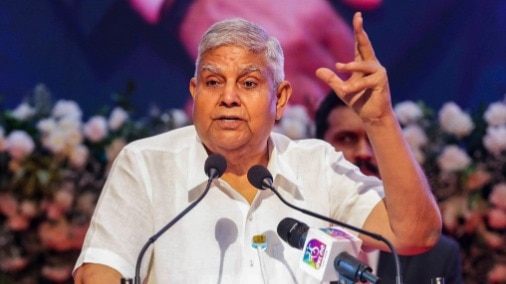
In a recent statement, Vice President Jagdeep Dhankhar emphasized the urgent need to reassess the Supreme Court’s ruling that mandates prior sanction for prosecuting judges of the Supreme Court and High Courts. This call to action comes in light of the ongoing investigation into a significant cash discovery case involving High Court judge Justice Yashwant Varma, raising questions about the delay in filing a First Information Report (FIR).
During a book launch event, Dhankhar expressed his concerns regarding the actions of a three-judge in-house committee that is investigating the case, particularly their decision to recover electronic devices from witnesses. He labeled this move as a “serious issue,” questioning the appropriateness of such actions in the context of judicial integrity.
Highlighting the necessity for a thorough and scientific criminal investigation, Dhankhar pointed out that the public is anxiously awaiting clarity on the money trail associated with the case. He questioned why the criminal justice system had not been activated in the same manner it would be for any other individual, emphasizing the need for transparency and accountability in the judicial process.
Justice Varma was transferred to the Allahabad High Court in March following the alleged discovery of a substantial amount of cash at his official residence in Delhi. This incident has sparked widespread concern about the potential implications for the judicial system and the integrity of its members.
Dhankhar specifically referenced the landmark K Veeraswami vs. Union of India case from 1991, which established that judges are considered “public servants” under the Prevention of Corruption Act but require prior sanction for prosecution. He argued that while judges should be protected from malicious attacks, there must be a robust and transparent regulatory mechanism in place to address any misconduct.
The Vice President also raised questions about the legitimacy of the in-house committee investigating the case, suggesting that its formation lacks constitutional and legal validity. He criticized the involvement of chief justices in an inquiry that may ultimately prove inconsequential, calling for a more effective approach to judicial accountability.
In conclusion, Dhankhar’s remarks underscore the pressing need for a reevaluation of judicial immunity laws and the establishment of a more transparent and accountable system for addressing allegations of corruption within the judiciary.
**FAQ Section:**
**Q: Why is Vice President Dhankhar calling for a reassessment of judicial immunity laws?**
A: Dhankhar believes that the current laws, which require prior sanction for prosecuting judges, may hinder accountability and transparency in the judicial system, especially in light of recent corruption allegations involving a High Court judge.