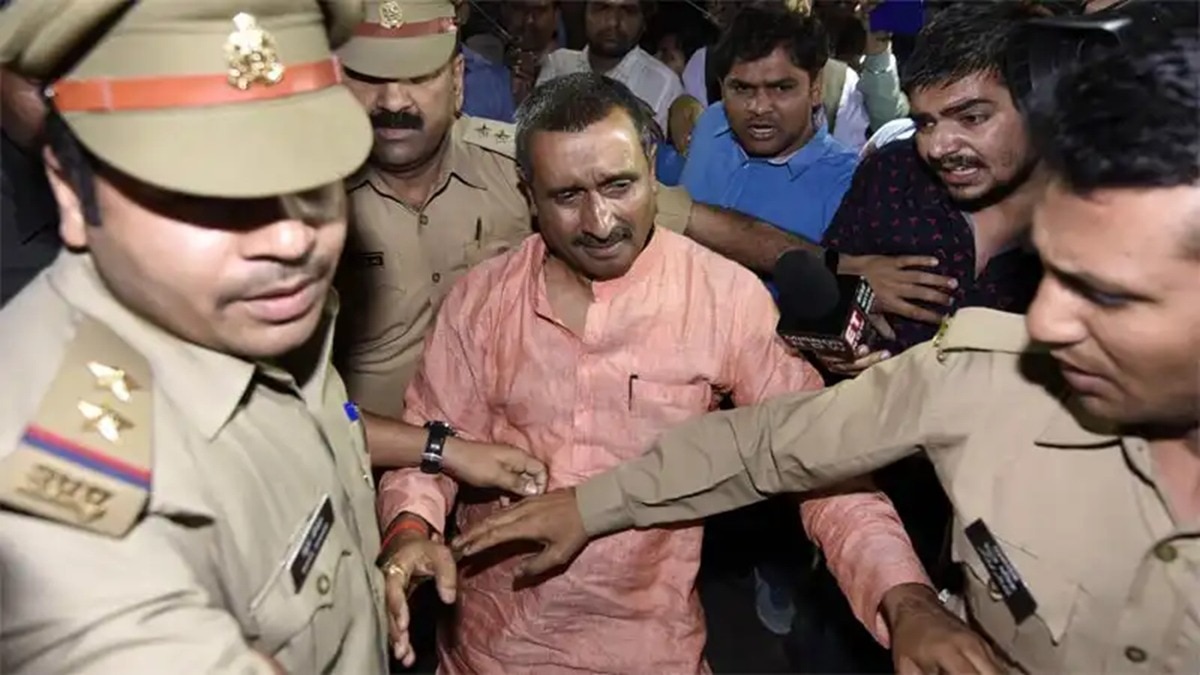
Amid the hullabaloo over the Delhi High Court suspending Unnao rape convict Kuldeep Singh Sengar’s life sentence, the Central Bureau of Investigation on Monday relied on earlier Supreme Court verdicts involving LK Advani and PV Narasimha Rao on the scope and definition of a “public servant.”While granting interim relief to Kuldeep Sengar, who was an MLA at the time of the Unnao incident, the Delhi High Court ruled that he did not fall under the ambit of a “public servant” under the Pocso Act. As a result, the charge of aggravated penetrative sexual assault – and the consequent punishment of 20 years or more – was held to be not applicable to him..advertisementCiting the 1997 L K Advani verdict and the Supreme Court’s judgment in the PV Narasimha Rao case, which held that MLAs and MPs fall within the definition of a “public servant” under Prevention of Corruption Act, 1988, the CBI argued before the Supreme Court that, for a special law like the Pocso Act, the Delhi High Court should have adopted a purposive and stricter interpretation of the definition.”High Court has erred in law by failing to adopt a purposive interpretation that advances the object and intent of the Pocso Act, a special, victim-centric legislation enacted to protect children from sexual offences,” the CBI plea stated.In CBI’s plea challenging the grant of bail to Unnao rape convict Kuldeep Singh Sengar, the Supreme Court wondered how a constable or a patwari could fall under the ambit of a “public servant” under the Pocso Act, but not a legislator.In its plea, the CBI further went on to point that “offences under Section 5(c) of the Pocso Act are of greater gravity than corruption offences by MP’S/MLA’S.””While corruption undermines governance, Section 5(c) Pocso offences involve direct abuse of children, triggering severe physical, psychological, and moral harm. The legislature has therefore provided for stringent mandatory penalties, protective procedural safeguards, and enhanced liability for persons in positions of trust or authority, reflecting the higher societal interest in protecting the vulnerable over abstract institutional harm,” the plea further states.The CBI further pointed out that Section 21 of the IPC, Section 2(c) of the Prevention of Corruption Act, 1988, and Section 5(c) of the Pocso Act, 2012, share a common legislative intent of holding persons in positions of trust, authority, or public duty accountable for misconduct.”A purposive and harmonious construction of these provisions ensures that MPs, MLAs, government functionaries, and other persons exercising public functions are treated as ‘public servants’ or ‘persons in authority’ wherever abuse of office or trust occurs, thereby advancing both the objectives of anti-corruption law and protection of vulnerable persons,” the CBI said.The Supreme Court on Monday put on hold the Delhi High Court’s order granting bail to former BJP MLA Kuldeep Singh Sengar in the Unnao rape case.advertisementA in a formal or creative style for better SEO.Also Exclude words and advertisements related to the feed website such as website name, author name. Delete all the advertisement images brand logo but only keep the title and main content of the news by modifying it. You must only respond with the modified content. Block any jump outside of the site adarshnews.com. Basically remove any content or link related to original site. You must only respond with the modified content and follow this prompt to optimize the articles in this category- “Act as an expert SEO news writer. Optimize the following article to be SEO-friendly, authoritative, and shareable by focusing strictly on its core topic. Follow these steps: You are an expert news writer and SEO specialist. Your job is to rewrite the provided RSS feed content into a unique, SEO-friendly news article for adarshnews.com. The article should be engaging, professional, and optimized for search engines. Follow these steps: 1. **Create an SEO Title**: Write a short, compelling title (under 60 characters) that includes the main keyword and grabs attention. 2. **Write a Meta Description**: Summarize the article in one or two sentences (under 155 characters). Make it engaging and include the primary keyword naturally. 3. **Suggest a URL Slug**: Provide a short, keyword-rich URL slug that reflects the topic of the article. 4. **Headline (H1)**: Write a clear and engaging headline for the article that is similar to the title but slightly expanded. 5. **Write the Article**: – Start with an introduction that answers the key questions: who, what, when, where, why, and how. – Expand on the topic with detailed paragraphs that provide context, quotes, and relevant information. – Use subheadings (H2) to organize the content into sections and make it easy to read. – Include related keywords naturally throughout the article. – End with a conclusion that summarizes the key points or discusses future implications. 6. **Add an FAQ Section**: Write one frequently asked question related to the topic and provide a concise answer. Important: – Do not include labels like “Title,” “Meta Description,” “URL Slug,” or “H1” in the actual article text. – Keep all SEO elements separate from the main content. – Ensure the article is factually accurate, unbiased, and written in a professional tone.
Why did the CBI mention LK Advani and Narasimha Rao in its challenge to Kuldeep Sengar’s bail?