**Satellite Detecting Methane Emissions Lost in Space**
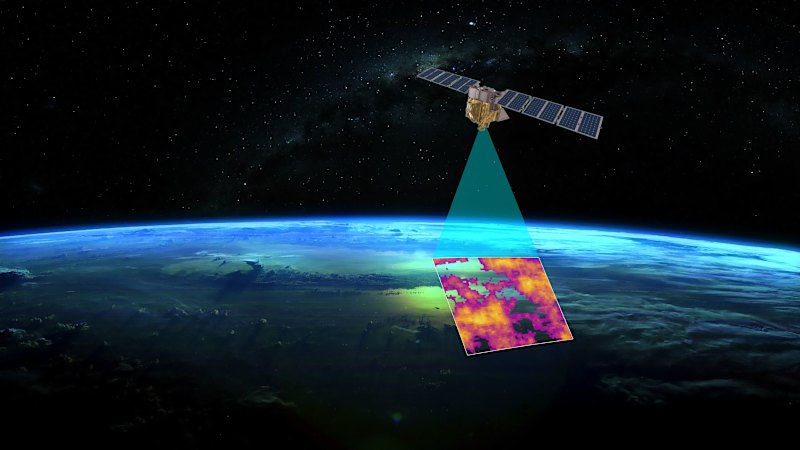
A $88 million satellite, MethaneSAT, funded by billionaire Jeff Bezos, has been reported lost in space after detecting emissions from the oil and gas industry. The Environmental Defense Fund (EDF), which operates the satellite, announced on Tuesday that MethaneSAT had been collecting data on methane emissions from various global drilling sites, pipelines, and processing facilities since its launch in March. However, it went off course approximately ten days ago.
The satellite was developed with a $100 million grant from the Bezos Earth Fund in 2020. Its last known position was over Svalbard, Norway, and EDF indicated that recovery was unlikely due to a loss of power. Amy Middleton, EDF’s senior vice president, described the situation as a setback rather than a failure, emphasizing the valuable insights gained from the project. “We’ve made so much progress and so much has been learned that if we hadn’t taken this risk, we wouldn’t have any of these learnings,” she stated.
The launch of MethaneSAT marked a significant achievement in EDF’s ongoing efforts to hold over 120 countries accountable for their commitments to reduce methane emissions, made during a 2021 pledge. Additionally, it aimed to support a promise from 50 oil and gas companies made at the COP28 climate summit in December 2023 to eliminate methane emissions and routine gas flaring. Methane is a potent greenhouse gas, with a warming potential 80 times greater than that of carbon dioxide over a 20-year period. Experts assert that addressing leaks from oil and gas operations is one of the quickest ways to combat global warming.
While MethaneSAT was not the only satellite project monitoring methane emissions, its supporters highlighted its ability to provide detailed information on emission sources. The satellite collaborated with Google to create a publicly accessible global emissions map.
Following the satellite’s loss, EDF reported the incident to federal agencies, including the National Oceanic and Atmospheric Administration and the U.S. Space Force. The total cost of building and launching MethaneSAT was $88 million, with additional funding from Arnold Ventures, the Robertson Foundation, and the TED Audacious Project. The project also partnered with the New Zealand Space Agency. EDF confirmed it had insurance to cover the loss and is currently investigating the circumstances surrounding the satellite’s failure. Meanwhile, the organization plans to continue utilizing its resources, including aircraft equipped with methane-detecting spectrometers, to monitor for methane leaks. Although it is too early to determine if another satellite will be launched, EDF believes that MethaneSAT demonstrated the capability of highly sensitive instruments to detect emissions effectively.
**FAQ**
**What is MethaneSAT and why is it important?**
MethaneSAT is a satellite designed to detect methane emissions from the oil and gas industry. It plays a crucial role in monitoring greenhouse gas emissions, helping to hold countries and companies accountable for their commitments to reduce methane emissions and combat climate change.