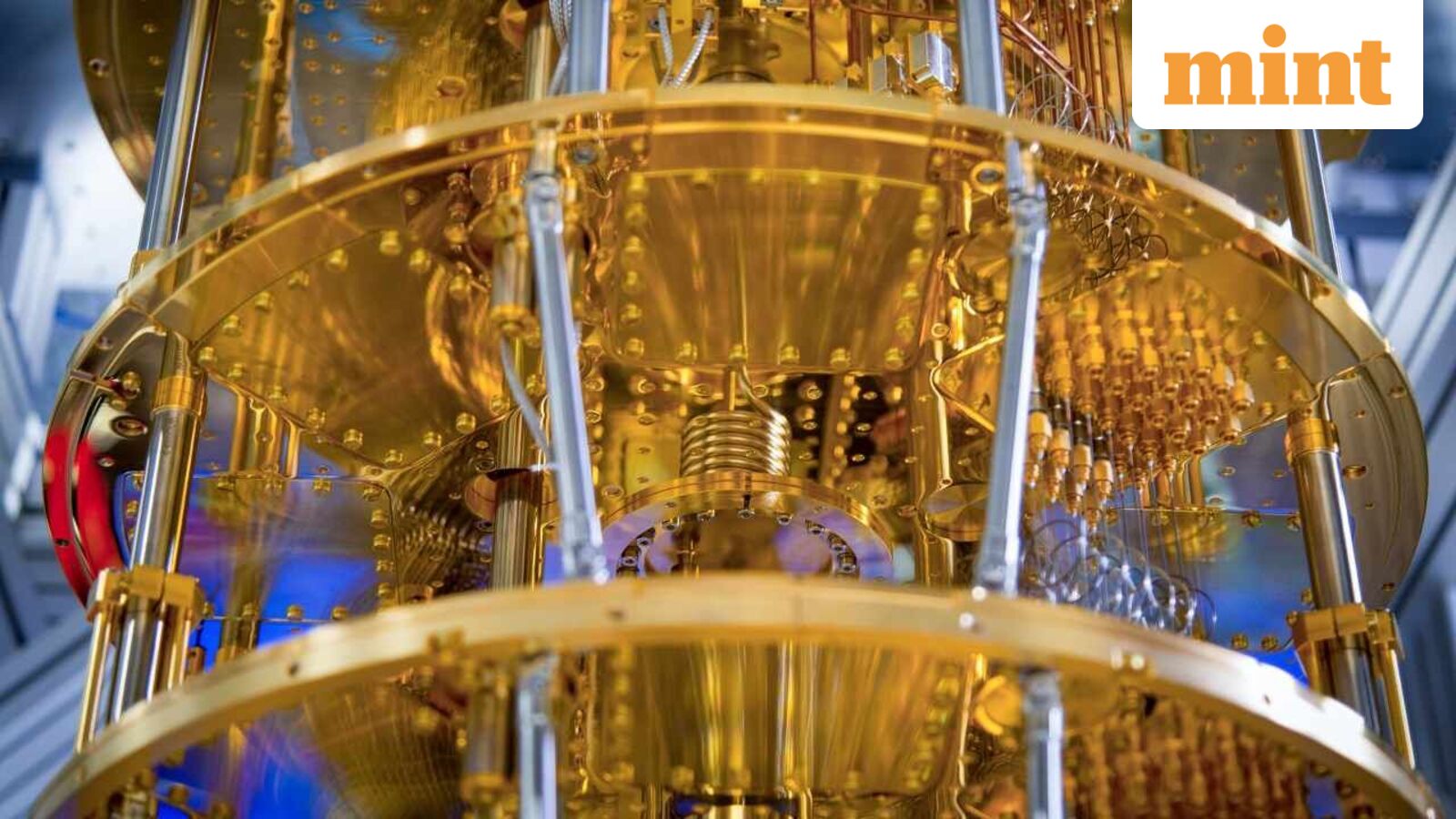
Europe is aiming to become the global leader in quantum computing. IQM, a Finnish start-up, is one of the building blocks of that endeavor. The company generated buzz last week, raising more than $300 million in a funding round led by a U.S. investment firm. That Series B capital raising could be an early sign that investors are recognizing how the continent has emerged as a hotbed of ingenuity for quantum in recent years. Privately traded pure plays are springing up. “If you look at the technology, it’s still very early, but we can build products that can compete even with the big names in the U.S.,” IQM co-CEO Jan Goetz said in an interview with Barron’s. “There’s this sentiment that finally, we have a chance, and I think there’s a lot of optimism here.” After wrapping up a PhD in physics in 2016, Goetz found himself drawn to quantum computing, which was starting on the slow crawl from a research setting into the real world. “Quantum was making the transition from university labs to industry,” Goetz said. “Here in Europe, we were still a bit behind, not from the technology perspective, but from the commercialization perspective.” IQM was founded in 2018. The following year, the start-up became the first in Finland to raise seed funding, at €11.4 million ($13.4 million). In the years that followed, it established itself as one of the pre-eminent quantum players in Europe, with clients including the Leibniz Supercomputing Centre in Germany and the VTT Technical Research Centre in Finland. IQM’s processors are built from electronic circuits that are cooled to reach superconductivity, a state where they can conduct electricity with zero electrical resistance. “The superconducting approach is based on chip technology,” Goetz said. “We actually use very standard semiconductor processes to build our chips. And this alone tells you that it’s a very scalable approach.” The tried-and-true nature of superconducting quantum computing makes it a popular modality. Much bigger players, such as Microsoft, International Business Machines, and Alphabet’s Google, use the same approach, with slight variations. IQM aims to set itself apart from these behemoths by building better machines. In 2024, the company reported a technical milestone when one of its quantum processors achieved 99.9% fidelity. High fidelity is essential for the performance of quantum algorithms; it negatively correlates to errors, a persistent problem in the business. The company is making strides commercially, as well. As of May 20, IQM had sold and shipped more on-premises quantum computers in the previous 12 months than any other manufacturer. Goetz said the company can produce up to 20 computers a year, “which is really a lot in this industry.” From left: Juha Lehtola, director of venture and growth investments at Tesi; Alex Doll, co-founder and managing general partner of Ten Eleven Ventures; D in a formal or creative style for better SEO.Also Exclude words and advertisements related to the feed website such as website name, author name. You must only respond with the modified content. Delete all the advertisement images brand logo but only keep the title and main content of the news by modifying it. You must only respond with the modified content. Block any jump outside of the site adarshnews.com. Basically remove any content or link related to original site. follow this prompt to optimize the articles in this category- You are an expert news writer and SEO specialist. Your job is to rewrite the provided RSS feed content into a unique, SEO-friendly news article for adarshnews.com. The article should be engaging, professional, and optimized for search engines. Follow these steps: 1. **Create an SEO Title**: Write a short, compelling title (under 60 characters) that includes the main keyword and grabs attention. 2. **Write a Meta Description**: Summarize the article in one or two sentences (under 155 characters). Make it engaging and include the primary keyword naturally. 3. **Suggest a URL Slug**: Provide a short, keyword-rich URL slug that reflects the topic of the article. 4. **Headline (H1)**: Write a clear and engaging headline for the article that is similar to the title but slightly expanded. 5. **Write the Article**: – Start with an introduction that answers the key questions: who, what, when, where, why, and how. – Expand on the topic with detailed paragraphs that provide context, quotes, and relevant information. – Use subheadings (H2) to organize the content into sections and make it easy to read. – Include related keywords naturally throughout the article. – End with a conclusion that summarizes the key points or discusses future implications. 6. **Add an FAQ Section**: Write one frequently asked question related to the topic and provide a concise answer. Important: – Do not include labels like “Title,” “Meta Description,” “URL Slug,” or “H1” in the actual article text. – Keep all SEO elements separate from the main content. – Ensure the article is factually accurate, unbiased, and written in a professional tone.
A European quantum computing startup has devised a strategy to compete with industry giants like IBM and Google.