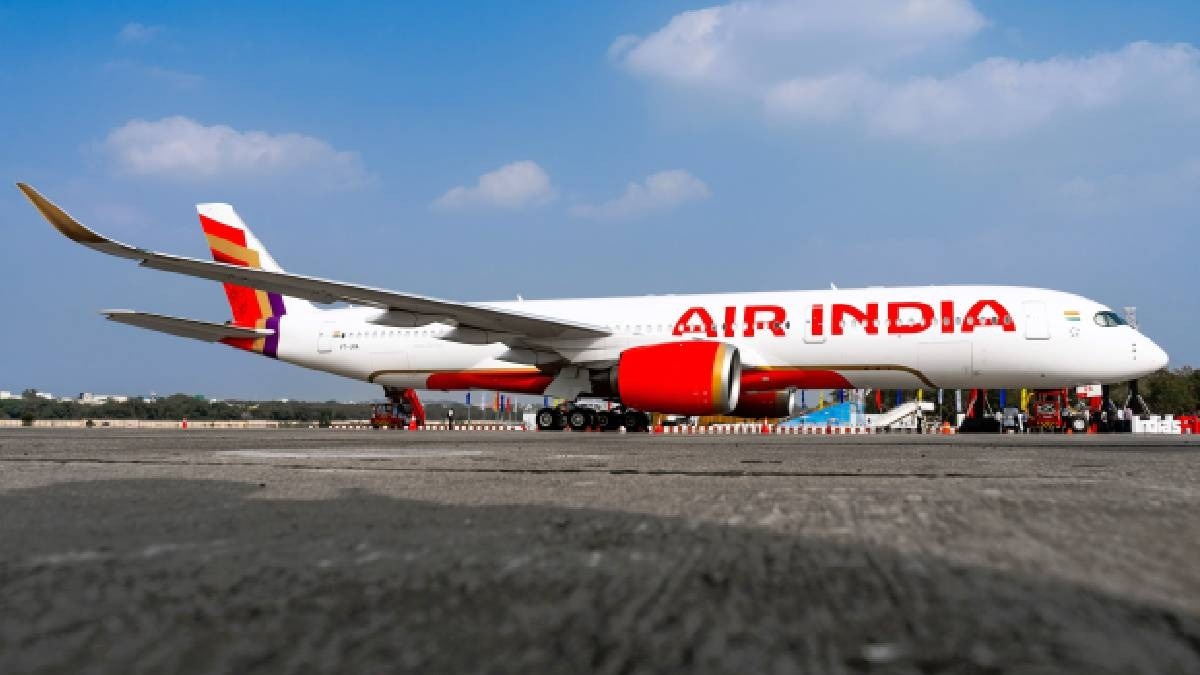
NewsIndiaAir India trims international flights: Here’s a list of routes affectedAir India has cut down 15 per cent of its international flights from June 21 to July 15. This comes amid the airline’s initiative to conduct pre-flight safety checks following the Ahmedabad plane crash and airspace closures due to geopolitical tensions in the Middle East.Listen to StoryLive TVAdvertisementAccording to Air India, the decision to cut down international flights aimed to restore schedule stability and minimise last-minute inconvenience to passengers. (Photo: Reuters)Amit BhardwajIn ShortAir India cuts 15% of international flights from June 21 to July 15Safety checks due to Ahmedabad crash, Middle East tensions cause schedule changesMultiple North America, Europe and Australia routes see reduced frequenciesAir India has announced a temporary reduction of 15 per cent in its international wide-body operations, effective from June 21 through at least July 15. The move came as part of the airline’s initiative to conduct enhanced pre-flight safety checks that were mandated following last week’s Ahmedabad plane crash and to adjust for increased flight durations due to airspace closures in the Middle East amid geopolitcal tensions.advertisementAccording to the airline, the decision aims to restore schedule stability and minimise last-minute inconvenience to passengers during this period of operational strain.DETAILS OF FLIGHTS AFFECTEDRoutes suspended until July 15 -Delhi-Nairobi (AI961/962): Four times per weekAmritsar-London Gatwick (AI169/170): Three times per weekGoa (Mopa)-London Gatwick (AI145/146): Three times per weekRoutes with reduced frequency -North America:Delhi-Toronto: Before – 13 times per week; Now – seven times per weekDelhi-Vancouver: Before – seven times per week; Now – five times per weekDelhi-San Francisco: Before – 10 times per week; Now – seven times per weekDelhi-Chicago: Before – seven times per week; Now – three times per weekDelhi-Washington Dulles: Before – five times per week; Now – three times per weekEurope:Delhi-London Heathrow: Before – 24 times per week; Now – 22 times per weekBengaluru-London Heathrow: Before – seven times per week; Now – 6 times per weekAmritsar/Delhi-Birmingham: Before – three times per week; Now – two times per weekDelhi–Paris: Before – 14 times per week; Now – 12 times per weekDelhi–Milan: Before – seven times per week; Now – four times per weekDelhi–Copenhagen: Before – five times per week; Now – three times per weekDelhi–Vienna: Before – four times per week; Now – three times per weekDelhi–Amsterdam: Before – seven times per week; Now – five times per weekadvertisementAustralia:Delhi–Melbourne and Delhi–Sydney: Before – seven times per week; Now – five times per weekAir India apologised to the passengers who were affected due to these curtailments.”Air India apologises to the passengers affected by these curtailments, and is proactively contacting affected passengers to offer re-accommodat in a formal or creative style for better SEO.Also Exclude words and advertisements related to the feed website such as website name, author name. Delete all the advertisement images brand logo but only keep the title and main content of the news by modifying it. You must only respond with the modified content. Block any jump outside of the site adarshnews.com. Basically remove any content or link related to original site. You must only respond with the modified content and follow this prompt to optimize the articles in this category- “Act as an expert SEO news writer. Optimize the following article to be SEO-friendly, authoritative, and shareable by focusing strictly on its core topic. Follow these steps: You are an expert news writer and SEO specialist. Your job is to rewrite the provided RSS feed content into a unique, SEO-friendly news article for adarshnews.com. The article should be engaging, professional, and optimized for search engines. Follow these steps: 1. **Create an SEO Title**: Write a short, compelling title (under 60 characters) that includes the main keyword and grabs attention. 2. **Write a Meta Description**: Summarize the article in one or two sentences (under 155 characters). Make it engaging and include the primary keyword naturally. 3. **Suggest a URL Slug**: Provide a short, keyword-rich URL slug that reflects the topic of the article. 4. **Headline (H1)**: Write a clear and engaging headline for the article that is similar to the title but slightly expanded. 5. **Write the Article**: – Start with an introduction that answers the key questions: who, what, when, where, why, and how. – Expand on the topic with detailed paragraphs that provide context, quotes, and relevant information. – Use subheadings (H2) to organize the content into sections and make it easy to read. – Include related keywords naturally throughout the article. – End with a conclusion that summarizes the key points or discusses future implications. 6. **Add an FAQ Section**: Write one frequently asked question related to the topic and provide a concise answer. Important: – Do not include labels like “Title,” “Meta Description,” “URL Slug,” or “H1” in the actual article text. – Keep all SEO elements separate from the main content. – Ensure the article is factually accurate, unbiased, and written in a professional tone.
Air India reduces its international flight schedule. Here are the routes impacted.