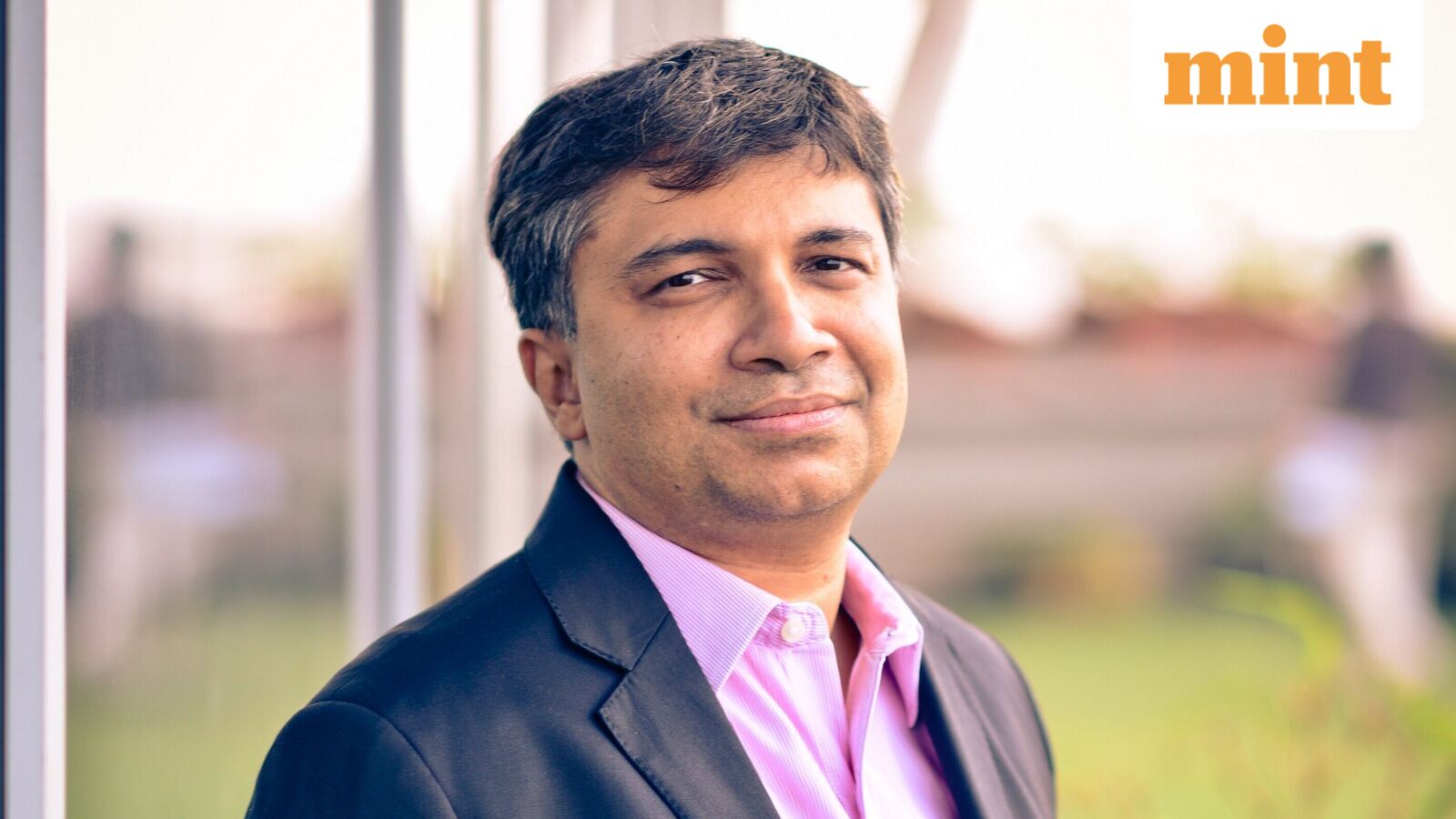
Indian venture capital (VC) firms have not been investing in ideas or companies that can potentially be a game changer for the country or humanity at large, argued T. N. Hari, executive chairman, Steer World, in a debate with Ritesh Banglani, partner, Stellaris Venture Partners, at the Mint India Investment Summit and Awards in Mumbai on Saturday.“They’ve just been content investing in ideas and companies that merely tweak business models to deliver endless convenience at your fingertips and your doorstep. The VC world in India has been abysmally lowering the standards for what it means to be a tech company or even what it means to be technology,” Hari said in the debate on whether Indian VCs invest in moonshot ideas.Investing in moonshot ideas doesn’t mean burning endless capital in making contrived solutions and problems that are seemingly real or chasing problems with imaginary network effects, he added.In his counterargument, Banglani said the thought of a moonshot idea is highly subjective depending on the needs of the market and the existing capabilities of an economy.He explained the right measure of a big investment idea is impact be it economic, social or cultural, citing examples of VC-backed sectors such as spacetech, semiconductors, energy, robotics and biotech.Hari took a critical view of the ideas that are getting funded and emphasised that much of them have been riding at the intersection of Aadhaar, broadband, and smartphones, a recipe that has been created by Mukesh Ambani, Nandan Nilekani, and Steve Jobs.“Using that intersection, they’ve been building on discoverability, accessibility, connectivity, and transactability. Every single startup is solving this problem,” Hari said, adding that there has to be more real tech companies to actually create moonshot ideas to compete with countries like China.He said there were more real problems that were yet to be solved.Although Banglani acknowledged the importance of solving problems across the board, the VC investor emphasised there is no hierarchy to solving problems. “One cannot say once the hunger problem is solved, we will send satellites into space. Hunger might not be a problem for all of us but that doesn’t mean that problems we do have, problems related to education, jobs, loans, and even credit cards, are not real problems. I don’t think we can trivialize those problems,” Banglani said.“Companies like Paytm have really simplified the lives of people beyond the metros by facilitating transactions and loans from formal institutions, and enabled smoother business operations,” he added.However, Hari argued they have to be more diligent in funding big ideas that actually matter and solve real problems for people, which is now being addressed by corporates rather than companies that are being funded by VCs who are really supposed to invest in risky ideas. “We have to find answers to many questions… otherwise who’s going to solve India’s problems?”Catch all in a formal or creative style for better SEO.Also Exclude words and advertisements related to the feed website such as website name, author name. You must only respond with the modified content. Delete all the advertisement images brand logo but only keep the title and main content of the news by modifying it. You must only respond with the modified content. Block any jump outside of the site adarshnews.com. Basically remove any content or link related to original site. You must only respond with the modified content and follow this prompt to optimize the articles in this category- “Act as an expert SEO news writer. Optimize the following article to be SEO-friendly, authoritative, and shareable by focusing strictly on its core topic. Follow these steps: 1. Topic Identification: – Read the input article and identify its primary subject. – Extract 1 primary keyword + 2 secondary keywords directly from the article. 2. Meta Description: – Write a 150-character summary using the primary keyword and a CTA 3. Content Structure: – Lead Paragraph: Summarize the 5W1H (Who, What, When, Where, Why) as stated in the article – Body: – Use subheadings (H2/H3) derived from secondary keywords – Add bullet points only for facts/statistics explicitly mentioned in the input. – Include quotes or data from the article (do not invent new stats). – Conclusion: End with a question/CTA tied to the article’s topic. 4. – Add 1 FAQ based on the article’s key point. 5. Viral Readability: – Use news article sentences structure. Avoid off-topic emotional triggers. 6. Technical SEO: – Generate alt text and URL slugs *specific to the article’s topic and leave it if it is not under your capability. Output Format for the article should be- [Summary with primary keyword] [Structured body using input’s facts] FAQ: [Relevant question + answer]
Are venture capitalists in India putting money into ambitious, high-risk projects?