


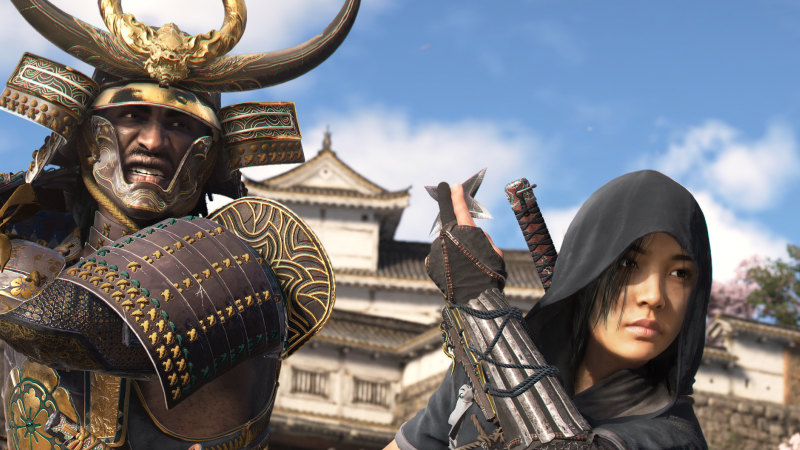
Assassin’s Creed stands as one of the most significant and prolific franchises in gaming, having released 13 main titles over the past 18 years. Throughout this time, many fans of the historical fiction series have longed for a game set in feudal Japan. Next month, that wish will finally be fulfilled. However, Assassin’s Creed Shadows signifies more than just a long-anticipated installment; it marks a new chapter for a franchise that has undergone multiple reinventions while still grappling with the challenge of appealing to both new and longtime fans. For Ubisoft, this release could be pivotal.
The upcoming Assassin’s Creed is set in Japan and features two protagonists. The French publishing company has faced challenges due to the evolving landscape of the video game industry, resulting in the loss of thousands of employees over the past two years. The increasing costs and complexities of high-end development have led to a period of financial struggles for the publicly traded company. Its efforts to pivot towards multiplayer and service-based games have largely not met expectations, and sales of new titles in established franchises, as well as licensed games based on films, have fallen short of Ubisoft’s ambitious goals.
Players and industry analysts have pointed to various factors contributing to this situation, including Ubisoft’s vast global presence, attempts to monetize games through microtransactions, and reliance on proprietary platforms and subscriptions. Assassin’s Creed is viewed as one of its most reliable franchises, with 2020’s Valhalla generating approximately $1 billion in revenue during its first year. Shadows, which will also introduce a new “hub” connecting recent games in the series, must demonstrate that it can maintain this success.
After experiencing a preview build of the game for about four hours, it’s evident that there is a strong desire to evolve the series. The gameplay combines the parkour and assassination mechanics of the original titles with the expansive RPG design seen in Odyssey and Valhalla. The developers have clearly aimed to address common player frustrations, though with mixed results. New systems reduce the number of map markers directing players to objectives, yet they still feel somewhat like busywork. On the other hand, the weapons-based character progression system appears promising, and the introduction of dual protagonists offers a compelling solution for balancing stealth and combat.
The first protagonist, Yasuke, is based on a real historical figure—an African man brought to Japan by European Jesuits who became a formidable samurai under the clan leader Oda Nobunaga. The second protagonist, Naoe, is a nimble, ninja-like warrior whose village is attacked by Nobunaga. Their contrasting styles create an intriguing dynamic; Yasuke is bold and straightforward in battle, while Naoe is more cautious and stealthy. Additionally, Naoe’s connection to her Japanese heritage contrasts with Yasuke’s status as a foreigner, highlighting the interplay between tradition and innovation.


