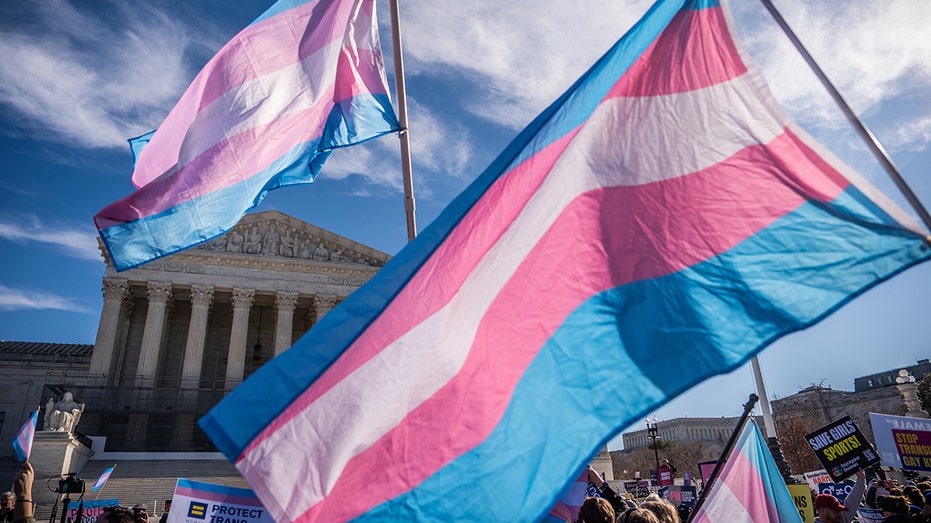
**Title:** Supreme Court Hears Arguments on Trans Athletes and Title IX
**Meta Description:** The Supreme Court hears the West Virginia v. B.P.J. case, raising questions about the legal definition of sex in relation to Title IX and trans athletes.
**URL Slug:** supreme-court-trans-athletes-title-ix
**Headline:** Supreme Court Considers Definition of Sex in Trans Athletes Case
In a pivotal Supreme Court hearing regarding the West Virginia v. B.P.J. case, which addresses the participation of transgender athletes in women’s sports, American Civil Liberties Attorney Joshua Block argued against the legal definition of “sex.” Block represents Becky Pepper-Jackson, a transgender teen from West Virginia who filed a lawsuit in 2021 to challenge the state’s law that bars biological males from competing in girls’ sports.
During the oral arguments, Block contended that the court should avoid defining “sex” in its ruling, emphasizing that the focus should be on whether the law discriminates against individuals based on their gender identity. “I urge the court not to resolve this case based on the definition of sex,” Block stated, asserting that Title IX’s purpose is to prevent discrimination rather than to establish a precise definition of sex.
Block’s comments came as he argued that West Virginia’s law violates Title IX, which prohibits sex-based discrimination in educational programs. He expressed concern that a ruling based on a strict definition of sex could misinterpret the intent of Title IX, which he believes should ensure equal opportunities for all, regardless of gender classification.
Chief Justice John Roberts challenged Block’s position, questioning how the court could address claims of discrimination without a clear understanding of what “sex” means under Title IX. Block responded by suggesting that discrimination could occur against individuals based on gender expression, but he acknowledged that biological differences are also relevant in discussions of sex.
The case has significant implications for the future of transgender athletes in sports and the interpretation of Title IX. As the court deliberates, the outcome could set a precedent for how gender identity and biological sex are understood in legal contexts.
**FAQ Section:**
**Q: What is the significance of the West Virginia v. B.P.J. case?**
A: The case addresses the participation of transgender athletes in women’s sports and challenges a state law that prohibits biological males from competing, raising important questions about the interpretation of Title IX and discrimination based on gender identity.