**Bitcoin Mining: Reviving the Working-Class Hero**
Bitcoin is often perceived merely as an asset to buy, store, and wait for appreciation. This perspective, common among white-collar investors, presents a sanitized and abstract view of cryptocurrency, ideal for financial reports and portfolio analyses. However, the reality of Bitcoin mining is far more complex and tangible. It is a noisy, physical endeavor that relies heavily on energy and infrastructure. Unlike passive investors, miners actively create Bitcoin, a fact that is frequently overlooked but crucial to understanding the cryptocurrency’s ecosystem.
**Experiencing Both Worlds**
Before venturing into Bitcoin mining, I was immersed in the solar industry, where I developed models, forecasts, and client pitches. I was well-versed in the numbers, but it wasn’t until I was physically on rooftops in California, racing against weather and supply chain issues, that I grasped the true essence of the work. The spreadsheets alone didn’t install solar panels; it was the dedicated crews that made it happen. The same principle applies to Bitcoin mining.
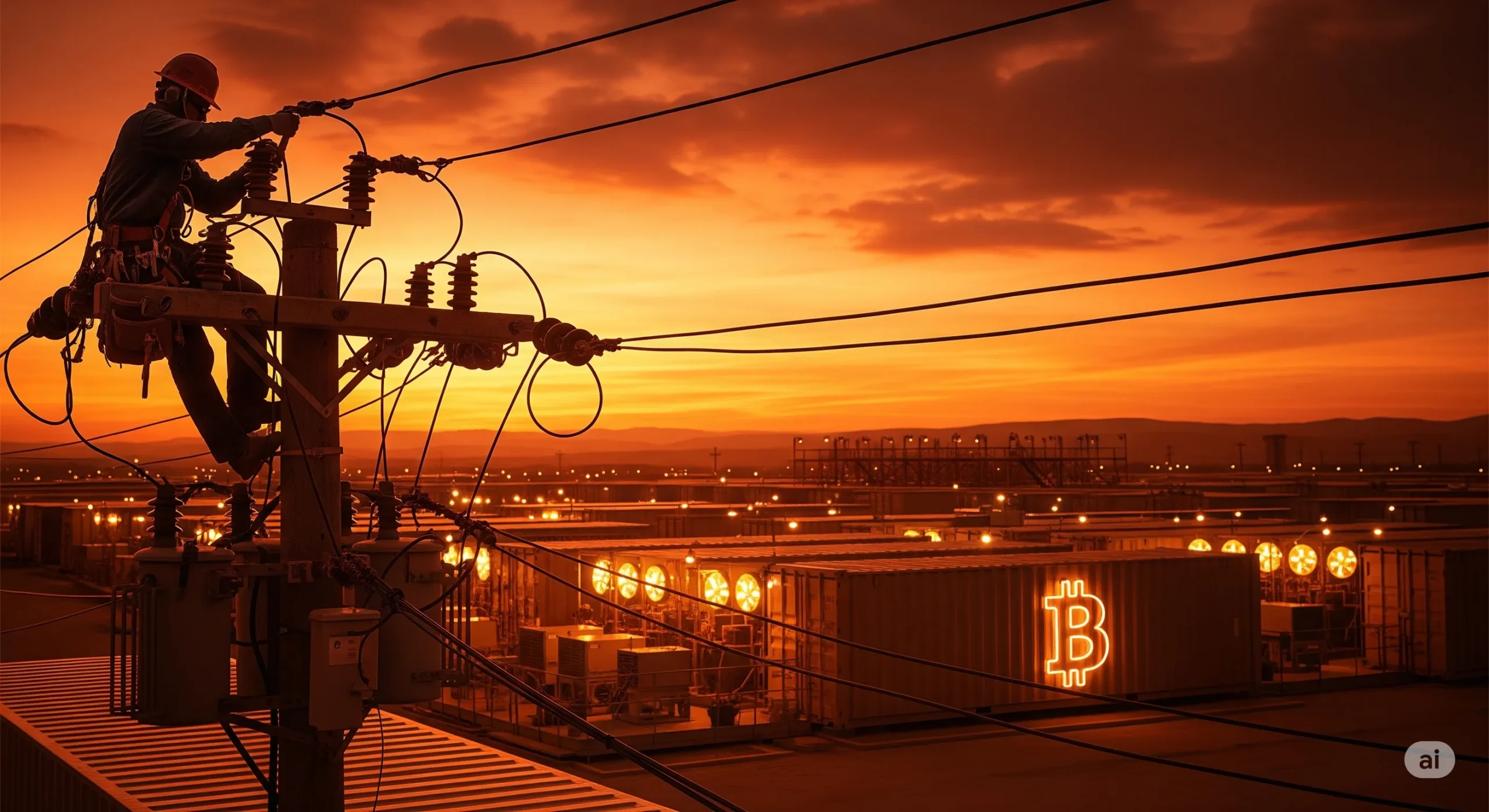
Currently, I balance roles as both an executive in meetings and an operator on-site. I’ve witnessed firsthand the operations at our facility in Paraguay, where hydropower-fueled ASIC rigs operate with the intensity of jet engines. I’ve seen technicians troubleshoot equipment in the dead of night, understanding that their efforts directly impact our success in mining blocks. Bitcoin is not a gift from above; it is the result of hard work.
**Bitcoin Mining vs. HODLing: Two Distinct Realities**
The Bitcoin community is diverse, with many newcomers entering through financial avenues since 2020. They discuss ETFs, market trends, and investment strategies, seeking exposure and returns while distancing themselves from traditional finance. However, at Bitcoin’s core lies a fundamental principle: thermodynamics. It’s not merely about financial sovereignty; it’s about earning that sovereignty through proof-of-work. Miners embody this principle, experiencing firsthand the challenges of producing even a single satoshi. For them, Bitcoin represents not just a financial yield but a daily commitment of sweat, capital, and energy.
Historically, blue-collar jobs have aspired to transition into white-collar comfort. Yet, Bitcoin may be reversing this trend. What if this moment inspires white-collar professionals to reconnect with the value of physical labor, engaging not just financially but also practically? This could signal a renaissance for the working-class hero.
**Global Perspectives: Norway and Paraguay**
My experiences span both hemispheres. During my visit to Norway, I encountered the serene power of hydropower, a stark contrast to the bustling energy of Paraguay. Each location offers unique insights into the potential of Bitcoin mining and the dedication required to harness its benefits.
In conclusion, Bitcoin mining is more than a financial activity; it is a testament to hard work and physical contribution. As the landscape of cryptocurrency evolves, it may inspire a renewed appreciation for the labor that underpins it, highlighting the importance of miners in the broader Bitcoin narrative.
**FAQ**
**What is Bitcoin mining?**
Bitcoin mining is the process of validating transactions and adding them to the blockchain, which requires significant computational power and energy. Miners are rewarded with Bitcoin for their efforts, making it a crucial component of the cryptocurrency ecosystem.