**Meta:** Muhammad Yunus returns to Bangladesh to lead reforms after a student-led revolution. Discover the changes underway in the country.
**Content:**
### Who, What, When, Where, Why
In August, Muhammad Yunus returned to Bangladesh amidst turmoil following the ousting of Sheikh Hasina, who had ruled for 15 years. The country was in disarray, with over 1,000 bodies in morgues after violent protests. Yunus, an economist and Nobel laureate known for his work in microfinance, was asked to lead an interim government to restore democracy. His leadership comes at a critical time as the nation seeks to recover from Hasina’s authoritarian regime.
### The Aftermath of Hasina’s Rule
– **Allegations of Tyranny:** Hasina’s government faced numerous accusations of violence and corruption.
– **Violent Protests:** Over 1,400 individuals were killed during protests against her rule in July and August.
– **International Response:** The UN described the police crackdown as potentially a “crime against humanity.”
### Reforms Under Yunus’s Leadership
Since taking charge, Yunus has initiated several reforms:
– **Prosecution of Police Officers:** Senior officers involved in extrajudicial killings are being prosecuted.
– **Closure of Torture Centers:** Secret detention facilities where critics were allegedly tortured have been shut down.
– **Establishment of Human Rights Commissions:** New bodies have been created to oversee human rights in the country.
– **Legal Challenges for Hasina:** She faces numerous charges related to her time in power, which she denies.
Yunus has committed to holding free and fair elections between December 2023 and March 2026, after which he plans to relinquish power.
### Challenges Ahead
Despite Yunus’s respected status, concerns about his governance and the pace of reforms persist. Political parties, especially the Bangladesh National Party (BNP), are pressuring him to expedite elections, questioning his legitimacy. The students who led the revolution have also formed their own political party.
Amir Chowdhury, a senior BNP figure, emphasized the urgency for elections, stating, “This government was only meant as an interim measure. Right now nobody is accountable on a day-to-day basis.”
### Conclusion
As Bangladesh navigates this transitional period, the question remains: Can Yunus effectively lead the country towards lasting democracy and stability?
**FAQs:**
**Q: What changes has Muhammad Yunus implemented since taking charge in Bangladesh?**
A: Yunus has prosecuted police officers for extrajudicial killings, closed torture centers, established human rights commissions, and is planning to hold free elections by March 2026.
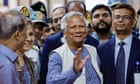
**Alt Text:** Muhammad Yunus addressing the nation after returning to lead reforms in Bangladesh.
**URL Slug:** muhammad-yunus-bangladesh-reforms-2023