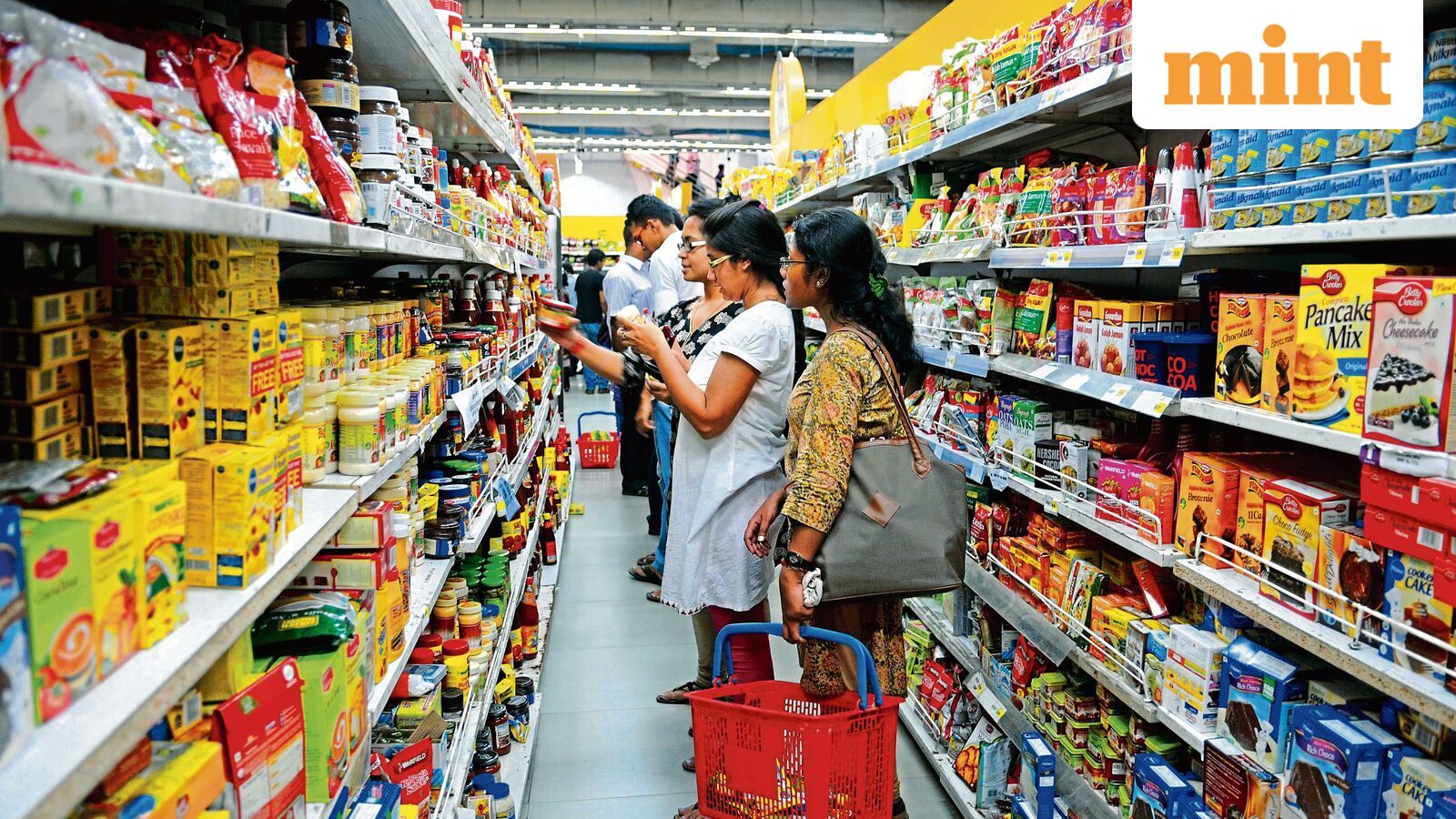
Officials of these companies told Mint that they have already started printing new product packaging with updated prices to reflect the reduced taxes. This new stock is expected to hit the retail shelves by 22 September, when the revised taxes take effect. Other companies hope the government will allow them to paste stickers with the revised prices on existing warehouse stocks to prevent losses on items already in the market. Industry bodies are also making representations to the government, requesting relaxations such as an extension of the implementation date. “Industry forums are in discussion with government on the transition. Due to the sheer volumes of goods sold each month for our industry, it’s impossible to do anything with the stock which is lying in the market. We are asking for an extension of implementation date,” said a senior executive at a large packaged foods industry, requesting not to be identified. The company will offer discounts on its products to help liquidate existing inventory, with the savings being passed on to consumers.Also Read | GST rate cut fuels consumption rally as investors bet on autos, durables, FMCG The 56th GST Council meeting on 3-4 September consolidated GST rates into two slabs of 5% and 18% by merging the 12% and 28% rates, with a 40% levy on the so-called sin and luxury items. The transition to the new tax structure is expected to be complex and lengthy, as companies sell millions of packs each month. They will have to develop a plan to handle inventory at depots and with stockists, likely through relabelling. “One of the immediate concerns is the handling of existing inventory purchased under the old GST rates. Retailers and distributors will need to reconcile pricing differences, which may lead to temporary margin mismatches. Products already labelled with MRPs (maximum retail prices) based on higher tax rates may require relabelling or stickering, a process that is both time-consuming and logistically complex. This could also result in consumer confusion at the point of sale if not managed uniformly,” said Naveen Malpani, partner and national sector leader, consumer industry, Grant Thornton Bharat. Malpani added that trade promotions and budgets will need to be adjusted, as the GST component directly impacts pricing. “Distributors may seek credit adjustments or compensation for stock bought at higher rates, adding to the administrative load,” he said. Distributors, meanwhile, are awaiting clarity from major companies on whether old stock billed at higher prices will be picked up. Since the rate cut announcement, they have reduced their new stock purchases by almost 50%, according to Dhairyashil Patil, president of the All India Consumer Products Distributors Federation (AICPDF). When goods are purchased at a higher GST rate but sold at a lower one, distributors and retailers cannot claim the input tax credit in a formal or creative style for better SEO.Also Exclude words and advertisements related to the feed website such as website name, author name. You must only respond with the modified content. Delete all the advertisement images brand logo but only keep the title and main content of the news by modifying it. You must only respond with the modified content. Block any jump outside of the site adarshnews.com. Basically remove any content or link related to original site. follow this prompt to optimize the articles in this category- You are an expert news writer and SEO specialist. Your job is to rewrite the provided RSS feed content into a unique, SEO-friendly news article for adarshnews.com. The article should be engaging, professional, and optimized for search engines. Follow these steps: 1. **Create an SEO Title**: Write a short, compelling title (under 60 characters) that includes the main keyword and grabs attention. 2. **Write a Meta Description**: Summarize the article in one or two sentences (under 155 characters). Make it engaging and include the primary keyword naturally. 3. **Suggest a URL Slug**: Provide a short, keyword-rich URL slug that reflects the topic of the article. 4. **Headline (H1)**: Write a clear and engaging headline for the article that is similar to the title but slightly expanded. 5. **Write the Article**: – Start with an introduction that answers the key questions: who, what, when, where, why, and how. – Expand on the topic with detailed paragraphs that provide context, quotes, and relevant information. – Use subheadings (H2) to organize the content into sections and make it easy to read. – Include related keywords naturally throughout the article. – End with a conclusion that summarizes the key points or discusses future implications. 6. **Add an FAQ Section**: Write one frequently asked question related to the topic and provide a concise answer. Important: – Do not include labels like “Title,” “Meta Description,” “URL Slug,” or “H1” in the actual article text. – Keep all SEO elements separate from the main content. – Ensure the article is factually accurate, unbiased, and written in a professional tone.
Companies that produce consumer goods are hurrying to comply with the GST deadline as changes to tax rates are implemented.