Bitcoin Magazine
Czech Central Bank Chief Backs Bitcoin as 1% Reserve Slice in ‘Conservative but Innovative’ Strategy
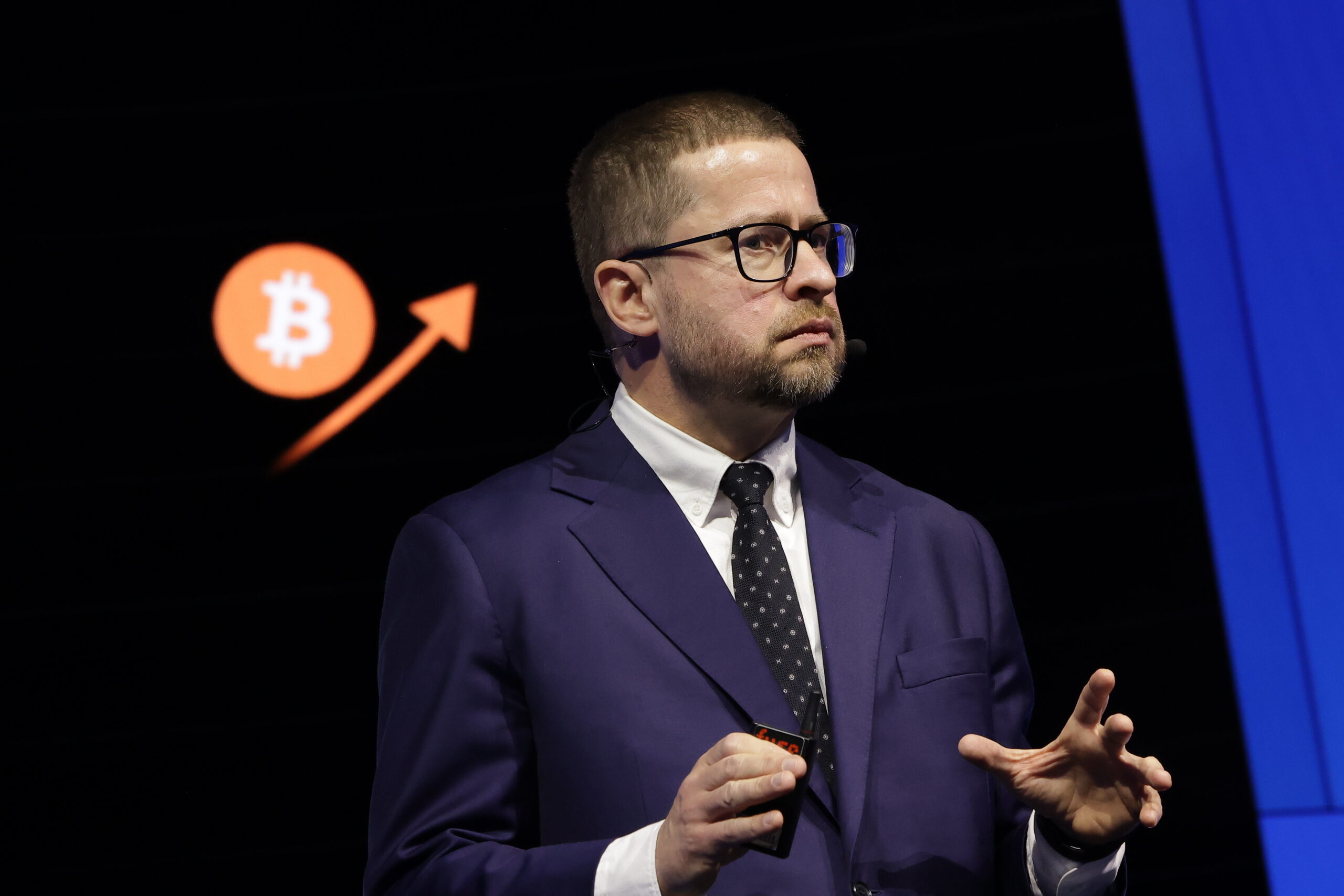
Czech National Bank Governor Aleš Michl used a Bitcoin industry stage in Las Vegas to defend a reserve strategy that mixes strict inflation control with measured exposure to digital assets.
He described the bank’s move to add a small Bitcoin allocation as a way to raise expected returns without increasing overall portfolio risk.
Michl said that when he became governor in mid‑2022, inflation in the Czech Republic was near 20%. He told the audience that the central bank pledged to bring inflation back to 2% within two years and met that goal through discipline, not “magic.”
He said money had been too cheap for too long, the currency had weakened, and there was too much easy money in the system. The bank responded by supporting saving and strengthening the Koruna, and its rule now is “to stay hawkish forever.”
Alongside that stance, Michl highlighted the scale of the Czech National Bank’s balance sheet. He said the institution manages about 180 billion dollars in foreign exchange reserves, equal to roughly 44% of Czech GDP, and described those reserves as among the largest in the world relative to the size of the economy.
The task, he said, is to “build for the future,” think ahead, and invest in a way that protects the country. That has meant shifting away from low‑return bonds and increasing exposure to assets such as stocks and gold through low‑risk portfolios.
Bitcoin has low long-term correlation
Michl said the next question for the bank was whether it could do more to build a stronger portfolio for the long run. That led to an internal debate over Bitcoin. He recalled first using Bitcoin to buy coffee in Prague and acknowledged that its price swings make it look risky, since its value can be higher one day and lower the next. He argued that other assets also move up and down and that the key issue for a central bank is how each asset behaves inside a broader portfolio.
According to Michl, Czech National Bank research found that Bitcoin has low long‑term correlation with many traditional reserve assets and does not move in the same way as them. Over longer horizons, he said, Bitcoin can provide returns that are not closely linked to other holdings. On that basis, the bank introduced a 1% Bitcoin position in its reserves.
In the bank’s analysis, he said, a 1% allocation lifts expected returns in Czech Koruna terms while leaving overall portfolio risk unchanged. “When you add Bitcoin to your portfolio it works better, returns go up and risk stays the same – that is diversification,” he told the audience.
Michl framed the move as part of a broader philosophy for central banking in an era of digital assets. His message to the crowd was to remain “conservative but innovative” in how institutions work and invest.
For the Czech National Bank, that has