**Senate Banking Subcommittee Holds First Hearing on Digital Assets Regulation**
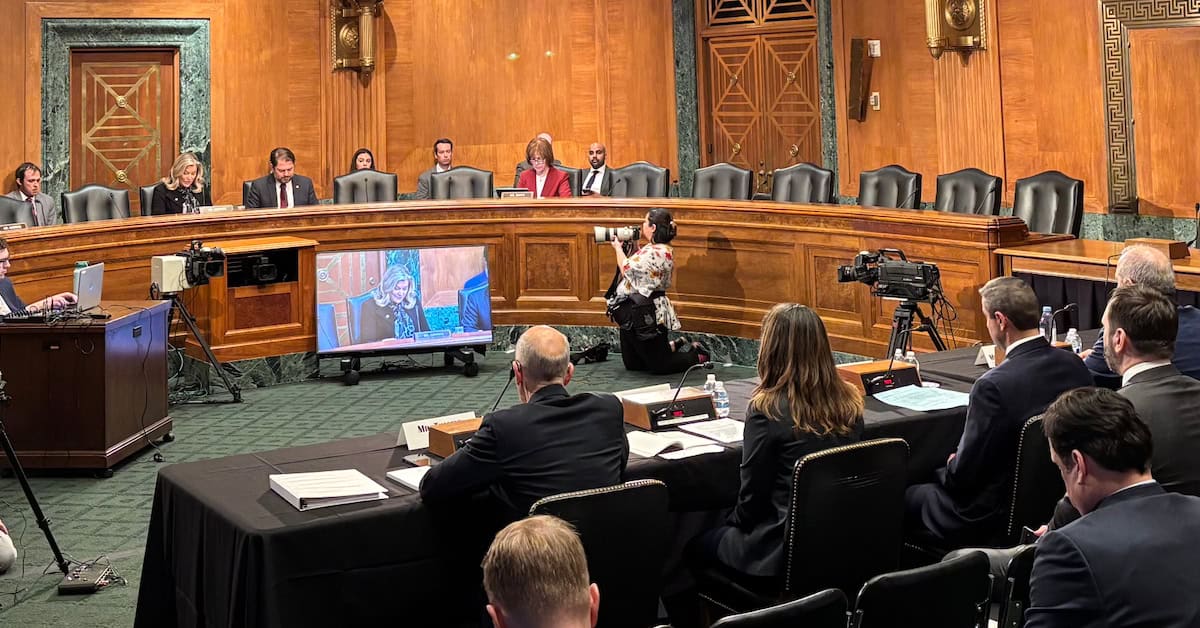
Today, the Senate Banking Subcommittee on Digital Assets convened its inaugural hearing titled “Exploring Bipartisan Legislative Frameworks for Digital Assets.” The focus of the discussion primarily revolved around the regulation of stablecoins, with contributions from various subcommittee members and witnesses from the cryptocurrency industry. Senator Cynthia Lummis (R-WY), a longstanding advocate for Bitcoin and digital assets, led the hearing alongside ranking member Senator Ruben Gallego (D-AZ).
The panel of witnesses included notable figures such as Tim Massad, former Chair of the CFTC and Research Fellow at Harvard University’s Kennedy School of Government; Jai Massari, Chief Legal Officer at Lightspark; Jonathan Jachym, Global Head of Policy and Government Relations at Kraken; and Lewis Cohen, Partner at Cahill Gordon & Reindel LLP. Senator Lummis set a collaborative tone, expressing her commitment to advancing bipartisan legislation for Bitcoin and stablecoins. Notably, the term “Bitcoin” was mentioned sparingly during the hearing, with one instance being Massad’s objection to the establishment of a Strategic Bitcoin Reserve.
Throughout the session, Massad emphasized the necessity of monitoring stablecoin transactions. He proposed extending the “regulatory perimeter” to tackle Anti-Money Laundering (AML) challenges linked to stablecoins and suggested that smart contracts could be designed to reduce the risk of misuse. “We might program smart contracts so that transactions can’t go through unless someone has been properly vetted,” Massad stated. He also urged stablecoin issuers to “aggressively monitor stablecoin activity” to detect potential AML violations.
Massari highlighted that authorities have the capability to monitor stablecoin transactions since these assets operate on public blockchains. She advocated for reasonable regulations that do not stifle innovation, stating, “We have a tendency [when regulating] financial services to take the new thing and cram it into the old.” Additionally, she called for a “common set of standards” for stablecoin issuers to enhance user confidence in the backing of all stablecoins.
Jachym attempted to redirect the discussion towards the Digital Asset Market Structure bill, asserting the importance of establishing clear guidelines for distinguishing between securities and non-securities in the digital asset space. However, his efforts received limited traction. Massad countered that the focus on stablecoins was more critical than the market structure bill, arguing that existing securities laws could effectively regulate crypto markets. Jachym reiterated the need for “simple jurisdictional lines” surrounding digital assets to facilitate clarity and compliance.
This hearing marks a significant step in the ongoing dialogue about the regulatory landscape for digital assets, particularly stablecoins, as lawmakers seek to create a balanced framework that fosters innovation while ensuring consumer protection.