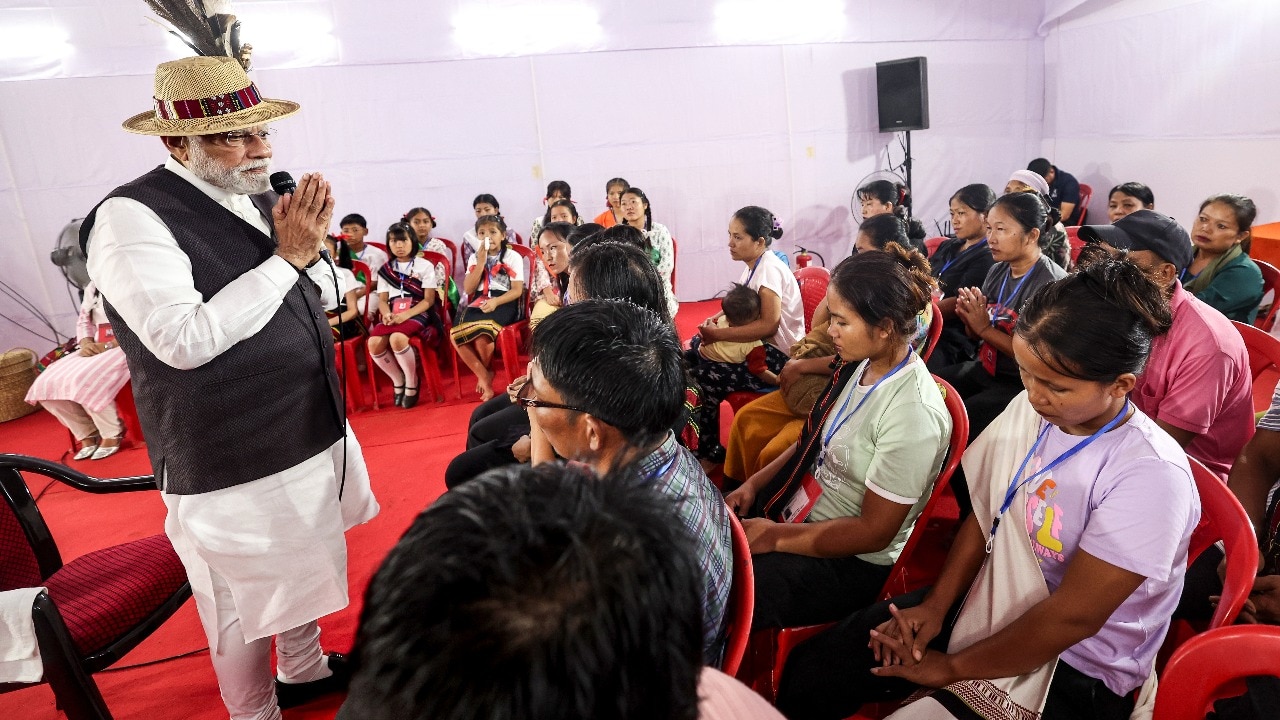
Prime Minister Narendra Modi’s visit to Manipur has brought a sense of relief to a state scarred by over two years of ethnic conflict. The violence that erupted in May 2023, leaving deep divisions between the Meitei community in the valley and the Kuki-Zo tribals in the hills, has now subsided.Gun battles have stopped, bunkers lie abandoned, and life is slowly resuming and getting up on its feet. Yet, beneath the calm, the scars of division linger.advertisementIn Churachandpur, one of the districts worst-affected by ethnic violence, PM Modi laid the foundation of projects worth Rs 7,000 crore on Saturday.Locals welcomed him with hopes that his outreach would bring healing to the fractured state.“There is no firing, there is peace. That’s why we are here to welcome the Prime Minister,” said Linda Kim, a resident of the district. “We want peace. No one wants to fight forever. Conflict is over, but education and the economy are in crisis.”The violence of 2023 resulted in over 200 deaths and forced thousands into relief camps, many of whom remain displaced.Villages were destroyed, and residents fled across districts for safety. Bishnupur district continues to function as a buffer zone, heavily guarded by security forces. Neither community dares to cross into each other’s territory.The divide has left residents grappling with everyday challenges. Even for emergencies, travel remains restricted.“If we have to go to Delhi for higher education or medical treatment, we cannot pass through Imphal. Instead, we take a 13-14 hour journey to Aizawl to catch a flight,” said Yamthang, a Kuki woman from Churachandpur. “It is expensive and time-consuming, but we have no choice.”While the highway connecting Imphal to Churachandpur is open for essential supplies, crossing the buffer zones requires multiple checks by security forces.Locals say fear and mistrust still dominate interactions between the two communities.In Churachandpur, residents have built a memorial for those who lost their lives during the conflict.“The bunkers are still there, but our boys have returned to their studies and work,” said Linda, who hopes the Prime Minister’s visit signals a long-term return to normalcy.Yet, concerns about governance and development persist. “A separate administration for hill districts is the only long-term solution,” said Michael, another resident.“As long as the valley controls finances and administration, the hills will remain neglected. Employment, education, and basic development will continue to suffer.”Internally displaced persons (IDPs) from other parts of Manipur also voiced their struggles during PM Modi’s visit.advertisementAt the Akampat Relief Camp in Imphal East, where families have been staying for two years, many shared their loss of homes and livelihoods. Chingtham Lembi Devi (left) living in Akampat Relief Camp in Imphal East.Among them was Chingtham Lembi Devi, a BSc student from Moreh, and Sadananda, a retired in a formal or creative style for better SEO.Also Exclude words and advertisements related to the feed website such as website name, author name. Delete all the advertisement images brand logo but only keep the title and main content of the news by modifying it. You must only respond with the modified content. Block any jump outside of the site adarshnews.com. Basically remove any content or link related to original site. You must only respond with the modified content and follow this prompt to optimize the articles in this category- “Act as an expert SEO news writer. Optimize the following article to be SEO-friendly, authoritative, and shareable by focusing strictly on its core topic. Follow these steps: You are an expert news writer and SEO specialist. Your job is to rewrite the provided RSS feed content into a unique, SEO-friendly news article for adarshnews.com. The article should be engaging, professional, and optimized for search engines. Follow these steps: 1. **Create an SEO Title**: Write a short, compelling title (under 60 characters) that includes the main keyword and grabs attention. 2. **Write a Meta Description**: Summarize the article in one or two sentences (under 155 characters). Make it engaging and include the primary keyword naturally. 3. **Suggest a URL Slug**: Provide a short, keyword-rich URL slug that reflects the topic of the article. 4. **Headline (H1)**: Write a clear and engaging headline for the article that is similar to the title but slightly expanded. 5. **Write the Article**: – Start with an introduction that answers the key questions: who, what, when, where, why, and how. – Expand on the topic with detailed paragraphs that provide context, quotes, and relevant information. – Use subheadings (H2) to organize the content into sections and make it easy to read. – Include related keywords naturally throughout the article. – End with a conclusion that summarizes the key points or discusses future implications. 6. **Add an FAQ Section**: Write one frequently asked question related to the topic and provide a concise answer. Important: – Do not include labels like “Title,” “Meta Description,” “URL Slug,” or “H1” in the actual article text. – Keep all SEO elements separate from the main content. – Ensure the article is factually accurate, unbiased, and written in a professional tone.
Field report: Tense tranquility in Manipur as groups work to restore their lives following ethnic conflicts.