**Google’s Gemini 3 Challenges OpenAI’s Dominance in AI**
Google’s recent launch of its Gemini 3 AI model has significantly altered the landscape of artificial intelligence, putting OpenAI’s position as the leading AI company at risk. This shift poses challenges for key partners like Oracle and Microsoft, who have heavily invested in OpenAI. Gemini 3 has garnered positive feedback from users and analysts alike, outperforming OpenAI’s latest GPT 5.1 in benchmarking tests.
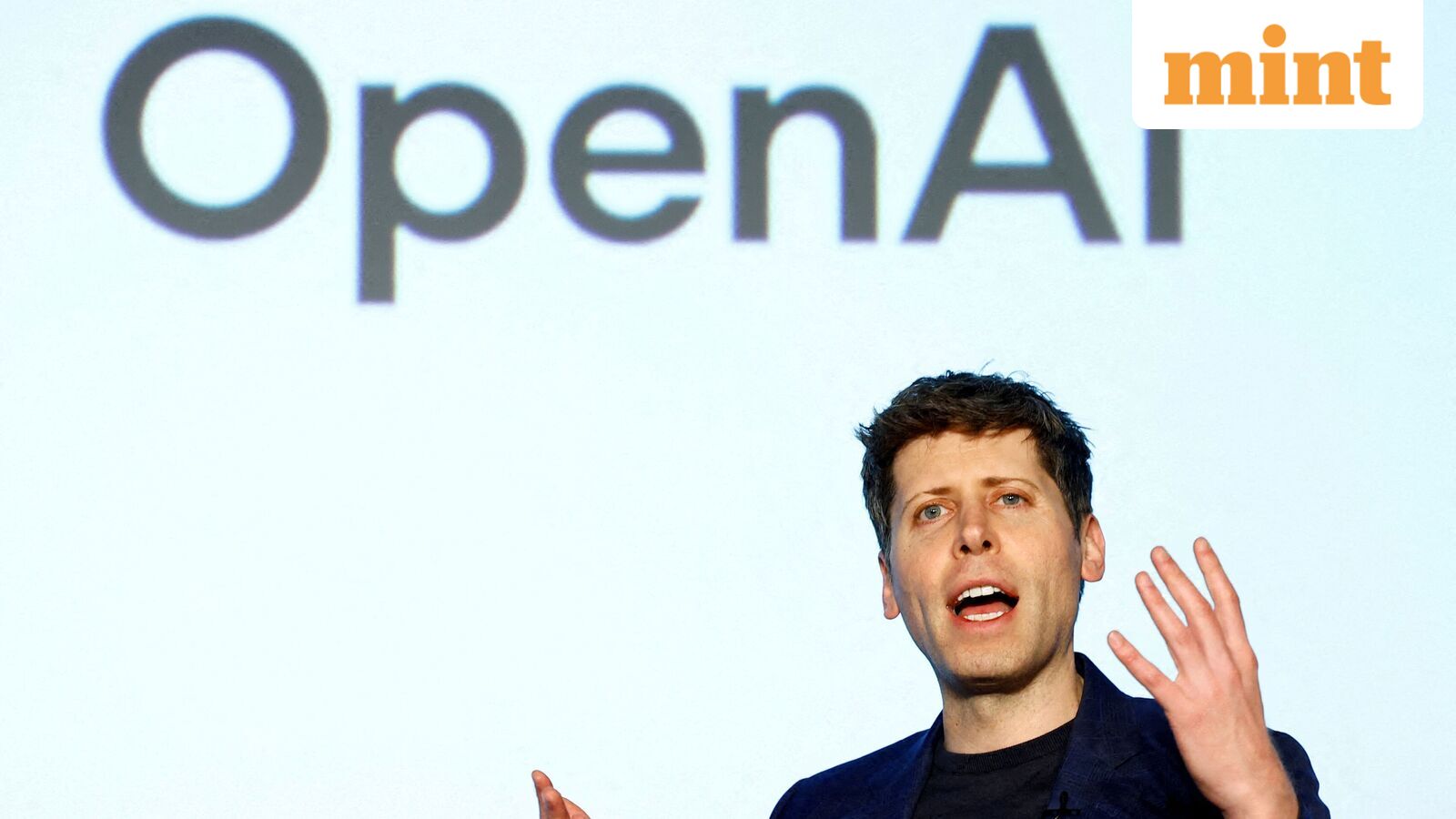
In response to this competitive threat, OpenAI has initiated a “code red” strategy aimed at enhancing ChatGPT. According to an internal memo from CEO Sam Altman, the company will postpone various projects—including advertising, AI agents for health and shopping, and a personal assistant—to focus resources on improving its flagship product. OpenAI has not yet commented on this development.
The implications of this rivalry are concerning for Oracle and Microsoft, as OpenAI’s efforts to keep pace with Google may delay its profitability and raise sustainability questions. OpenAI has committed over $1 trillion in spending, including a $300 billion cloud-computing deal with Oracle and a $250 billion partnership with Microsoft. Currently valued at around $500 billion, OpenAI anticipates generating over $20 billion in annual revenue this year. However, its backers are relying on increased revenue from advertising, subscriptions, and other sources to meet these financial commitments. Altman has projected that OpenAI could achieve $100 billion in annual revenue by 2027, but this growth trajectory may be jeopardized if Google’s Gemini captures significant market share.
Gemini has seen rapid user growth, boasting over 650 million monthly active users, an increase from approximately 450 million in July. In comparison, ChatGPT has around 800 million weekly active users, up from about 700 million in the same period. This suggests that Google’s AI is expanding at a faster rate, and Gemini is also set to enhance Apple’s digital assistant, Siri, starting early next year.
While comparing AI models can be challenging, data from AI-benchmarking firm Artificial Analysis indicates that Gemini 3 Pro mode outperforms OpenAI’s GPT 5.1 in general intelligence and coding tasks. However, it is worth noting that Gemini is also more expensive to utilize.
OpenAI faces competition not only from Google but also from emerging players like the Chinese AI start-up DeepSeek, which recently introduced two new large-language models. DeepSeek claims that its DeepSeek-V3.2 model matches OpenAI’s GPT-5 across various benchmarks, while a more computationally intensive variant surpasses GPT-5 and rivals Gemini 3 Pro in reasoning capabilities.
As the AI race intensifies, the future of OpenAI and its partnerships hangs in the balance, with the potential for significant shifts in market dynamics.
**FAQ**
**What is the significance of Google’s Gemini 3 in the AI landscape?**
Google’s Gemini 3 has emerged as a strong competitor to OpenAI’s offerings, outperforming its latest models in key benchmarks and rapidly increasing its user base, which could impact OpenAI’s market position and profitability.